








This Mother’s Day, many of us are having kind thoughts about our moms. We are grateful for all they did and continue to do; for protecting us, showing us the way, standing behind us in times of hardship and success. We know our moms wanted the best for us.
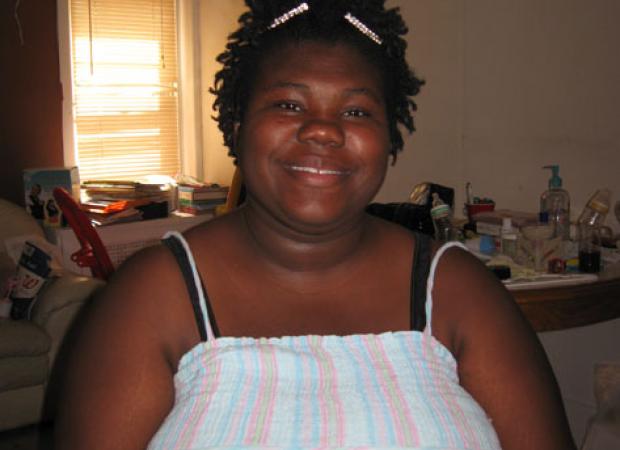
Our moms are just like Tianna Gaines-Turner. She too wants the best for her children. She sees them being the president, a lawyer, a doctor, a professor or a great community organizer, like Tianna herself. Mothers sacrifice themselves for their children to ensure they have the best chance.
Despite their sacrifices, mothers who are raising 20% of the U.S. children living in poverty are ignored. Their needs are judged, and their voices, silenced.
This is why people are shocked to find out that one in 4 young children under the age of six, and 37% of female-headed households are food insecure, meaning they don’t have enough money for food for an active and healthy life. Those who have not suffered the indignity of poverty make many assumptions about low-income families—about who such moms are and what they need.
Food insecurity and hunger is not a family’s fault: According to the USDA, 85% of families that are food insecure have at least one working adult in the household. For many years, moms have been telling us that their wages are too low, so they need to rely on public assistance. Said differently, minimum wage equals the wage of the hungry.
Moms want the best for their kids so they turn to SNAP (the Supplemental Nutrition Assistance Program, formerly “food stamps”) because they know that when children are hungry it has disastrous effects on their health and their cognitive, social and emotional development.
Here’s the rub.
There is no mom I talk to (and I talk to hundreds through our research as part of Children’s HealthWatch and Witnesses to Hunger) that actually wants to be on food stamps. They participate in SNAP and other public assistance programs because they have to in order to protect their families.
Hunger is solvable. Better wages and income supports, like SNAP, work to protect family health. Our research has shown that SNAP promotes child health, and prevents hospitalizations. Yet our leaders in the House of Representatives are dishonoring America’s mothers by trying to cut $20 billion from the SNAP program. Did they forget that half of SNAP recipients are children? Do they know that 60% of people on SNAP work while receiving SNAP, and that the rest are either children, disabled or elderly? Do they know that for $1 spent on SNAP, $1.72 is generated in the local economy?
But Congress doesn’t pay attention to the research, much less do they hear the voices of the mothers. Most of our congressional leaders have never set foot into a poor person’s home, let alone talk with and share ideas with people who are living in poverty.
If we listened to the moms who know hunger and poverty first hand, we’d hear: So why can’t we fix wages in this country? Why do we vilify moms who utilize public assistance to supplement their wages to protect their kids? Why do the media feed into the dangerously wrong stereotypes about people who are poor? It comes down to our notions of who our country and culture determine to be deserving, and who has worth. At the same time, we turn our heads away from the real welfare queens: the corporations who depend on government welfare to supplement the meager wages they’re willing to pay. And then we look at the moms who are working double shifts to just try to feed their families. Because it’s not enough, they apply for assistance, and often because that’s not enough, they’ll collect cans, sell their plasma, or work under the table to clean people’s houses. And we have the audacity to blame them for being poor. We refuse to see women who are low-income as they really are: kind, hard working, smart, tenacious, and downright entrepreneurial. They may have the only creative ideas left for how to fix our childish mess. How do we end poverty in America? Start by honoring America’s mothers. Mariana Chilton is an associate professor at Drexel University and Director of the Center for Hunger-Free Communities. Find her organization on Facebook and Twitter. Dr. Chilton will be a guest on Sunday’s special-edition “MHP” on the topic of poverty.
Mariana Chilton Recommended


