








Defense Secretary Chuck Hagel proposed some major reforms at the Pentagon this week. The goal is to make a military that is smaller and more targeted. The plan includes eliminating a fleet of aircraft originally designed to attack Soviet tanks, and ultimately saving $75 billion over the next two years.
Some Republicans seized on the plan to attack President Obama, and it’s fine to debate the military’s goals. But one top Republican, a former defense secretary who styles himself a hawk’s hawk, came out of retirement to blast the president in a misleading and toxic way.
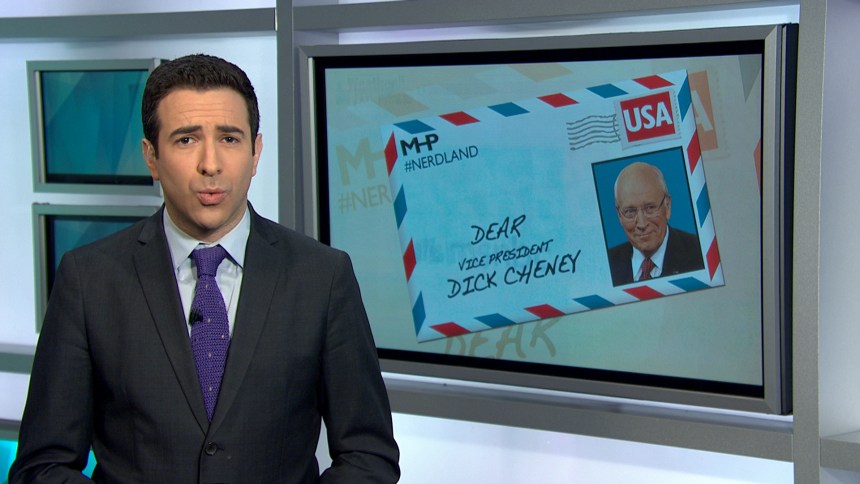
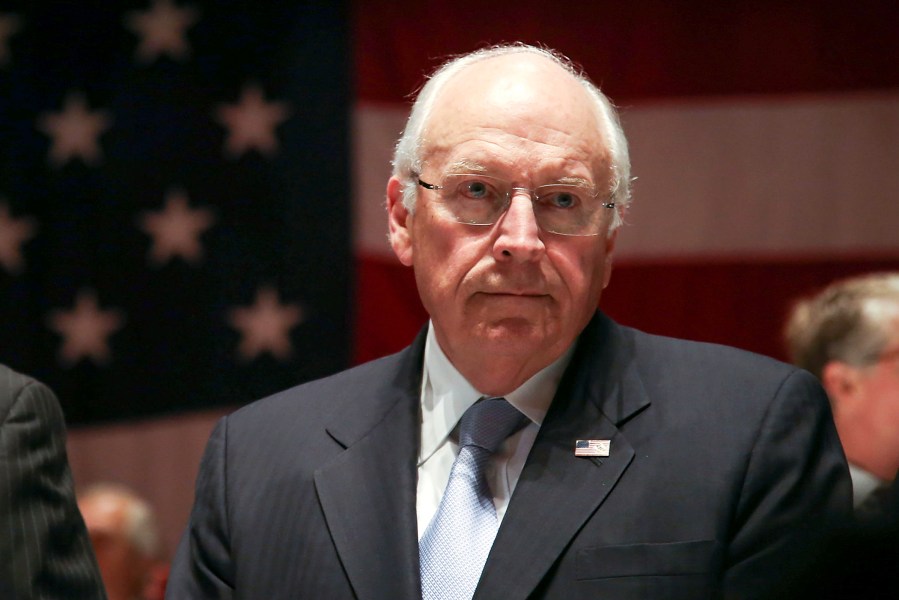
So today, my letter is to former Vice President Dick Cheney.
Dear Mr. Vice President,
It’s me, Ari.
We hadn’t heard from you in a while, but you just called into Fox News about the president’s plan.
“It’s driven by budget considerations. He’d much rather spend the money on food stamps than he would on a strong military or support for our troops.”
Would he? Let’s start with the false choice: our soldiers, or our food stamps. Mr. Vice President, we live in a nation where many of our soldiers and military families are using food stamps.
Military families spend $100 million dollars in SNAP benefits on site at military bases every year! In any given month, about 900,000 veterans live in households that use food stamps, or SNAP benefits.
We should work towards an economy where our veterans have enough money that they don’t need SNAP. But right now they do.
Mr. Cheney, under your false choice, you wouldn’t be picking soldiers over “food stamps.” You’d be picking weapons systems over the many soldiers on food stamps. But you know that. So why did you grab this comparison out of the thin Wyoming air? Well, it’s a common habit among some GOP politicians.
Here was Newt Gingrich in 2011.
“You want to be a country that creates food stamps? In which case, frankly, Obama is an enormous success. The most successful food stamp president in American history . Or do you want to be a country that creates paychecks?”
That’s another false choice. While SNAP benefits are vital to many people who are out of work or can’t work, one out of three households using SNAP include working adults. But their wages don’t pay them enough to survive. That’s key to the minimum wage debate: if people who work are starving, do we want to subsidize them with benefits? Or require companies to pay a living wage?
That came up when governors visited the White House this week, with a similar twist.
What I worry about, I heard a question over here about whether he mentioned the minimum wage. Yes, he did mention the minimum wage repeatedly to us. And what I worry about is, that this president, the White House, seems to be waving the white flag of surrender after more than five years now under this administration. The Obama economy is now the minimum wage economy. I think we can do better than that. I think America can do better than that. The minimum wage economy? That’s meant as some kind of slur. In a regulated market economy, however, a large share of workers will always be paid the minimum regulated wage. And while the president is the one trying to make that a living wage, in the Cheney-Gingrich-Jindal worldview, simply thinking about that income bracket is suspect. There’s a sense of contempt here for the president’s focus on such Americans – the minimum wage workers, the people using SNAP – and a rhetorical attempt to disappear the more popular members of this group (like veterans) from the political mental image here. Mr. Cheney, I don’t imagine you or Gov. Jindal would criticize the president “focusing” on our veterans on food stamps. Or our veterans living on minimum wage – though they are part of those groups just the same. Yet you seem to think you can smear President Obama by associating him with a group of Americans disfavored in your political imagination – regardless of the data. Maybe you think that passes as weighing in on public policy. And you know, there was a time when that kind of double-barreled military-welfare politicking helped Republicans win presidential elections. But it hasn’t worked since, well… since you were still in the White House. And you know that, too. Sincerely, Ari
Ari Melber
Ari Melber, an Emmy Award-winning journalist, writer and attorney, is the host of “The Beat with Ari Melber” airing nightly at 6 p.m. ET on MSNBC. He also serves as MSNBC’s chief legal correspondent and an NBC News legal analyst. Before joining MSNBC, Melber practiced First Amendment law and served as a legislative aide in the U.S. Senate. He received a J.D. from Cornell Law School and is a member of the New York Bar. Recommended


