








The number of female CEOs heading Fortune 500 companies is at an all-time high, leading companies like Xerox, Kraft Foods, and PepsiCo. While women still only lead 4.2%—or 21 total–of the Fortune 500—the focus remains on the women at the top, there are millions of women who are taking a more entrepreneurial route and starting their own small businesses.
The latest comprehensive data from the U.S. Census shows that between 1997 and 2007, companies owned by women grew at almost double the rate of their male counterparts. That amounts to 7.8 million women-led businesses. But while the number of companies have grown, only 2% of women-owned firms are considered high-achieving earning more than $1 million in annual revenue.
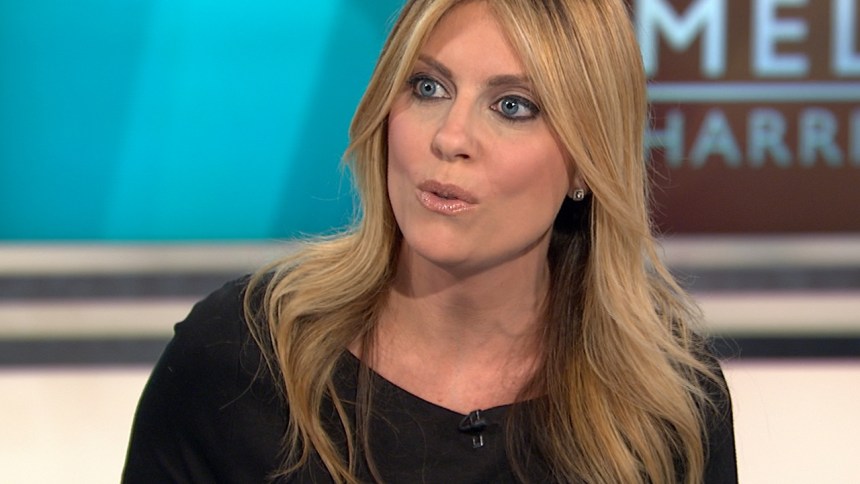
On her April 14 program, host Melissa Harris-Perry spoke with her all-woman panel about the challenges and possibilities that women small business owners can face.
When it comes to finding capital to start a business, many new entrepreneurs rely not on government or bank loans but rather personal funding. “I self-funded Power Women TV for four years,” Amy Palmer, founder and CEO of PowerWomenTV.com said on the show. “I took my primary job and I said I believe so much in this mission and this network that I was living way below what I should be living at my age because I believed in it.”
According to the National Women’s Business Council, 55.5% of women-owned firms used personal funds to start their business versus government business loan (.4%) or a guaranteed government business loan from a bank (.5%).
Lisa Cook, assistant professor of Economics and International Relations at Michigan State University, told Harris-Perry that the reasons for this are two-fold. “The problem for start-ups is that women typically have lower credit scores…often they don’t have credit histories like men do.” Cook goes one step further with, “I think women are less informed about say small business loans and SBA policy.”
Is it a lack of knowledge by women or more so a lack of confidence by investors? Carmen Wong Ulrich, president of Alta Wealth Management, said it’s the latter. “Women encounter so much trouble getting that money, getting people to really believe and invest in them. That that’s a huge burden.”
Ulrich went on to note that it may be hard to get the initial investment capital but it may be worth it versus the alternative. “It gets to a point where women have so much trouble getting ahead, because the assumptions are you just be quiet now, you can be an assistant. That’s where you belong. So that they find a different way around it, but it’s a very different, very risky thing to do.” It may be risky but worth it in the long run, since non-farm firms run by women generate $1.2 trillion to the economy. And women of color are among the fastest growing group of entrepreneurs in the country. And when it comes to branding, “Reinventing You” author Dorie Clark said that the time has come where women can brand themselves however they like. “I think we’re entering an era where what really matters is what’s unique about you, what’s different. And so I don’t think that necessarily the women have to brand themselves as I’m a woman doing this but you need to ask yourself the question what about me uniquely as an individual can I bring?” See the second half of the discussion below, where Harris-Perry discussed her favorite small-business owner in her hometown of New Orleans: Demo Diva‘s Simone Bruni.
Shanta Covington Recommended


