The Rachel Maddow Show WEEKNIGHTS 9PM ETMorning Joe WEEKDAYS 6AM ETDeadline: White House with Nicolle Wallace Weekdays 4PM ETThe Beat with Ari Melber Weeknights 6PM ETThe Weeknight Weeknights 7PM ETAll in with Chris Hayes TUESDAY-FRIDAY 8PM ETThe Briefing with Jen Psaki TUESDAYS – FRIDAYS 9PM ETThe Last Word with Lawrence O’Donnel Weeknights 10PM ETThe 11th Hour with Stephanie Ruhle Weeknights 11PM ET
African-Americans don’t need a history lesson from Rand Paul
I read a lot of letters this week, but don't worry–I also found time to write one. This one inspired by an especially awkward lecture at Howard University.
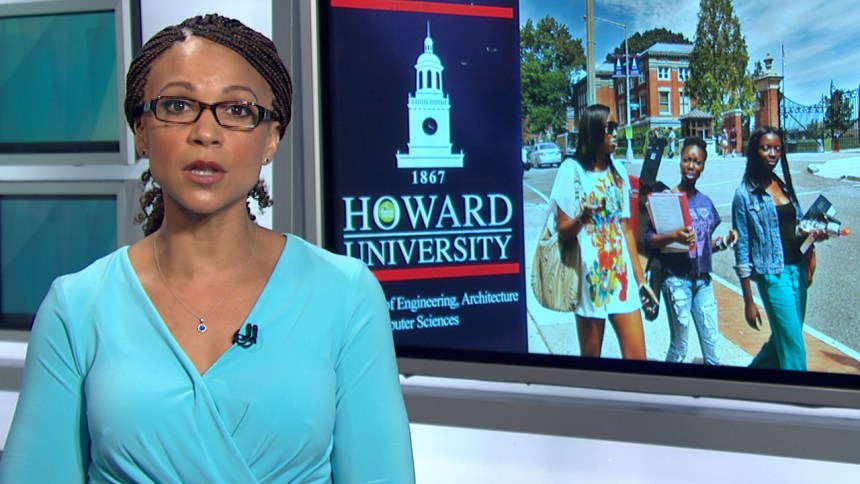
I read a lot of letters this week, but don’t worry–I also found time to write one. This one inspired by an especially awkward lecture at Howard University. And since my dad and two of my sisters attended Howard, I feel a little possessive of it and paid careful attention to Republican Sen. Rand Paul’s address.
Dear Sen. Paul,
It’s me, Melissa.
Apparently, you had a bit of trepidation about your visit to the land of the Bison this week. You said that some thought you were “either brave or crazy” to speak on campus.
Because it strikes me as precisely the mission of a university to give students an opportunity to hear dissenting viewpoints, to interact with political leaders, and to address the major issues of our day. I wouldn’t characterize it as brave or crazy, just part of Howard’s mission. But maybe you were nervous because as a libertarian you know your ideology stands opposed to the impulse that gave birth to Howard in the first place.
Howard University was established by the federal government. Following the Civil War, Congress recognized our nation’s collective responsibility to offer educational opportunities to the Freedmen and the subsequent generations of children that would be born into freedom. So Congress, in an act of collective responsibility toward young people, established Howard and later authorized an annual federal appropriations for its construction, development, improvement and maintenance.
But you left out that story of big-government Republicanism in your fascinating revisionist history. This moment was a gem, though: “I think what happened during the Great Depression was that African Americans understood that Republicans did champion citizenship and voting rights but they became impatient because they wanted economic emancipation… The Democrats promised equalizing outcome. Everybody will get something. through unlimited federal assistance.”
Um, OK: so your theory is African American voters left the Republican Party because they didn’t get enough free stuff.
Let me offer a different take.
After Democratic President Lyndon Johnson signed the Civil Rights Act and the Voting Rights Act–which were passed by the Democrats in Congress–and after those acts established the framework for black citizens to exercise the franchise and enjoy equal protection. After those Democratic actions, it was white Dixiecrats who left the party and found refuge among Republicans. Those who refused to support civil rights gains were clear that the best party for them in the modern era was the Republican Party.
So folks like Strom Thurmond and large majorities of white voters in Southern states became reliable Republican voters. Because they opposed civil rights. And Sen. Paul, you know a little about opposition to the Civil Rights Act, don’t you?
Even though you told a [Howard] questioner, “I’ve never been against the Civil Rights Act, ever,” Mother Jones‘ Adam Serwer correctly reminded us that in 2010, during an interview with the Louisville Courier-Journal, you said that even though you “abhor racism”, you do not support bans on discrimination by privately-owned businesses. And that, Sen. Paul, would mean those students from another historically black college, North Carolina A&T, would have just had to live with the private decision to deny them a place to sit at that Woolworth’s lunch counter. Maybe Republicans like you don’t count that as opposition to the Civil Rights Act, but I bet many Howard students do.
And as you said: “Yes. Alright. Alright. You know more than I know… And I don’t mean that to be insulting. I don’t know what you know… you know, I mean I’m trying to find out what the connection is.”
Sen. Paul, I hope you enjoyed your time at Howard and the applause for your positions on foreign policy and ending the drug war and the respectful and engaged audience you encountered. But I also hope you learned something during your visit. If you want to do better with black voters, we don’t need you to explain our history–we need you to make an argument for why your policies are better for our futures.