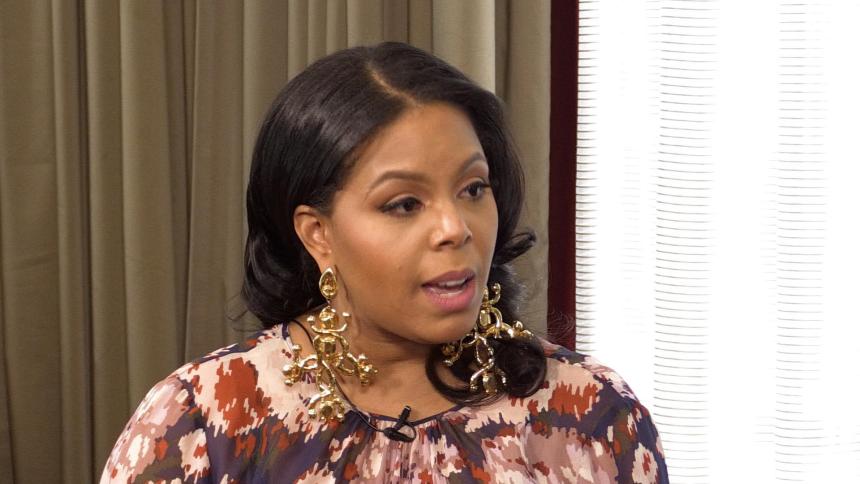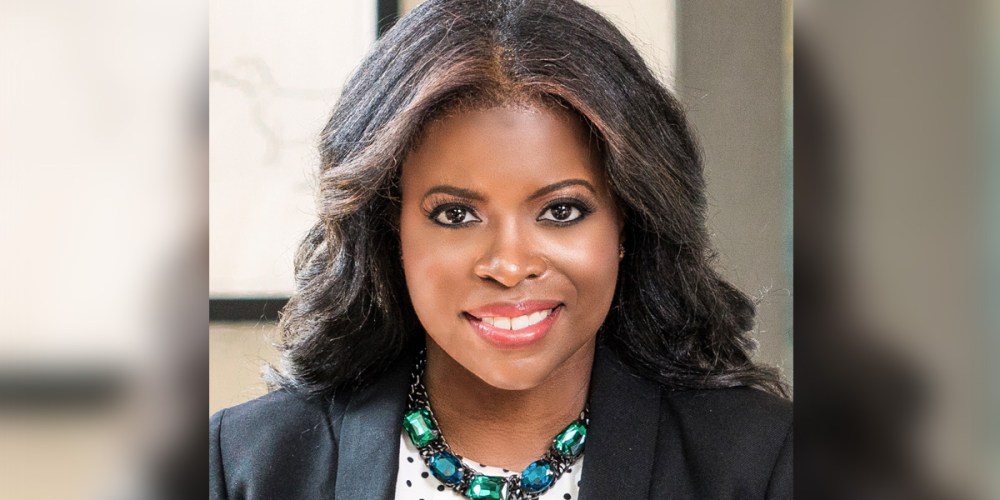
Diversity and representation on television are more important than ever before. And for Keesha Boyd, it’s also personal.
Boyd, who is the executive director for multicultural video and entertainment at Comcast NBCUniversal, recounted moving from New York to Georgia as a young child and being the only Black girl at school.
“It was a culture shock,” she told Know Your Value founder and “Morning Joe” co-host Mika Brzezinski, adding it was the first time she felt “othered.”
Boyd found herself seeking out representation on television, watching shows like “A Different World,” a 1980s spin-off of “The Cosby Show.” She also loved “The Facts of Life” and related to the character Tootie, the only Black girl on the show.
It’s part of the reason why Boyd, as she puts it, is “extremely passionate about the importance of cultural representation on screen and the positive impact it can have on young people and all people when it comes to feeling seen, validated, motivated, inspired.”
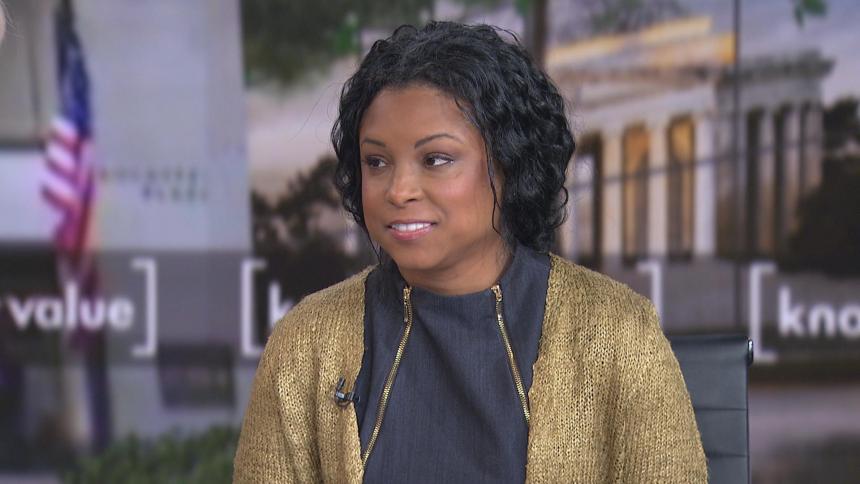
And it’s something she gets to work on every day at Comcast NBCUniversal. Boyd is responsible for defining the multicultural content programming and engagement strategy specific to Black, Latino, Asian-American and international viewing audiences. Her role touches all facets of the distribution business, including development, content acquisition, marketing, production and consumer engagement.
Boyd chatted with Brzezinski about her role in bringing diversity and representation to television, in addition to her career path (which included being an organizational psychologist), her best career advice, how to influence a room, mentorship and more.
Below is their conversation, which has been edited for brevity and clarity:
Mika Brzezinski: You started your career as an organizational psychologist. I’m obsessed with that right there. What an incredible foundation. Do you think that has shaped the way you lead and work?
Keesha Boyd: Absolutely. I started out as an organizational psychologist because my plan was to become a psychotherapist. I also had a real desire to be in corporate America. When I was at grad school at Columbia University, I learned that there was this branch of psychology that was specific to business. And I thought, “Oh my goodness, there might be a place where I can kind of marry what I’m really interested in…”
It absolutely guides who I am as a leader … I’m very interested in everyone’s individual story and what motivates them. I say sometimes that I can’t help but to have my therapist hat on during one-on-one with my employees. I’m sure they absolutely love it ― air quotes around ‘love it.’
But it has helped me to be able to build relationships across any company that I’ve been part of… And I think it helps me really understand my employees better and what they need and what I need to do to get the best out of them.

Brzezinski: Tell me, what other challenges you have helped people with as a coach, like reading the room? What’s your advice and what other kinds of questions do you get?
Boyd: There have been times when I’ve coached employees [ about certain situations], like being in a room where you have a difference of opinion and how to move forward on a particular project when you’re having trouble influencing the rest of the room.
Often, what I’ll coach some of my employees on is thinking about one person in particular [that you’re at odds with].It’s best to focus your energy, instead of getting really angry, to focus that energy into understanding the other person’s point of view.
…And you do that by asking questions. Don’t focus on what your answer is going to be, what your comeback is going to be. But just in that moment … focus on asking questions to understand. And once you do that, what you’ll find is two things might happen. One, you either find that, “Oh, maybe we actually do have to some common ground here. Why don’t we try to rally around that particular point.” Or it will give you more data and insights that you can better present what your idea was to help them understand why you’re giving an opposing point of view…
Brzezinski: You have triggered the Know Your Value coach in me. Do you see a difference in male versus female employees in terms of how they responded to this advice or in terms of how you had to edit the advice you were giving them?
Boyd: I have found that more of my coaching around asserting yourself has been requested more by women employees versus my male employees. Very rarely have I had a male employee who had trouble asserting themself. My male employees look for coaching around how to be more reflective in the moment. It’s what I like to call measuring their assertion in the room so that it’s productive for them, versus my women employees actually dialing up their assertiveness. Sometimes I’ll give them a goal. I had one particular person who would go an entire meeting and not say anything. And then we would have our one-on-one and she would have the best ideas. I said, “So, this is what we’re gonna do. We’re going to give you a goal. And your goal is that when you get into these meetings, you’re going to say just one thing, even if it’s at the very end of the meeting… Pick at least three meetings [during the week] where you’re going to say at least one thing in that room. And then let’s talk about how it felt after you did that.” … I remember how she was at the beginning, and now she’s running meetings, she’s quarterbacking. I ended up getting an opportunity to promote her. So it’s nice to see when the coaching lands and you see them blossom. I enjoy that. Brzezinski: You’re so right. It’s so awesome to see it land. I would love to ask you about representation and diversity on television from when you were a kid watching “The Facts of Life” to today. What’s the journey been like? Boyd: It’s been really fascinating. For me, it started when we moved from New York. At that time, I was living in a very diverse neighborhood and attending an all-Black, Catholic school. And my father was in the military and we moved down South, and it was this huge culture shock. I went from being at this school with all of these young, Black girls who were all Catholic to being in the South and being the only Catholic and the only Black girl in a private school. That was the first time I’ve started to feel “othered” if you will. I had lots of friends, enjoyed myself and so forth. [But] I felt different, and that’s when I think I started to seek out representation on television, or at least notice. I think that’s why “The Facts of Life” caught my eyes so much because it was like “Oh look there’s a young Black girl [Tootie], and she’s the only Black girl.” And she was just being herself ― smart and sassy and fun and so forth. I found myself gravitating toward seeing that sort of imagery. …My parents were very good about reinforcing to me that I could do anything. It doesn’t matter if you feel different. I really believed it. I am so appreciative of my parents leaning in on this notion, that no matter how “othered” you might feel, you’re just as capable, you can do whatever you set your mind to. And I think that stuck with me … And here I am, doing this work around cultural content and meaning. Content that centers cultural identity and story. So it’s personally important to me because I know how it affected me, to see it on screen… There’s so much that media, entertainment, movies and television can do to inspire and motivate the next generation. So that representation is just so critical to make sure that people feel heard and supported. But this is such a personal part of my own story that I’m glad I’m in a position to be able to, in some small way, help someone else see that. Brzezinski: That’s incredible. So, tell us about the Black Experience Channel on Xfinity. How did you bring it together? What were the challenges, and what are you hoping to accomplish with the content? Boyd: The point of the channel is that we as a company have always leaned in on celebrating diversity and finding ways to promote cultural content. But I think we had gotten to a point where we were feeling like we wanted to do more. And then in June of last year, following the murder of George Floyd, we as a company knew this is a safe place where we can take this idea that we were already thinking about and really take it to the next level. And so, the point of the Black Experience is to create a space that celebrates the voices of an underrepresented community and at the same time helps introduce this diversity, that this is not a community that is monolithic. …One of the things that we’re looking to do with the Black Experience is to lean in on content that helps tell stories about the Black community, that also celebrates the Black network partners that we’ve been in business with, because they’ve been in this game, the Black content game longer than us. These are Black-owned media companies, and we want to help support them and celebrate them… We’re pulling that content and helping introduce stories… What I’m most excited about is that we are now going to be investing in a Black creative community. So we’re working for the Black emerging content creators and helping Black-owned production companies to green light these new voices … It’s going to be a groundbreaker for those new voices.
Know Your Value staff Recommended