









As the Democratic presidential primary season rolls full steam ahead, headlines will continue to scream who’s in, who’s out, who’s ahead and who’s behind. But we all know, not every candidate will be able to move forward. The field of viable contenders will inevitably narrow, and candidates who do not see a realistic path forward will be forced to drop out.
And while only one candidate will win their party’s nomination, it doesn’t mean the others won’t come out ahead (after getting over the initial disappointment). In politics, if you come out stronger than when you started, you have been successful. And this lesson is true in many professional settings as well.
It can be disappointing when you advocate for a salary increase, job promotion or lead role on a project – only to get a “no” from your boss. But if you don’t achieve your goal the first time, it doesn’t mean you weren’t successful.
Remember this: By raising your hand, you have made yourself known, advocated for yourself, and let the powers-that-be know what you want and what you’re capable of.

Democratic Sen. Kamala Harris of California is a great example. Even though she dropped out of the presidential race in December, she established herself a fierce political force and her future is only brighter because of her bid.
We spoke to Lily Adams, Sen. Harris’s former communications director and communications aide to Hillary Clinton during her 2016 presidential campaign. She shared her feelings about what success looks like.
Lily’s Experience: Even in a loss you can move the needle forward. I worked for Hillary Clinton in 2016 and, like millions of others, I not only believed she would be the best president but also that it was time we broke that “highest, hardest glass ceiling.” When we came up short it was devastating. But even in losing we’d rung a bell that couldn’t be un-rung.
Three years later, I watched as my boss, Kamala Harris, entered the presidential race as the most viable woman of color to seek the office in our nation’s history. She was a part of a field where the question wasn’t if a woman would run but how many. Neither of my two bosses won, but they challenged the notion of who could do what – and that will make the road less rocky for women to come.
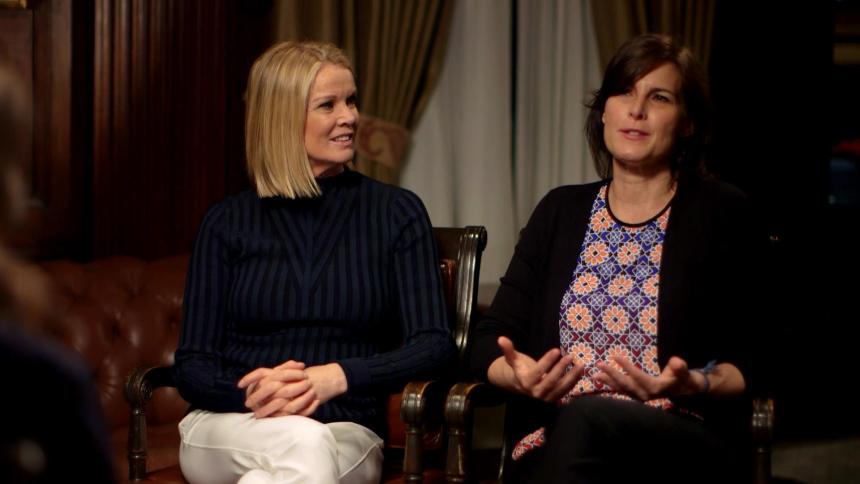
Adrienne’s experience: In politics and government, people often say (particularly to women) “wait for your turn.” While my male counterparts were out there seeking positions that appeared way above their experience, my female cohort mostly sought out the next-step or same-level jobs. To this day, I’m not sure where I found the nerve, but on one occasion, I decided to apply for a very senior position in Congress.
I didn’t get the job. However, what I found out later was that my name came up in another search among other top staffers. Although things didn’t work out the first time I raised my hand, I still came out better for it and my reputation was elevated to a much higher level.
Sometimes you win. Sometimes you don’t. But never undervalue yourself. Most of us grew up in a culture where “wins” are celebrated and “losses” are cause for embarrassment. That is not only nonsense, and that mindset can prevent you from a long-term success. The key is not in never “losing,” but in owning your losses and learning from them. Susan’s Experience: I was working with a client who was about to get some negative press. My proposed a communication plan was based on what I assumed was all the information I needed. It turned out that I actually didn’t have all the facts and the tricky situation turned into a full-blown disaster. After explaining the situation, the client really laced into me. I couldn’t argue with her – she was right. But because I started out the conversation with, “I was wrong,” and offered no excuses, she remained a client. From that point on, however, I never just took someone’s word again. And to this day, I question and re-question all of the information provided to me. I sure didn’t “win” that day, but I have never made that mistake again, which has helped me to be successful today. Susan and Adrienne: The bottom line is that success does not always mean a “win.” The outcome you don’t want can be an unexpected success. It is never going to feel good to be passed over for a promotion or role you really want, but don’t conflate a short-term loss with a lack of success. The real win comes from being engaged in the first place. Susan Del Percio is a New York-based Republican strategist and Adrienne Elrod is a Washington, D.C.-based Democratic strategist. Their column, “Politicking for Success,” appears bi-weekly on NBC News’ Know Your Value.
Susan Del Percio is a Republican strategist and a political analyst for MS NOW.
Adrienne Elrod
Adrienne Elrod is an NBC News and MSNBC contributor. A veteran of Capitol Hill and multiple campaigns, she served as a senior advisor to Hillary Clinton’s presidential campaign in 2016. Recommended



