








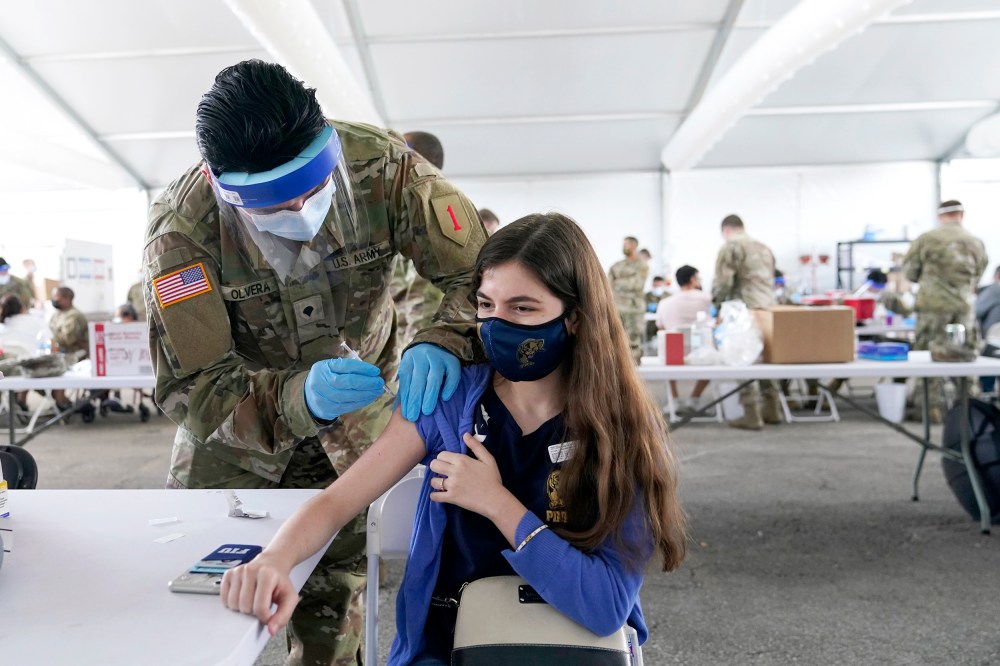
The good news is 150 million Americans have received at least one Covid-19 vaccine dose, with President Biden committing that every American will be eligible for the vaccine by April 19. And by July 4, he has promised we will be able to begin safely gathering again.
To make this dream a reality, however, requires vaccinating millions more Americans at a time of deep distrust in government. As vaccine availability expands, we should take a page out of the 2020 election playbook to ensure that the most marginalized and vulnerable Americans get the vaccine. That means women, especially women of color, will play a critical role in Getting Out the Vaccine (GOTV).
Women, after all, make the majority of health care decisions ― 80 percent ― for their families and are best positioned to help GOTV in their families and community, both immediate and extended. That’s why they are so critical to vaccine distribution and acceptance. The more women embrace the vaccine and encourage others in their family and community to do the same, the more likely we are to see widespread vaccine adoption.
This will be hugely critical for communities of color. Minorities have been disproportionately devastated by the Covid-19 crisis ― dying at higher rates than Americans overall but also have been more skeptical about the vaccine and face the biggest obstacles to accessing it.

We can also take lessons of grassroots activism from the historic turnout in the 2020 Presidential election (despite the many unique challenges presented by the Covid-19 pandemic) and use them in the 2021 Get Out the Vaccine effort.
For example, during elections, citizens of every state need to know the state rules, be able to easily find their polling places and learn what’s on the ballot. Similarly, as vaccines become more widely available, Americans in every state will need accessible, reliable information about how, when and where to get the vaccine in their community. They also need trusted voices encouraging them and helping them to get it.
And like challenges to ballot access in the 2020 election, vaccine access has been plagued with obstacles keeping minority Americans on the sidelines. There are not nearly enough resources for folks to find a place to get vaccinated ― the online systems are difficult to navigate and frankly just inaccessible for far too many people. If community organizations that spent 2020 getting out the vote by making phone calls and knocking on doors shifted to the same strategy, but focused on helping people make and keep vaccine appointments, we could radically accelerate the vaccination progress and ensure greater equity and inclusion in the process.

The high turnout in the last election was due in large part to the vast network of grass roots organizations across the country deeply embedded in diverse communities, who registered and turned-out millions of people. Many of these organizations are driven by women volunteers, especially Black women, who have been the engines of Black voter turnout for decades. The strategy worked.
So what can we do now? The Biden administration, in partnership with state governments, should do more to empower local grass roots organizations, especially in minority communities, with the tools they need to mobilize armies of volunteers to reach vulnerable people who haven’t been able to access the vaccines. And women who turned out on masse to help mobilize voters in 2018 and 2020 would certainly step up if given the opportunity and resources to do so. When it came to the 2020 election, thousands of volunteers worked to ensure voters had the right information and the right resources to cast their vote. If 2020 taught us anything it’s that the power of collective effort can yield extraordinary results. Now it’s time to apply the same energy, commitment to the greater good, civic volunteerism and focus to help vaccinate the millions of Americans who still need it. Let’s Get Out the Vaccine and leave no eligible person behind. Lauren Leader is co-founder and CEO of All In Together, a non-partisan women’s civic leadership organizations. She tweets @laurenleaderait Dr. Loren Robinson is chief medical officer and vice president of medical affairs at CHRISTUS St. Michael Health System. She tweets @DocLoRo
Lauren Leader
Lauren Leader is the co-founder and CEO of All In Together. She is a frequent contributor to Know Your Value. She tweets @laurenleaderAIT
Dr. Loren Robinson Recommended


