








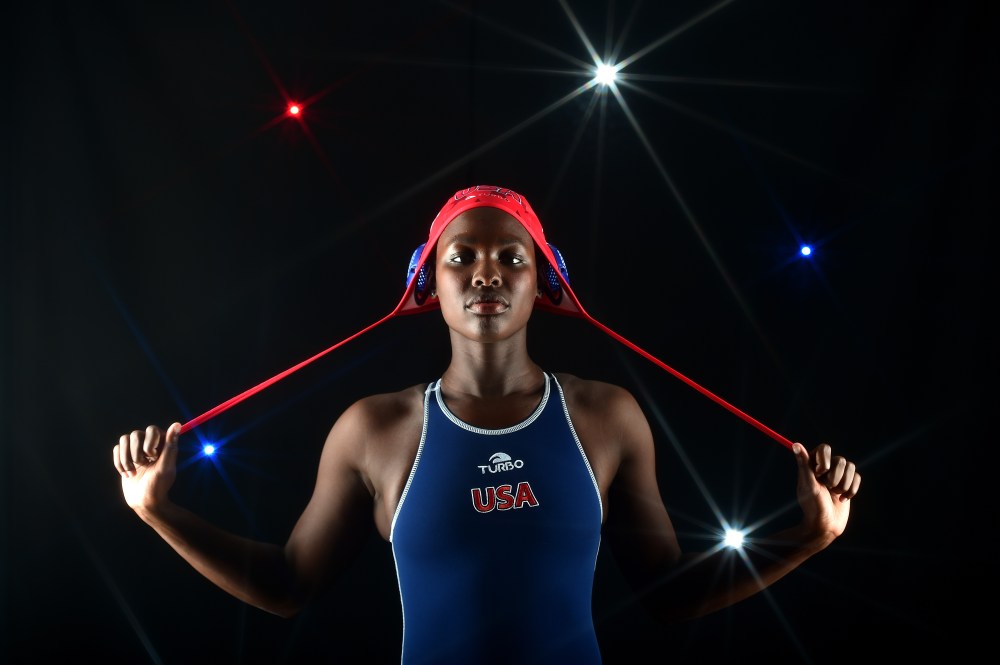
If anyone knows how to pivot and adapt during uncertain times, it’s Ashleigh Johnson.
The gold-medal-winning water polo player said she was devastated when she heard the Tokyo Olympics were being postponed until 2021 due to the coronavirus pandemic. But thanks to her training as an elite athlete, the 24-year-old goalkeeper is used to shifting and recalibrating at a moment’s notice. And she’s using those same techniques to get her through this difficult time.
Johnson recently chatted with Know Your Value about shifting perspective, mental toughness and how she’s smashing the stereotypes of being a Black athlete in a predominantly white sport.
Know Your Value: What was your initial reaction when the Olympics were officially postponed?
Johnson: “When I heard the news that the Olympics were officially postponed, I felt a combination of shock and disbelief that day and for a few days after. The Olympic Games is the one event on our schedule that you plan everything around and that you never expect to move or change, so it took me a while to actually accept the postponement and adjust to the new reality of training another year towards our goal.”

Know Your Value: How did you mentally shift perspective after the official postponement? What strategies and tactics have you used to adjust and move forward?
Johnson: “Shifting my perspective after the news of the postponement wasn’t easy, but it was easier with the support of my teammates and our sports psychologist. As a team, we spend a good amount of time understanding and practicing mental flexibility and self-awareness, which are both useful in a high-intensity situation where you’re competing for a spot on an Olympic Team circumstance, but also very necessary skills to have in the event of a global pandemic.”
Know Your Value: What advice do you have for people based on your own adjustments while trying to weather COVID-19?
Johnson: “Living with so much uncertainty is difficult for me personally, as I’m sure it is for many people, but what has helped me adjust to the new reality of COVID-19 is putting in effort towards understanding myself, giving myself permission to feel and process the big emotions, negative or positive, and making space to connect with my support system.
Know Your Value: What was it like as a kid being Black in such a predominantly white sport?
Johnson: “Being Black in a predominately white sport is an interesting experience. The most prominent thing that I can point to in my experience growing through the sport, especially once I was no longer playing alongside my brothers and sisters, is that it was very isolating at times. When I was younger, I got questions from other kids in the sport, parents, and even strangers asking questions like, “Can Black people float?” or “Black people don’t swim, how come you know how?” [I received] questions like these and other similar things that weren’t as direct, but meant the same thing and implied that I didn’t belong, and people like me didn’t belong. That put a lot of pressure on me when I was younger to either act like race wasn’t something that was part of my reality or absolutely crush the expectations that people had for me.”
Know Your Value: How does it feel to hear your Princeton coach compare you to Michael Jordan?!
Johnson: “It’s an honor to be compared to such an amazing competitor and someone who achieved so much in their career and was a global and athletic icon. He’s an incredible inspiration and I would love to have even a fraction of the positive influence that he’s had in his sport and on the world.” Know Your Value: How does it feel to have such high visibility as the first Black American woman Olympian in water polo? Do you feel like you have a unique responsibility? Johnson: “Having such high visibility as the first Black American woman Olympian in water polo is a welcome responsibility and an amazing opportunity. I have the chance to show how much opportunity there is in water polo from social, educational, and health and wellness perspectives and I’m able to do that while helping to tell a new story for Black people in aquatic spaces. We belong here and we thrive here. “ Know Your Value: What are your hopes for the future of water polo in terms of diversity? Johnson: “My hope for the future of water polo in terms of diversity is that it becomes a space that welcomes and appreciates difference. By creating an environment where each athlete can feel comfortable bringing their whole selves and identities, you build a community of people who know who they are, share that identity openly, and feel supported by those around them. We’re all at our best when we can be wholly present.’ Know Your Value: What’s something about you that might surprise people to know? Johnson: “When most people hear that I grew up in Miami, they think of the South Beach type lifestyle, but I actually grew up on a small farm in the agricultural part of Miami and had animals like goats and cows growing up.”
Know Your Value staff Recommended


