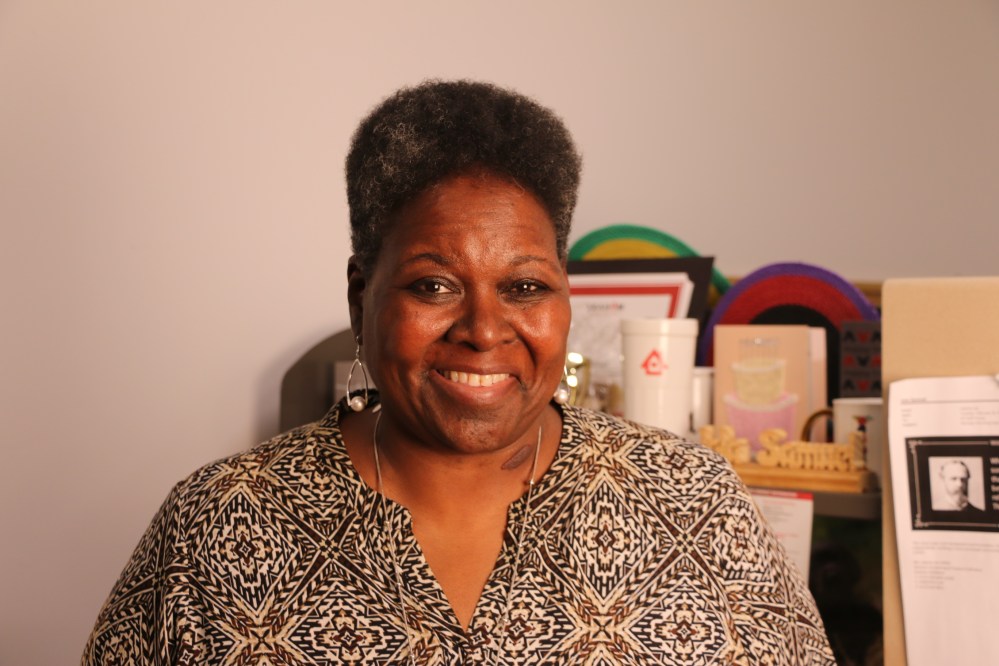
Kym Hardy Watson will never forget the cold November day she was separated from her parents and siblings and entered the foster care system.
Growing up in New York City, her parents struggled with alcoholism, drug addiction and domestic violence. She always felt loved by her mom and dad, but her home life began to spiral out of control. It culminated in the 1970s when Watson, who was 8 at the time, and her three younger siblings, who were 4, 6 and 7 years old, were separated and placed in separate homes.
“It was a very emotional and turbulent moment with my younger siblings screaming and pulling away from the social workers who were prying them from my mother,” recalled Watson. “To this day, I can still hear them screaming and my mother trying to quiet them and assure us everything would be OK.”
Although their months-long stay in foster care was relatively brief, it had lasting repercussions. While Watson and one sister were placed with a kind, nurturing family, her two siblings who landed elsewhere didn’t fare as well. “They experienced some abusive behavior that to this day, neither one is fully comfortable or able to talk about,” she said.
Decades later, Watson’s journey has helped inform her new role as president and CEO of Graham Windham, one of America’s oldest social service agencies for children and families.
The non-profit was founded in 1806 as an orphanage by philanthropic women, among them, Elizabeth Schuyler Hamilton, the widow of Alexander Hamilton.
Watson is carrying forth that legacy as the first Black woman to helm the organization in its 215-year history.
“Being entrusted with the lives of New York’s children and families is a precious responsibility that I hold dear and take very seriously,” said Watson, who arrived at Graham in 2010 and served most recently as its Chief Operating Officer. “Growing up in Brownsville-East New York and raising my own family in Bedford Stuyvesant, I have both been on the stage and had a front-row seat for the everyday drama of life of these underserved communities that I love.”
Watson, who holds degrees from Fordham University and Baruch College, CUNY, began her career in the 1980s after a summer job working with youth at St. Christopher’s Home.

Along the way, she’s been a caseworker on the front lines during the crack cocaine epidemic. She later created “Project Reconciliation” for mothers and daughters incarcerated together at Rikers Island. Her work has garnered numerous honors, and she appeared in the Netflix documentary, “The Kalief Browder Story,” which chronicles the challenges for youth and families in the criminal justice system.
Today, Watson leads a team of 450 employees and another 1,500 volunteers at Graham Windham, which has school-and-community based sites in Harlem, Brooklyn, and the Bronx. Their programs for foster youth and the community reach 4,000-plus people, most of whom are disproportionately minorities.
“Neglect, abuse and maltreatment — one of these three things,” Watson said, when asked what typically brings children into the system. Overwhelmingly, she added, poverty is a common denominator.
“Nearly 11 million children in America are poor,” Watson wrote in a recent op-ed for The Hill. “The grip of poverty is unrelenting — and the more families grow closer to the brink of crisis, the more likely their children are to come into contact with the foster care system.”
Poverty, she wrote, is too often conflated with neglect. “If families simply had the financial means to care for their children how they want to, we could circumvent thousands of families entering the child welfare system.”

Nationwide, more than 632,000 youth were in foster care in 2020, according to federal data from the Adoption Foster Care Analysis Reporting System (AFCARS).
Congress is taking notice on the issue. The Congressional Caucus on Foster Youth provides a forum for members of Congress to discuss and develop policy recommendations to strengthen the child welfare system and improve the overall well-being of youth and families. The bi-partisan caucus is co-chaired by Rep. Karen Bass (D-CA), Rep. Jim Langevin (D-RI), Rep. Don Bacon (R-NE), and Rep. Brenda Lawrence (D-MI) and has more than 100 members.
In addition to introducing legislation that aims to improve the lives of foster youth, the Caucus hosts briefings, hearings, listening tours across the country, and a Congressional Foster Youth Shadow Day.
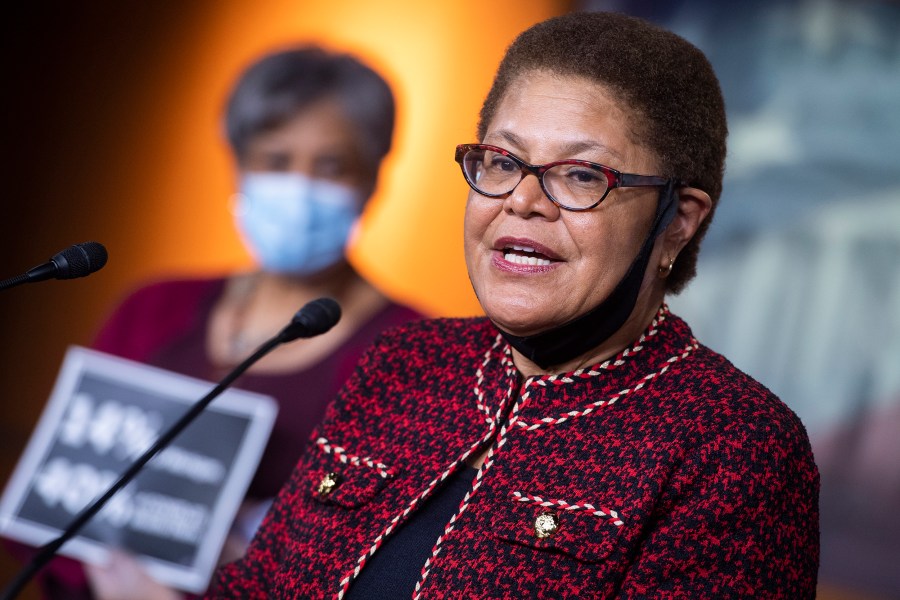
Rep. Karen Bass (D-CA) believes change is needed to preserve those aspects of child welfare laws that have proven effective. Her aim is to update federal policy so more children can safely and expeditiously leave foster care for loving, stable and permanent families. To that end, she introduced The 21st Century Children and Families Act in November. “I’ve spoken with former foster youth, social workers, and child welfare professionals over the years,” said Bass, who founded and co-chairs the bipartisan Congressional Caucus on Foster Youth. “And the consensus is that more needs to be done to improve foster kids’ options for stability in their lives.” For every child adopted from foster care, her office noted, two children are left awaiting a family; moreover, more than 20,000 youth age out of foster care every year. Bass indicated many youth languish in foster care or age out, in part due to existing laws. For example, states are currently required to terminate a parent’s rights when their child has been in foster care for 15 out of 22 months. “Premature modification of parental rights too often leaves children in foster care with no legal family,” Bass added. “The changes that I’m proposing focus the foster care system on the child and the idea that children should be at the center of our efforts.” As Watson continues her longtime commitment to center the voices of youngsters and families, she has a bold vision for Graham Windham’s future. It encompasses everything from amplifying their presence in local communities, to working with fellow advocates in New York City to create an inclusive, unbiased approach to helping families keep children safe. A major goal is dismantling racism in the child welfare system so it’s more racially inclusive and socially responsible. Watson’s perspective both in and out of the system guides the ordained minister, wife, mother and grandmother. “My experience is one that I have kept in mind as I have done this work. I know my reality and experience and also know what my siblings experienced, has haunted them all these years later. I know clearly that there are two very real faces of the foster care system, [one] that intends to help and save children but [another] that is also responsible for wounding and traumatization.” “I have always held both realities in my head when working with families,” she continues. “It is a very difficult thing for families to open themselves to help. When they do, the help they receive should address their needs and concerns in a compassionate, non-judgmental and humane way.”
Donna M. Owens Recommended