








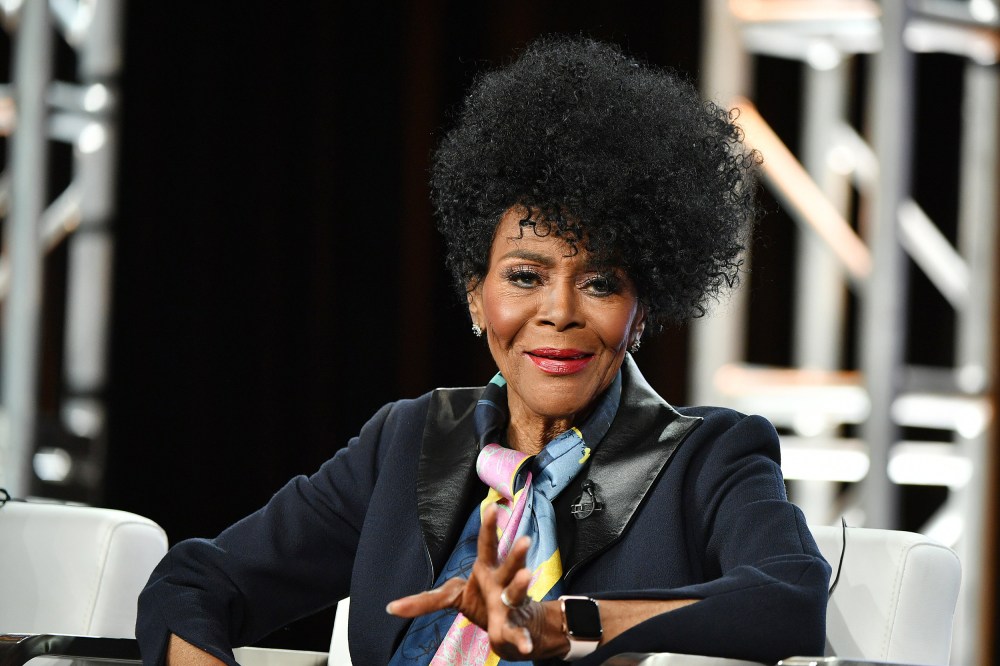
Actress Cicely Tyson spent her seven decade-long career uplifting our value.
In the boom of blaxploitation filmmaking, Tyson vowed only to accept parts that rendered Black women with “strength, pride and dignity.” This often left her out of work for months, even years at a time. But her unwavering defiance against roles that demeaned Black people inspired a generation of powerful Black actresses behind her.
After a lifetime of her ineffable grace on stage, in film, and on television, Tyson died on Jan. 28 at 96. Her memoir “Just as I Am” was released last Tuesday, several days before her passing. “My art had to both mirror the times and propel them forward,” she writes. “I was determined to do all I could to alter the narrative about Black people — to change the way Black women inp articular were perceived, by reflecting our dignity.”

Tyson was born in New York’s Harlem neighborhood, the youngest of three to West Indian parents who scraped by to make ends meet. Her parents separated when she was around 11, and she was raised by her strict Christian mother, Theodosia, who did not allow movies or dating.
After graduating from high school, she became a model, appearing in Vogue, Harper’s Bazaar, and other publications. She landed her first acting gig on NBC’s “Frontiers of Faith” in 1951. In an act of disapproval, her mother kicked her out. Her mother didn’t speak to her for two years, acquiescing only after seeing her daughter star in a drama at Harlem’s YMCA in 1956.
But Tyson continued, finding few roles in the 1960s for upcoming and talented Black actresses. It wasn’t until 1972 that she would take on a leading role spent years searching for: Rebecca, the wife of a Louisiana sharecropper, in the film “Sounder.” After her husband is imprisoned for stealing food for their children, Rebecca holds up the family in a harrowing struggle and resolve.
“That movie was, for me, the first acknowledgment that I could do something that would move people,” she said in a 2017 Elle interview with “How to Get Away with Murder” co-star Viola Davis. The performance earned her an Oscar nomination for best actress.
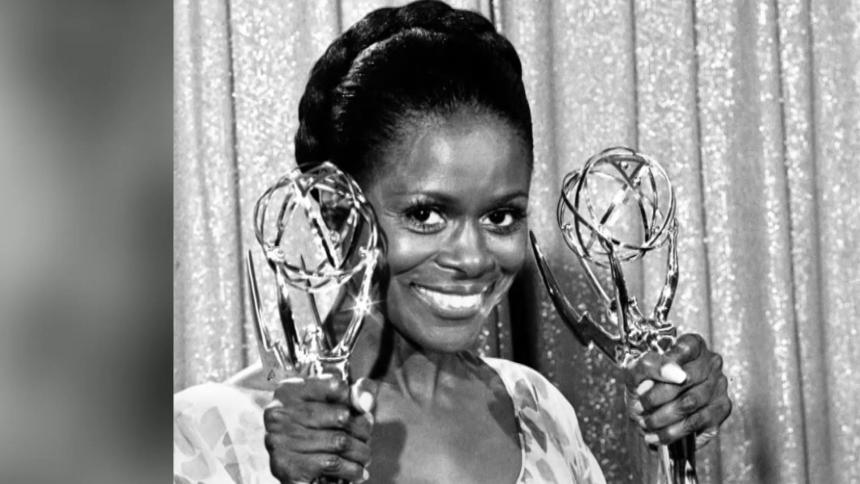
Tyson moved across the screen with elegance and natural grace. But make no mistake: her slender, dancer-like stature only gave the appearance of delicacy. She was an iron fist in a velvet glove, delivering each line like poetry punctuated by strength.
She went on to star in the 1974 “Autobiography of Jane Pittman,” and later as Coretta Scott King, Harriet Tubman, Marva Collins, and others to whom she brought some of the earliest ennobling portrayals of Black women.
“Cicely Tyson’s contributions have been titanic,” Gil Robertson, President of the African American Film Critics Association, told Know Your Value.
“From her early days as an actress, she symbolized the many realities of African-American women and had a profound effect on how Black women in the U.S. and around the world saw themselves and how the world saw them as well. During a time when Black people weren’t often seen on screen she delivered performances that spoke to our deep humanity and rich heritage.”
She knew her own value with unshakeable certainty. And what’s more, she knew our value. As Black women, as Black Americans, as human beings. No matter how poor or how hard of times fell upon a person, she insisted they deserved to be represented with the poise and resolve so quintessentially her.
She encouraged her Black colleagues to do the same. That strategic defiance against racist stereotypes inspired many Black actresses to follow in her footsteps. “You made me feel loved and seen and valued in a world where there is still a cloak of invisibility for us dark chocolate girls,” Viola Davis wrote on Instagram. “You gave me permission to dream….because it was only in my dreams that I could see the possibilities in myself.” Over the course of Tyson’s career, she appeared in over 100 film, television and stage roles. She won three Emmy awards and earned many from civil rights groups and women’s groups. By age 89, she became the oldest person to ever win a Tony for her performance in the Broadway revival, “The Trip to Bountiful.” A year later, she was a Kennedy Center honoree, awarded for a lifetime of kicking down doors so other Black women might walk through them. President Obama recognized her with the Presidential Medal of Freedom, the nation’s highest civilian honor. And by 2018, she received an honorary Oscar. Tyson reflected on her commitment to uplifting Black stories in a 2019 Time interview. “I said if I just reach one person, one person, then I will be happy,” she said. “There isn’t a day—I’m grateful to say—that when I walk out of my doors I don’t run into somebody who says, ‘I can’t tell you what you’ve done for me. You changed my life.’ To me, you can’t buy that. It just confirmed for me that I was on the right track and I stayed on the right track.” Natalie Johnson is a segment producer for “Cross Connection” and “The Sunday Show” on MSNBC and an illustrator from Brooklyn, New York. Follow her on Twitter @nataliejohnsonm
Natalie Johnson
Natalie Johnson is a segment producer for “AM Joy” on MSNBC and an illustrator from Brooklyn, NY. Follow her on Twitter @nataliejohnsonm. Recommended


