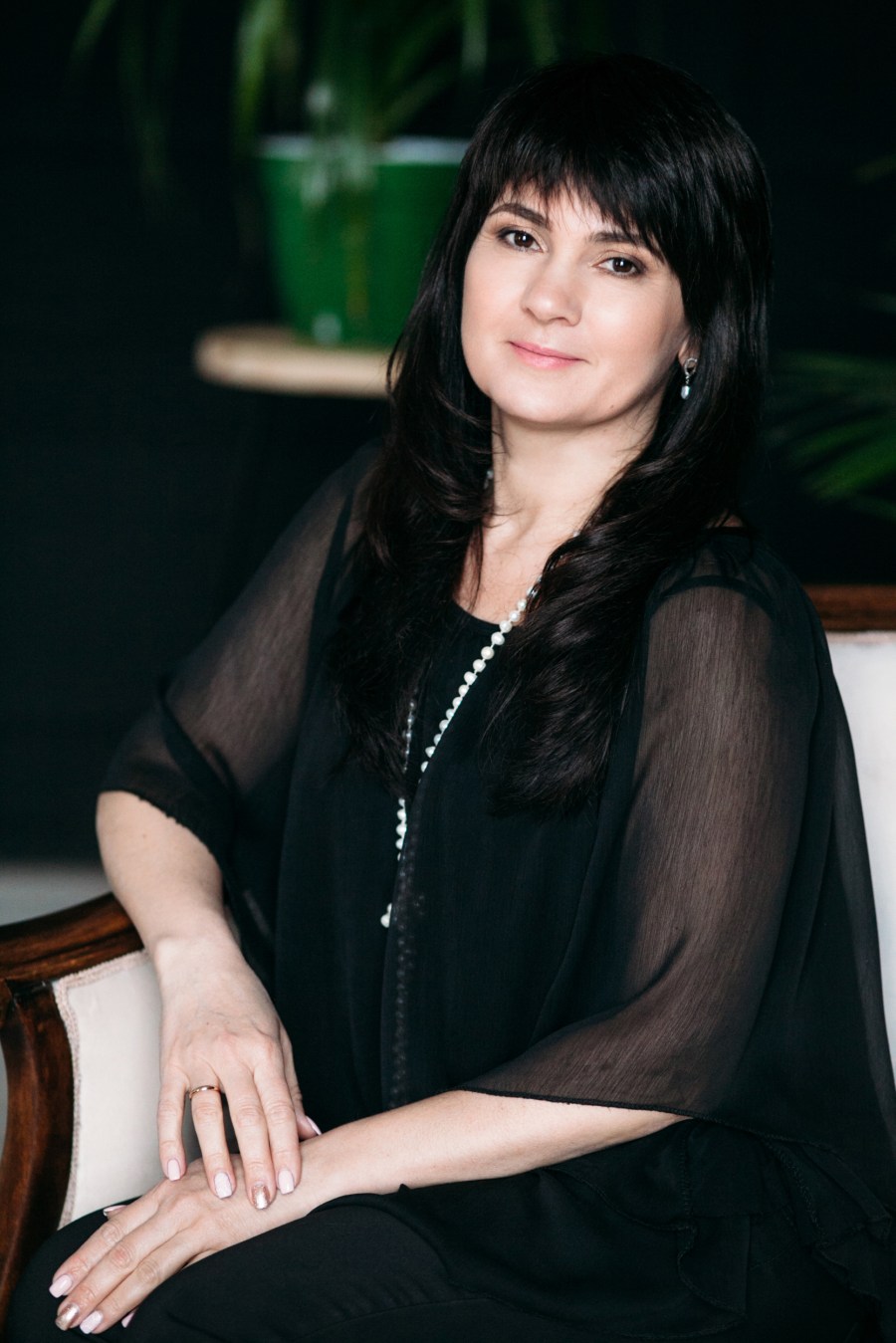
On March 5, just days after Russian forces invaded Ukraine, Elena Kuleshova fled her home in Slovyansk (in the Donetsk region) with her young daughters and elderly female relatives. After five days on the run, they finally arrived in Poland.

The war in Ukraine has been raging since Russian President Vladimir Putin launched his invasion along the country’s eastern border in February. His full-scale attacks to de-militarize Ukraine, root out nationalists and protect Russian speakers has killed more than 11,000 civilians and left entire cities in ruins.
For the survivors, more than 5.2 million Ukrainians have been displaced within the country or fled to others as refugees. Some might consider Elena one of the lucky ones who got out before a major Russian offensive slammed the Donetsk region, with the cities of Slovyansk and Kramatorsk directly in the line of fire.
I learned about Elena from a family member, who sent me a beautiful note he received from her two months ago. Elena’s bravery, determination and spirit was inspirational … and led to many more questions.
Stitching her life back together

“The five-day journey [from Ukraine to Poland] was very difficult, especially for the younger kids and our 87-year-old grandmother,” Elena Kuleshova explained to my translator, Olga Gutman. “Tears, bombings, ambulances, sleeping in different places, we overcame everything. And thanks to kind people we found a house in a small Polish village called Orle. It’s a quiet and calm place.”
Elena worked as a journalist and an accountant manager before she became a business owner in 2019. In Russian, “Rannia ptashka,” the name of her Etsy shop, means “early bird.” Two of Elena’s three children were born premature, and when Elena was unable to find clothing for her tiny babies at the time, she decided to start her own embroidery company.
When she was on the run to escape the Russian bombing in early March, the family could only take their essentials. “Everything we could take with us to the evacuation train fit into one bag: documents and one change of clothes for each family member,” she said.
With no money and no way to keep her business functioning, the family worked to earn what they could. “We took any work that was available,” she explained. “We made vareniki [Russian dumplings], baked cakes to order, helped the locals with cleaning, babysitting, and massages.”
Elena said she never thought she’d would have the opportunity to come back to embroidery, the work she loved and was forced to leave at her home.
Then as friends in her new community and those outside the country learned and shared Elena’s plight, they realized they had enough momentum to help her. Together, they bought Elena an embroidery machine to replace the one she had in Ukraine.

That generosity opened a door for Elena. Now she’s determined to get back on her feet financially and take care of her family. “I reopened my store a month later and my family will not be afraid that we may be unable to buy food or pay for our home or medical care,” she told my translator, who also contributed funding toward the new machine. “With the same strength of force that the Russians used to brutally destroy our world, [they] showed us a miracle of human support and care.
As extraordinary as Elena is, she’s not alone.
Through Elena, I learned about Natasha Oboroznaya and Natalya Kuzmenko, two more fierce and remarkable women who stopped at nothing to reinvent their lives in the face of unimaginable tragedy.
Crashing into a new opportunity
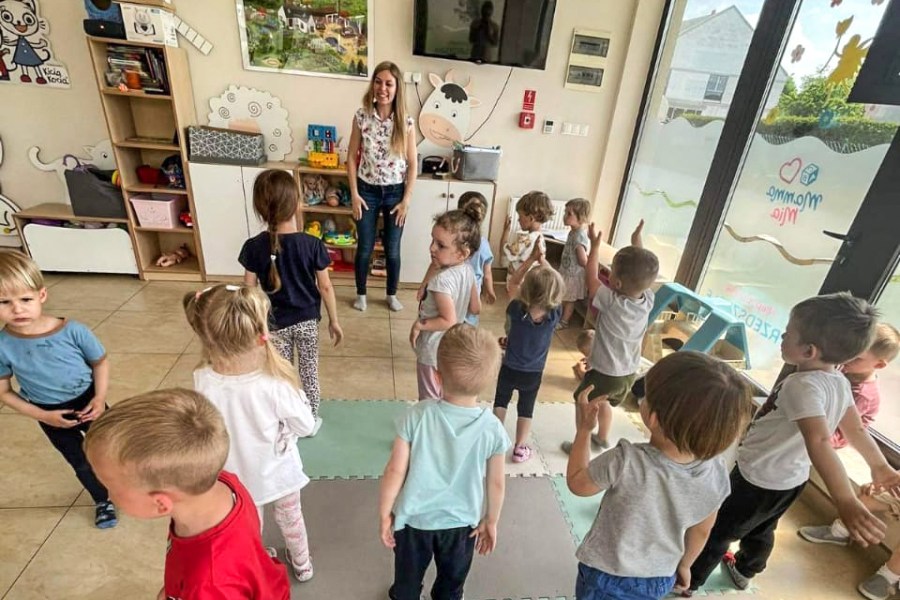
Before the war, Natasha Oboroznaya was a deputy director and a music teacher in Slovyansk, Ukraine. When the war started, she fled to Poland with her mother and two sons.
As Elena recounted, Natasha was unable to speak Polish and struggled to find meaningful work. Since the family needed to be fed, she took any work that was available. Natasha cleaned houses, helped with gardening, ironed clothes. Her diligence did not go unnoticed. Many locals in her Polish village saw how hard she worked and eventually she booked up completely, often for a few weeks ahead.

Then one day, as Elena explained it, Natasha and two of her friends were on their way to clean a house and had a car accident. The car was totaled but thankfully everyone survived. Natasha however, had multiple bruises, a broken clavicle and had to wear a medical corset for six weeks.
As a result of her injury, Natasha was forced to quit her cleaning job entirely. Out of necessity, she started studying Polish intensely and in two weeks she learned enough of the language to book her first students for piano lessons. A few weeks later, she was hired by a kindergarten to work one day a week and teach early music education. By the time the doctors permitted her to stop wearing the medical corset, she had no time left for cleaning jobs. She is now in demand as a music teacher and has her own tutoring business working with local children, as well as teaching online.
Natalya Kuzmenko is from the southern city of Melitopol, Ukraine – one of the first towns which came under control of the Donetsk People’s Republic – and is now occupied by Russian forces. At the onset of the war, her husband left home to take care of their three elderly grandmothers in a small village outside the city, Elena said. Natalya tried to continue with her job as a bookkeeper and accountant for a local pharmacy chain. She stayed in Melitopol alone, often without any ability to communicate and in immediate danger of being shot or killed. But on March 3, her life crumbled into pieces. Natalya’s teenage son Maxim was in Bucha where he volunteered to deliver food to the locals and feed homeless animals. While he was driving with two other friends that day, his care was fired upon at close range by a Russian tank. Everyone in the care was killed. Natalya and her husband were not allowed to take his body. Elena said the three youngsters were buried a few days later in the yard of one of their parents. Meanwhile Natalya desperately tried to work with the local prosecutors on charges to present the case as a military crime. So far, she has not been successful, according to Elena. Faced with unspeakable tragedy, Natalya fled Melitopol and is now in Kiev, where she’s turned her designing hobby into a burgeoning accessories business to keep her family afloat. “Ukrainian women continue to broadcast love to the world and continue to create beauty,” Elena said of Natalya. “I admire her so much.”
Susan Del Percio is a Republican strategist and a political analyst for MS NOW. Recommended


Creating beauty despite an unspeakable loss