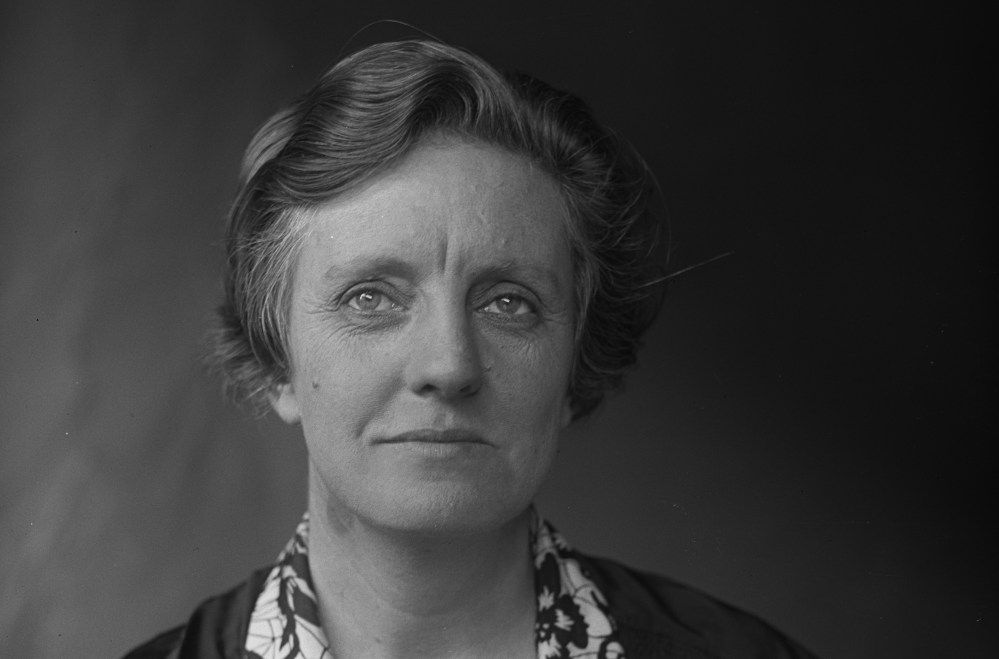
Elsie Robinson was a woman before her time.
In the early 1900s, Robinson went through a scandalous divorce and found herself a single mom with a chronically ill son. Robinson, however, dreamed of becoming a writer and was willing to do anything to accomplish her goal — even swinging a pickax in a gold mine to support her family and pay the bills.
She eventually became known for her incredibly popular, syndicated Hearst column, “Listen World,” which was read daily by 20 million Americans for over 30 years. In their new book, “Listen World!: How the Intrepid Elsie Robinson Became America’s Most Read Woman,” authors Julia Scheeres and Allison take a look at Robinson’s trailblazing legacy. From taking on male bosses, to fighting for equal pay – and eventually becoming the highest-paid woman in the Hearst organization, Robinson stood up for what she believed in.

Know Your Value recently chatted with Gilbert about the new book and what women today can learn from Robinson’s life.
Below is the conversation, which has been edited for brevity and clarity.
Know Your Value: Why did you write a biography of Elsie Robinson?
Gilbert: After my mother died, I found a piece of paper hidden inside a book that had belonged to her. It was a poem, attributed to a woman I’d never heard of, Elsie Robinson. The poem was full of tough-love and compassion, and I found the words comforting and healing … I’ve kept this fragile piece of paper for 26 years. It was my curiosity about Robinson that set the course for writing this biography.
Know Your Value: In your research, what was the most surprising thing you learned about Robinson?
Gilbert: Before media powerhouse William Randolph Hearst hired Robinson in 1924, making her the highest-paid woman writer in his empire, she worked as a common laborer in a California gold mine, the only woman in a motley crew of prospectors. She was a single mother and needed a way to support herself and her chronically ill son. For three years, she wore spiked boots and cheated death 600 feet below the surface of the earth, spending her evenings by candlelight bent over a typewriter, trying to develop her skills as a writer.
Know Your Value: What can women today learn from Robinson, especially about taking a gamble on self-fulfillment and professional success?
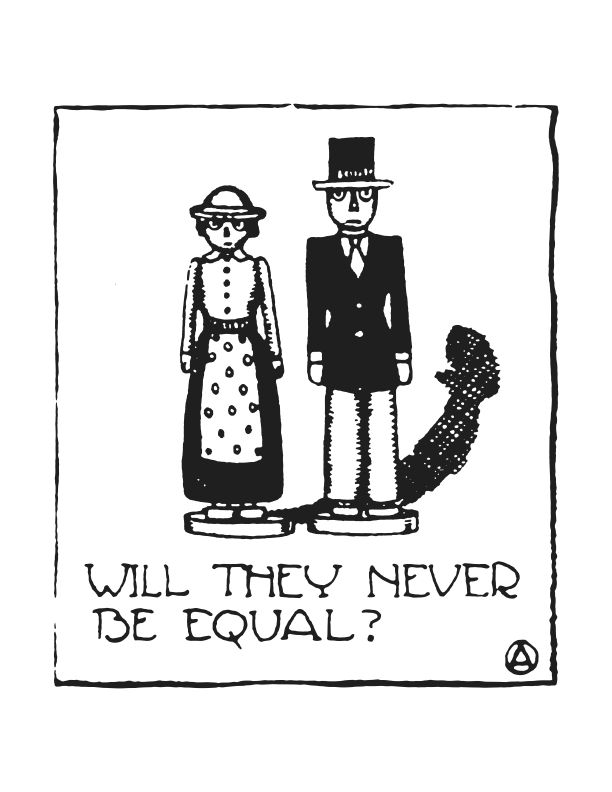
Gilbert: Robinson’s career took off in 1919, when she launched a wildly successful children’s column as “Aunt Elsie” for the Oakland Tribune. She wrote and illustrated the stories. Dozens of Aunt Elsie clubs were established throughout California, and the Tribune created membership cards and pins for her young and passionate fans. The paper also hosted variety shows at local theaters. As many as 3,000 children would attend these live shows, with lines going for blocks and police on hand to handle the crowds.
The “Aunt Elsie” brand started only because Robinson had the idea and made it happen. A year before, in 1918, she noticed the Tribune didn’t have a children’s section and she convinced the paper’s top editor to give her a chance. This took moxie, but her ambition was grounded in talent. She’d frequently craft and draw stories for her son on days he was too ill to go to school. She honed her skills at home, perfected them, and doing so gave her the confidence to push forward professionally.
Robinson would go on to make history writing her “Listen, World” column and being one of the first columnists in the country, male or female, to also draw her own editorial and political cartoons… Know Your Value: Robinson fought to get paid what she was worth. What advice would she offer that is still applicable today? Gilbert: Robinson was direct and put her demands for better pay in writing. She’d first address her concerns to her immediate supervisor, typically an editor, but then, if she didn’t get the response she wanted, she wasn’t shy about going over his head (her bosses were always men). Her approach always included proof of her worth: she’d assemble the applicable data, providing an accounting of her growing fanbase. In 1940, she made such an appeal to multimillionaire William Randolph Hearst. This took gumption and guts. At the time, Hearst was still a megaforce, heralded as America’s most powerful publisher. But when Elsie failed to get traction otherwise, she didn’t see a reason to stop advocating for herself. The advice that’s still applicable today is clear: know what you want, assess your value, document your success, put your “asks” in writing, start with your boss, but if you don’t get the results you want, elevate your concerns. Know Your Value: While Elsie Robinson was one of the most powerful people in the country, she’s been largely forgotten. Why is that? Gilbert: Women’s histories have been steadily erased over time. Not too long ago, the National Women’s History Museum hosted “Where Are the Women?,” a two-hour summit about the way American students learn history in school. The research found that of the 737 historical figures taught in K-12, only 178, or 24 percent, are women. This includes, by the way, fictional characters such as Rosie the Riveter. One reason for the marginalization of women is that social studies in the United States, education experts say, is a “masculinized school subject.” Lessons tend to center on war and politics – diminishing the areas where women have been the most influential, among them, voting rights, health care, gender discrimination, working conditions, and journalism. This patriarchal foundation, while improving, has yet to be fully remedied and still fails to affirm the lives of all women.” Listen, World!,” the first biography of Robinson, aims to restore this one woman’s remarkable legacy.
Know Your Value staff Recommended