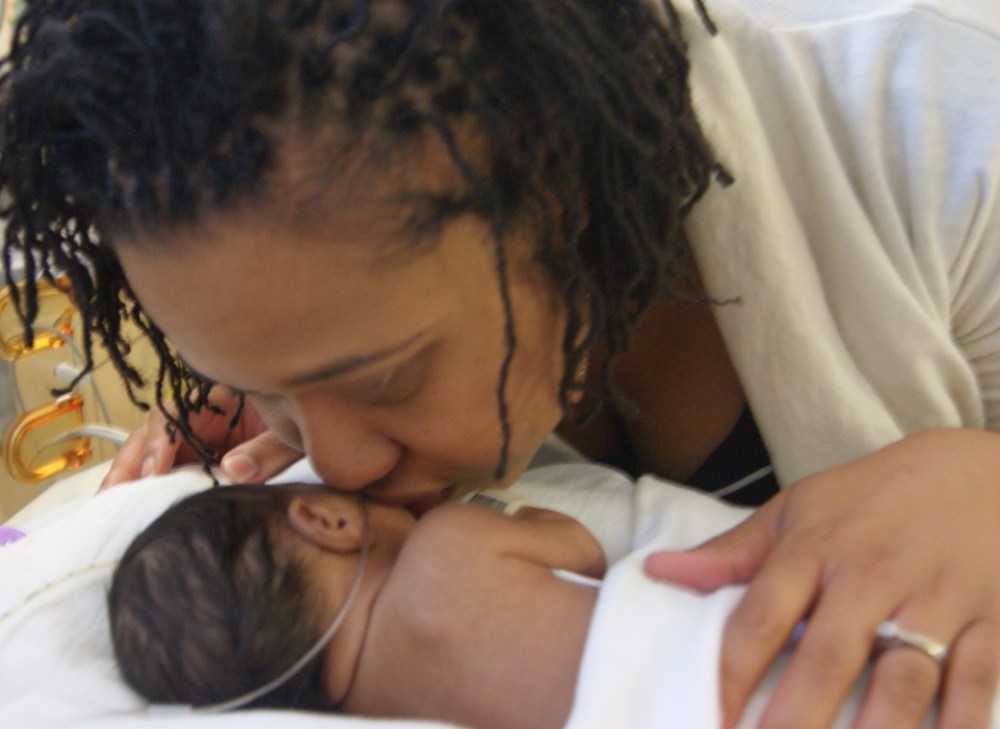
When newly-pregnant Jessica Wade and her husband went to their first doctor’s appointment in 2013, they got news no parent wants to hear — the doctor said he couldn’t detect a fetal heartbeat. With the fetus unviable, he suggested she undergo an emergency procedure similar to an abortion. Wade’s husband urged her to wait a little longer, and when they later visited a different medical provider, that doctor found not one but two heartbeats. While the news of twins left her joyous, she was stunned by her first doctor’s recommendation.
“I just felt extremely dismissed,” Wade said. “I don’t know if it was because I was a Black woman, but I just wasn’t given the information I needed about the procedure.”
Research shows that Wade’s experience isn’t uncommon among pregnant Black women, and the racial disparities in the maternal health care system are having disastrous consequences. Black women are around three times more likely to die from a cause related to pregnancy in comparison to their white peers, and in some parts of the country, that rate is twice as high. Overall, more women die from childbirth and pregnancy in the United States than in any other country in the developed world. Of these 700 deaths each year, 60 percent are preventable.

“We see the staggering numbers regardless of education or economic level in terms of Black women, so it’s just across the board,” said Tammy Boyd, the chief policy officer and legal counsel of the Black Women’s Health Imperative. “In some third-world countries you would have a better outcome there than you have here in the U.S.”
Now Wade, 34, is the founder and executive officer of the non-profit organization Mighty Little Giants, as well as a doula and a lactation specialist in the Los Angeles area. Her personal experience marked neither the first nor the last time she witnessed disparities in the maternal health care system that are all too familiar to Black women.
“For me, now that I’m in the work that I’m in, I do believe a lot of what I went through was because of the color of my skin,” said Wade, who spent 58 days on hospital bedrest during her pregnancy and recalled her pain being overlooked and dismissed several times, including a crucial moment in her labor and delivery.
“I’m in pain,” she remembered telling the nurses while sweating and crying. They told her she was fine, pointing to the monitors that showed her and her baby’s progress. “Don’t look at the monitors,” she told them. “Look at me. I am not OK.”
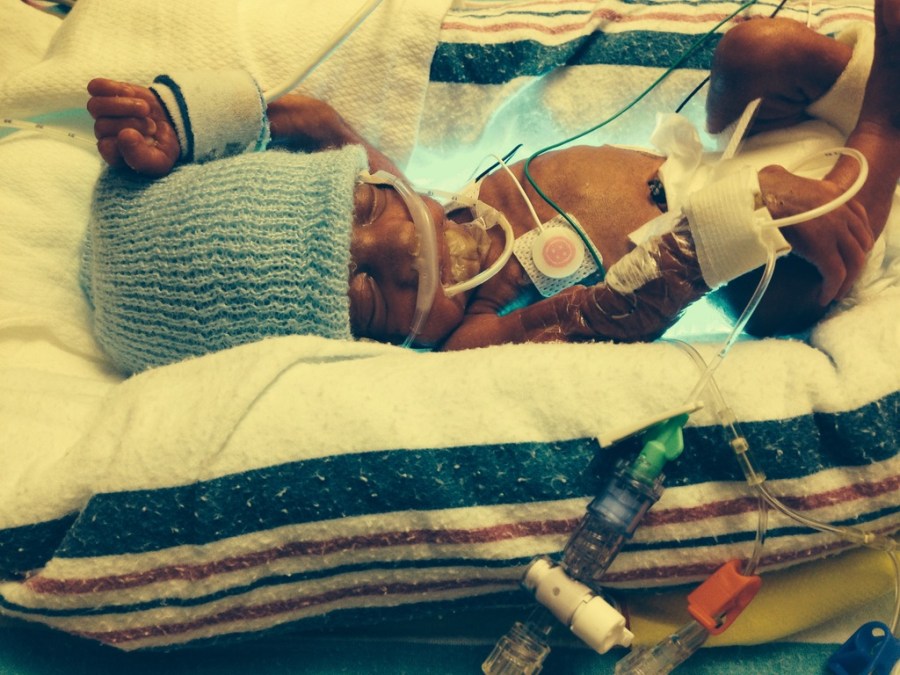
It turned out that the band around her belly that reported critical health data to the doctors and nurses was broken, blinding them to Wade’s condition. She was 10 centimeters dilated.
“I literally gave birth to my son in the hallway because the NICU team wasn’t ready because nobody listened to me,” she said. Wade, who had earlier miscarried one of the twins, said her other son, Marlon Jr., born on Feb. 27, 2014, spent the next 143 days in the NICU.
“I felt like I had no control over my birthing experience. I felt like I had no control over anybody,” Wade said. “I felt like I was screaming in silence.”
Research shows that everything from implicit bias, to discrimination over public versus private insurance, to a health care system riddled with racial disparities writ large, to systemic racism comes to bear on the Black maternal health crisis. Members of Congress formed a working group this year to draft the Black Maternal Health Momnibus Act of 2021, a collection of bills aimed at achieving better outcomes for Black mothers. And in April, Vice President Kamala Harris published an open letter to Black moms with advice for expectant mothers after inviting Black moms to discuss the issue with her at the White House.

Black women are often “not listened to when they’re expressing their concerns and their pain and discomfort,” said Karie Stewart, a certified nurse midwife in Chicago. “And so there’s a lot of mistrust and care is not provided properly.”
The crisis is linked to a wider issue about health equity — something that came into widespread discussion last year as the Covid-19 pandemic disproportionately ravaged communities of color. Achieving equity involves accounting for the needs of people who are at greatest risk and are disadvantaged due to their social circumstances. It can impact everything from quality of life and life expectancy to rates of disease and access to treatment. “In neighborhoods that are very affluent and predominantly white, you have no problem finding a pharmacy on the corner [or] an institution that has enough clinics,” said Stewart, who serves as the Director of Midwifery at the University of Chicago’s Family Birth Center and is the founder of the non-profit Melanated Midwives. “But on the South Side where it’s predominantly Black and brown it’s lacking, from grocery stores, to pharmacies, to labor and delivery units. It’s unacceptable and that also contributes to the disparities.” These factors have contributed to Covid-19 vaccine hesitancy in Black communities, which has been fueled by obstacles to vaccine access like the absence of Internet access, flexible work schedules, and dependable transportation. Beyond that, deep mistrust persists after decades of cruel scientific experimentation on Black people at the hands of white scientists, doctors and researchers. Kimathi Coleman is a doula in Memphis, Tennessee, a city that disproportionately suffers from Black maternal mortality. She spoke about a deadly and racist perception Black women face. “[Medical providers] see a Black woman or a Black person and they feel like either we can take more pain than a white person, which is not true, or that we should just be able to tolerate it and be okay,” said Coleman, who is also the co-director of the community-based childbirth education and doula service Birth Strides, “or [that] we should just do whatever they say we should do with our bodies because for so many years, they’ve been pretty much experimenting on our bodies.” If a hesitancy to seek medical care doesn’t keep a person from getting to her doctor’s appointment, logistical challenges can. And the brunt of those hardships are borne by mothers with more childcare responsibilities and less help at home. Research shows that’s more often the case for Black mothers than their peers. “People think that they’re not coming to their prenatal [appointments] just because they don’t want to, but a lot of times they don’t have a way to get there,” Coleman said. “So it’s not always, ‘I don’t care about my health. I just don’t want to come.’ It’s ‘I don’t have somebody to watch my kids’. ‘I can’t get on this bus because I don’t have any money’, or ‘I don’t have a car.’” “Let’s find ways to make it easier for these people to get the health care that they need,” she said. “They want it. They just need to be able to access it.”
Erin Delmore Recommended