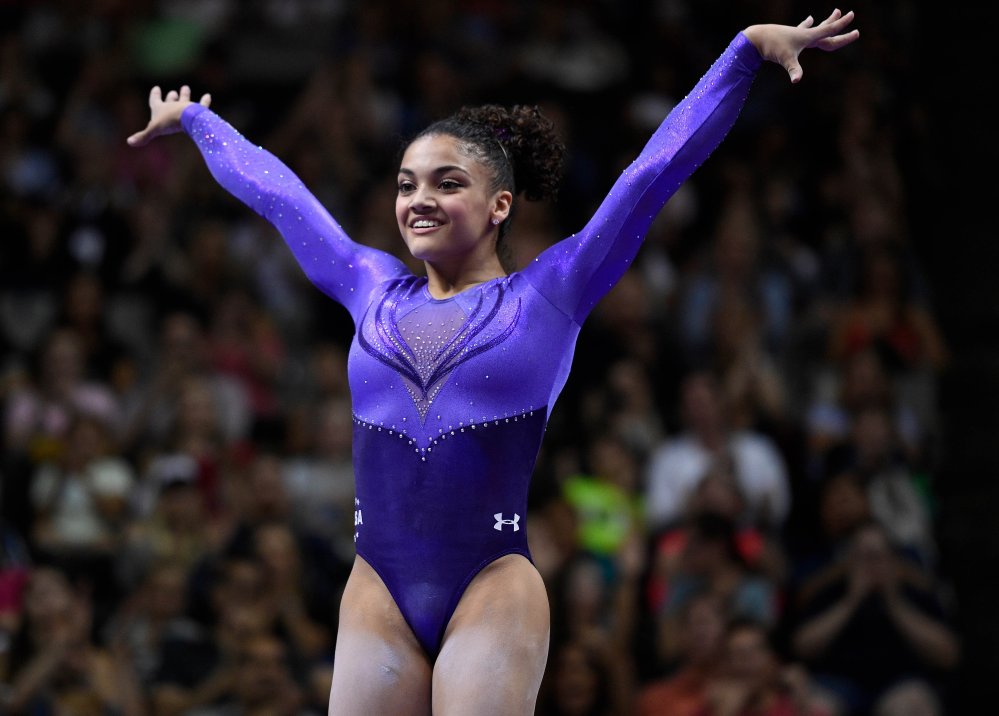
For Olympic gymnast Laurie Hernandez, being Puerto Rican in a Caucasian-dominated sport has never felt like a setback. If anything, her heritage helped pave the way for her remarkable gold medal-winning career.
“Being brought up by two Puerto Rican parents, it added some flair into everything I do,” said Hernandez, who remembers dancing with her parents in their New Jersey house every Saturday morning as a child. “There’s a lot of passion. It narrows down to dance and music, and how I connect with that. I have parents who love movement.”
At age 16, Hernandez became the first Latina to make it to the U.S. Women’s Olympic Gymnastics team in 30 years. In honor of Hispanic Heritage Month, she spoke to Know Your Value about her career and her beloved culture.
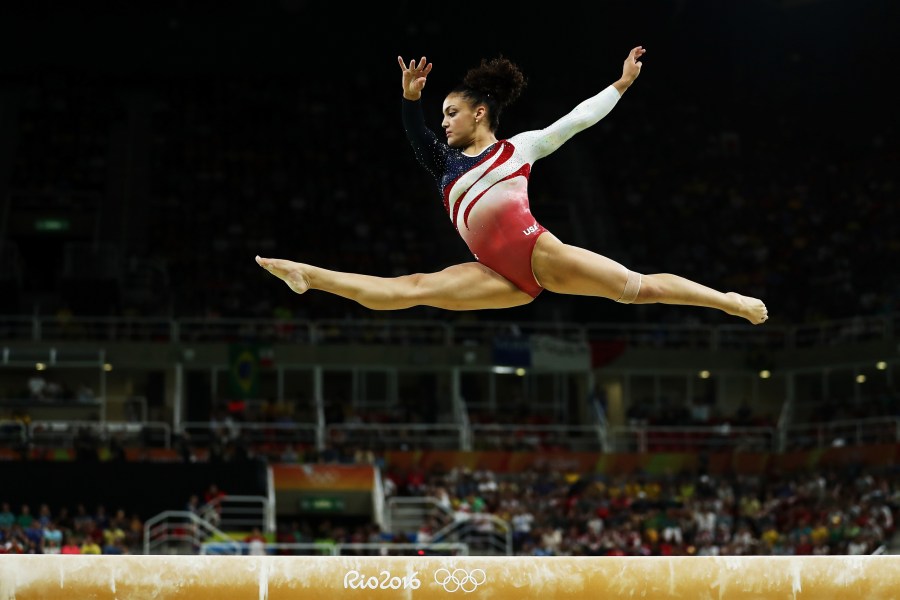
At the 2016 Summer Olympics, Hernandez rose to fame alongside teammates Simone Biles, Gabby Douglas, Aly Raisman and Madison Kocian, who formed the gold-wining “Final Five.” Hernandez, now 21, said she received a humbling amount of support from the Puerto Rican community at the time, and from the Hispanic community at large.
“Puerto Rico is home to me. It’s my home, it’s my culture,” said Hernandez. “There’s a lot of love in the community. You go visit that island and it’s like walking into Thanksgiving dinner with your cousins. It’s in the culture to be welcoming and loving.”
In December, Hernandez will give back by hosting Champions Challenge, a gymnastics benefit competition in San Juan. Gymnasts from the island and beyond are invited to compete, Part of the proceeds will go to various local causes including the Puerto Rican Gymnastics Federation.
“The biggest thing is making sure these kids are going in and feeling passionate and excited about gymnastics,” said Hernandez. “It is a competition, don’t get me wrong, but I don’t want these athletes to come in and feel immense pressure. I want them to see it as an opportunity to enjoy their gymnastics, to build a community.”
Born and raised in Old Bridge, N.J., Hernandez said she became interested in gymnastics when she was 5 years old. Her mother worked three jobs in order to support her ascension to the big leagues.
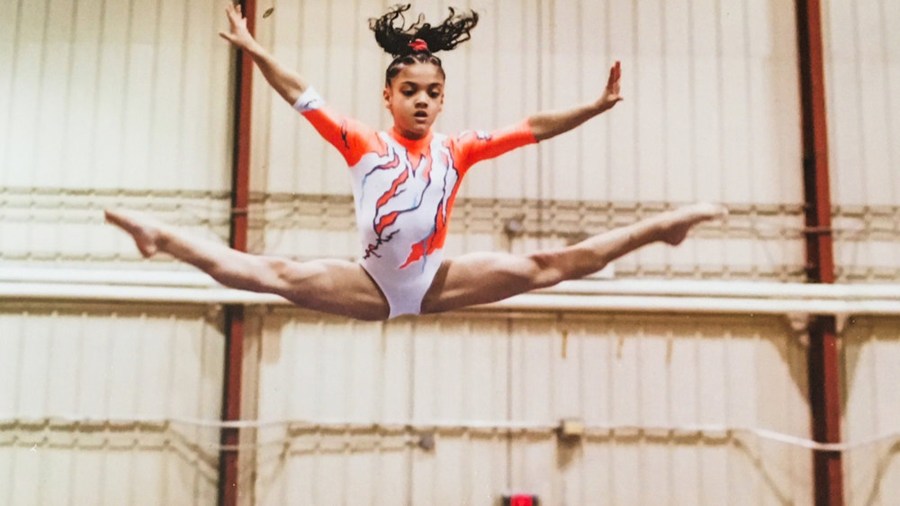
“I was just a kid who was excited about something,” she said. “She could have just said ‘no’, but she didn’t.”
Hernandez said she didn’t recognize the uniqueness of her journey, even though the sport was historically dominated by white girls.
“Ignorance is bliss,” Hernandez said. “I would find girls with curly hair like me, and that was my version of representation. I would see that other girls didn’t look like me, but I didn’t think twice about it.”
As she gained more prominence, however, Hernandez started to recognize that her achievements were important on a cultural level. “I get a lot of messages on social media coming in, like ‘I’m Afro-Latina too! We see you out there and it’s so cool to see someone who shares my culture!’” she shared. “I had one parent come up to me during a meet-and-greet who said ‘my daughter didn’t think she could do gymnastics, but she saw you, and now she thinks she can.’” Unfortunately, there are undeniable barriers to entry for Latina and Black gymnasts, Hernandez said. “It really has to do with the environment we’re in, and where we grow up and what we have access to,” Hernandez said. “Gymnastics is an expensive sport. A lot of times little girls may have the passion for it, but their parents can’t afford the tuition. That opportunity is stripped from the kids.” Still, Hernandez believes that, at its heart, gymnastics and sports are truly for everyone. She tells young aspiring gymnasts to believe in themselves and to avoid self-limiting based on preconceived notions. “Don’t pull yourself from the opportunity just because you yourself have gotten in the way,” said Hernandez. “Sport in general is inclusive, and gymnastics is what you make of it. It is for you. If that’s what you’re passionate about, that’s all you need to get into there.”
Halley Bondy Recommended