When Dr. Christine McGinn, Samantha Whitehorn and Christine Hallquist were starting their careers, the word “transgender” wasn’t in the lexicon. They felt different, but nobody knew the word for it. Whatever it was, it felt shameful.
So, they kept quiet. To the world, they were men.
In some ways, it proved advantageous. They were collectively drawn to male-dominated fields: electrical engineering, politics, surgery, computer tech, sports and the Navy. They each excelled and were ultimately very successful.
McGinn, Whitehorn and Hallquist embarked on their own unique journeys before transitioning into their true selves. There would be personal fallout and pangs of loss, but they are living their truth and remain at the top of their male-dominated fields.
They shared their stories during Pride Month in the hopes that one day, they will live in a world where their experiences are less of a remarkable feat.
Dr. Christine McGinn: The surgeon
Dr. Christine McGinn is extremely busy, which makes communication tricky. Interviews were conducted between a chondrolaryngoplasty (Adam’s apple removal), three vaginoplasties and a removal of a hormone-delivering implant. Then, McGinn had to hide in her car, away from her three kids, to get some quiet. All in a day’s work.
McGin has been out as transgender for about 20 years. In addition to being on staff at two Philadelphia hospitals, she runs the successful Papillon Gender Wellness Center out of New Hope, Penn., where she and her team conduct transgender treatments. She has also become an unintentional media darling, garnering headlines after successfully breastfeeding her twin babies and offering free surgery for transgender Navy veterans. She consulted on the film “The Danish Girl” for surgery scenes, and has appeared as a transgender advocate on The Dr. Oz Show, CNN and more.
“I didn’t set out to be so visible,” she said. “But I certainly have become visible.”
Dr. Christine McGinn was raised in Rhode Island and Pennsylvania. Born as “Christopher,” she knew even as a child that she wanted to fly planes and be a doctor.

“I wasn’t unhappy,” she said. “I wasn’t attracted to boys, so there was enough normalcy. I guess that I got by. I didn’t like puberty though. I didn’t like how that ended.”
McGinn attended Moravian College in Bethlehem, Penn., where she was in a fraternity. She kept very busy in school, which helped distract her from her identity.
McGinn joined the Navy to foot medical school costs, and she fell in love with the work. Before she transitioned, McGinn oversaw all of the squadrons in the reserve base. She conducted plane crash investigations and ran medical for flight shows. She was nominated Flight Surgeon of the Year.
“THE LIGHT BULB WENT OFF”
Then, in the mid-90s, McGinn started to surf the Internet and stumbled upon information about transitioning. Suddenly she’d found a name and voice for all of those lurking feelings.
“I started reading, and that’s when it was sort of like opening Pandora’s Box,” said McGinn. “The light bulb went off. Then, it was like ‘oof, I can’t put this away.’ Then it started weighing on me.”
For her Navy role, McGinn conducted thousands of flight physicals for pilots, which gave her a front-row seat to the “Don’t Ask, Don’t Tell” policies that gripped the Navy around 2000. She may have been remembered simply as an accomplished Navy man, but she reached a crossroads and had to make a choice.
“I have no bad feelings about the Navy. I wish I could have stayed in,” she said. “I had to choose. You couldn’t be trans and be in the Navy. I was the person who was evaluating people for being disqualified, so I knew.”
After the Navy, McGinn started the transition process in her late 20s, which meant losing her wife.
“I was married, very much in love with my wife,” she said. “It was really hard, one of the hardest parts of my life. I didn’t wanna do that to her. She was trying to be cool, but it didn’t work out. She’s not a lesbian.”
Later, McGinn enrolled in Philadelphia College of Osteopathic Medicine to start her non-Navy medical track as her true self.Being a woman in medical school came with its own set of issues.
“It was my first month, so the rumors hadn’t gotten out yet that I was trans … I didn’t know the answer to a question and I had kind of a nervous laugh. And this guy, the chief surgeon said: ‘Do you see that smile? That’s why women will never be taken seriously in surgery.’ But the funniest part was that he didn’t know that I had been in his boys club, and that I’d decided to quit.”
Once the man found out McGinn was trans, he excluded her from participating in surgeries, she said.
“That’s how discrimination happens, it’s all about opportunity,” said McGinn. “If you’re not invited to the fourth floor meeting to discuss, say, thoracic surgery because one guy is transphobic, you can’t participate later on.”

Just before her transition, McGinn had her sperm frozen so she could eventually have her own biological children. It was a pioneering idea, and it worked. Nine years ago, her partner gave birth to twins, and McGinn was able to breastfeed them since she had developed enough breast tissue by that point (having the inside medical knowledge didn’t hurt). After she and her partner split up, McGinn had a third child through a donated egg and a gestational carrier.
“Those kids are my life,” she said of her 3-year-old and her 9-year-old twins.
In 2007, McGinn opened her clinic, and says her work is as emotional as it is physical.
“Counseling is a big part of my practice, unofficially. Patients need that going through surgery ..When we do surgery, we’re putting them in touch with their feelings and letting them know it’s OK.”
Throughout her practice, McGinn has had to battle insurance companies and negative perceptions of her work, but the medical community is largely accepting of transgender surgical treatment in a controlled and regulated environment. She cited the American Medical Association’s recent bout of support for transgender treatments in the military.
“They are publicly saying, ‘listen we have data, and if you are diagnosed as transgender, then this treatment is undeniably effective and very safe,’” said McGinn. “It was reproducible data … Where else in medicine do you see this level of success?”
Christine Hallquist: 2018 gubernatorial candidate and former CEO of Vermont Electric Cooperative
In 2015, Christine Hallquist decided it was time to come out as a woman to her team of 107 employees at Vermont Electric Cooperative (VEC), the largest electric cooperative in the U.S.
To them, she had always been their CEO “David.” She had to tread lightly.
“If you’re a CEO of a company, you can’t just show up in a dress the next day. You have to prepare them,” she said.
Hallquist conferred with managers. She sent a company-wide email announcing her transition. She picked a date to return to work. Then, she ripped off the biggest Band-Aid of all: facing the cooperative’s line workers. There weren’t any female line workers, and now a transwoman would be their boss.
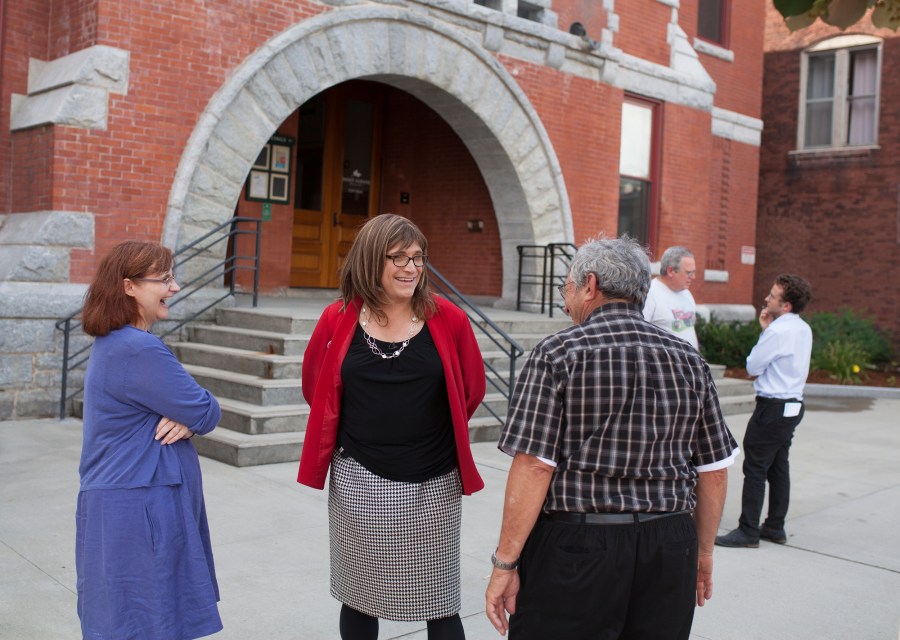
“I’ll never forget. I went to one of our district offices. I walked in, in the morning, you could see the guys toughening up, sticking their chests out. As I walk in the room they’re like ‘holy cow,’” Hallquist described. “There was some fear in the room. It was palpable, the tension … For a month, it felt like everyone was walking on eggshells around me. By January everyone was used to it.”
It was an endearingly awkward start, but this moment was actually the culmination of decades of agonizing. Hallquist was in her late 50s, and she was finally going to start living.
Previously, Hallquist had been an engineer at IBM. She’d spent 10 years as a technical advisor to the National Rural Cooperative Association, which provides electricity to rural America. After coming out as trans successfully to VEC, she was poised for a happy retirement. But, she wanted more.
“You would think that should be enough, and that I should be satisfied. I have a great job, I’m highly recognized all throughout the nation, I’m functioning well in a macho world … However, something happened in November 2016 that I couldn’t believe.”
After Donald Trump was elected president, Hallquist resigned from her post at VEC to run for governor of Vermont. She won the Democratic nomination, the first openly transgender person to ever do so. She lost to Republican incumbent Phil Scott after earning 40 percent of the general vote.

Her platform centered on equality, climate change, universal Medicare, and increased broadband access.
It was during her campaign run that she learned about the stresses of being a woman in a male-dominated government.
“I received more vitriol and hatred because I was a woman than because I was trans,” she said. “The glass ceiling is so hard.”
“I JUST HAD TO SUPPRESS EVERYTHING”
Hallquist was born in upstate Baldwinsville, New York as “Dave.” Her parents were supportive of her eccentricities (though Hallquist hid most of them), but school was torture. Nuns, she said, once told her parents that Hallquist needed an exorcism.
“Clearly, I was different,” she said.
Her parents transferred Hallquist to public school. There, the teachers were fine, but the kids were worse.
“I was getting beat up on the way to school, and I got beat up on the way home,” she said. “In ninth grade, I said ‘I’ve had it with this abuse. [I told myself] ‘I’m gonna toughen up and act like a man.’ …Once I started acting like a man, everyone was okay. At that point life got to be good. I just had to suppress everything.”
Out of fear, Hallquist became so good at hiding her true self, which proved advantageous as she pursued a career in electrical engineering. “I went into this male-dominated field… and I was very successful because I was faking it as a man,” she said. “Even if I was a woman, I wouldn’t have had the same success in life, let alone a trans woman, forget it.” Looking back, she said she faked her wife Pat and their three kids. “She didn’t marry Christine,” she said. “She married this image I created. I still have to reconcile the guilt that I’ve played a fraud on my spouse and my children.” For decades, Hallquist believed her life would fall apart completely if she came out. But, the charade began to crumble anyway when she hit her late 40s when she started having suicidal thoughts. “You can’t live this life any longer if you’re thinking of [suicide] as an alternative,” she said. Still, it would be another decade before Hallquist transitioned. She and Pat are still partners today, though their relationship is more familial and platonic. Since losing her bid for governor, Hallquist set off for Canada to embark on a new adventure as CEO of engineering venture Cross Border Power. She commutes from Canada to Vermont regularly. “We’re committed to solving climate change,” she said. “… It’s a new chapter.” It was “pink shirt day” on the information technology sales floor. About 20 computer geeks with sales prowess filed into the nondescript U.K. office, giggling among themselves. The culture was in full force. A man in the company hated pink, and it had become an office joke. One day, some employees decided everyone should come in wearing pink shirts in order to rib the guy and have a good laugh. Samantha Whitehorn was working there too. She knew that the prank was an exercise in thinly-veiled toxic masculinity. As the energy around “pink shirt day” swelled around her, Whitehorn sank into her work and didn’t say a word. She did not wear a pink shirt that day. “There was a lot of toxic masculinity,” said Whitehorn of her previous position in her male-dominated field. “If I ever spoke up, they might know something or figure something out about me.” “Pink shirt day” was one of many times Whitehorn stayed quiet about her transgender identity. As she rose the ranks in information technology sales, she quelled her true self for decades. Eventually, she moved to GCI, one of the largest IT firms in the United Kingdom. At age 32, she is now the youngest sales operations manager at the company. “I DIDN’T SHARE MY FEELINGS WITH ANYONE” Whitehorn was raised in Southhampton, U.K., born as “Paul.” As a teen, she laid low about her gender, especially after seeing a gay kid bullied terribly in school. “I didn’t share my feelings with anyone. If I was happy, it was internal, if I was sad it was internal,” she said. Meanwhile, Whitehorn nurtured her natural talent for computers. She grew up tinkering on an early Windows machine and was fascinated by how it worked. She didn’t graduate from college, but went straight into computer retail, where she worked with customers before becoming a senior sales staffer. She said she “hit the ceiling in retail” and moved on to Blue Chip Data Systems, an IT company that was ultimately acquired by GCI. She got promoted, and promoted again. In general, computer sales has a pretty macho culture, according to Whitehorn, so she was better suited to management. The new role gave her a perch away from the “drama.” Whitehorn married a woman who knew a bit about her identity, but it was framed as a hobby. Then, about three years ago, Whitehorn fell into a severe depression and couldn’t fight the need to transition anymore. She and her wife decided to split up, but the relationship is still amicable. “She needed a husband,” Whitehorn said. Whitehorn found herself in her late 20s, successful, single and able to experiment more freely. She posted a photo of herself on Tinder as Samantha. That’s when a colleague noticed her profile. “I was under my female current name. My face was in full makeup. I was expecting them to out me and for everything to be really bad, but they spoke to me very nicely,” Whitehorn said. “I told someone else, they were really nice as well. So, bit by bit, I was becoming more comfortable.” When she came out to her company two years ago, she wasn’t scared anymore. She was a manager of managers. Whitehorn built a spreadsheet and a calculated timeline around coming out. She took a hands-on approach with her employees and colleagues, calling them in one-by-one to talk about her transition. A supportive HR employee sat in on the meetings, too “I told everyone individually. I had 80 meetings,” she said. “It came with the usual questions, like ‘are you gay?’ But, it was nice because, when you do it by email, people group together and can be a bit bitchy. I wanted the message to say: if you have any questions, ask me. I wanted to be able to offer support to anyone finding it difficult.” Whitehorn is currently engaged to a woman named Jodie and is currently transitioning. “I’m already living the life of who I am. It’s only about aesthetics now,” she said.
Halley Bondy Recommended


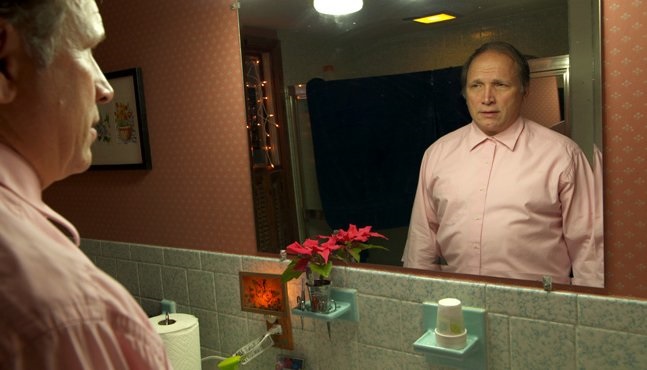
Samantha Whitehorn: The IT Manager