








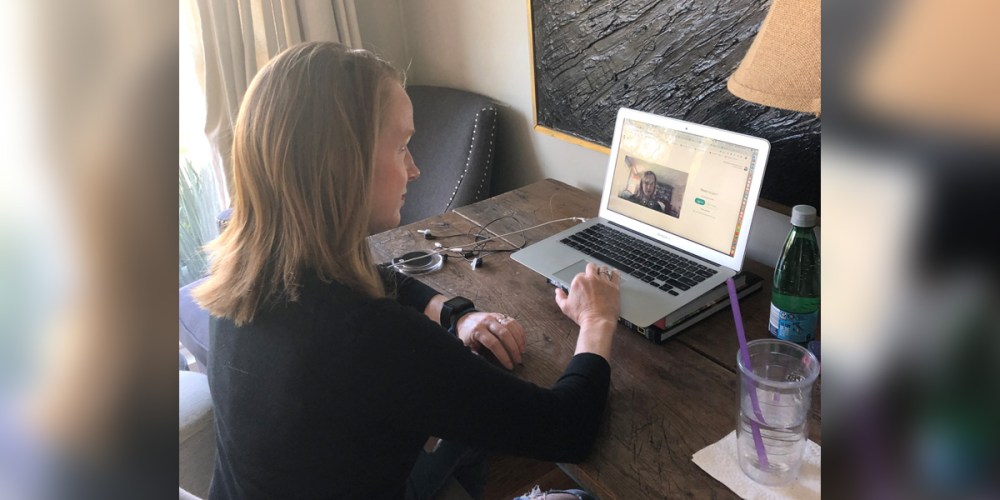
Whether you’re in a staff meeting, pitching a new client or talking to your child’s teacher, it’s likely the window to your outside world is now the tiny camera at the top of your laptop screen.
In a rush to keep business operations up and running and for people to stay connected as a result of the coronavirus pandemic, many of us simply jumped on screen in pajamas and workout wear, with unwashed hair in ponytails and kids and cats in our laps.
That was OK for the initial transition to working from home, but the reality is that this situation could go on for months. Yes, we need to have patience with ourselves and each other as we reconfigure our lives. But we should also do our best show up as our best selves online, just as we would in person.

To help me figure out what that looks like, how I can live, work, and lead authentically (and comfortably!) through a global pandemic, I turned to a few experts for advice.
Get comfortable on camera
No stranger to a video monitor, Know Your Value founder and “Morning Joe” co-host Mika Brzezinski, has spent nearly her entire career on camera.
“Just because you are working from home doesn’t mean we shouldn’t go to some effort,” said Brzezinski. She encouraged people to sit up straight, with the camera elevated to eye level. “Nobody wants to see up your nose,” she noted.
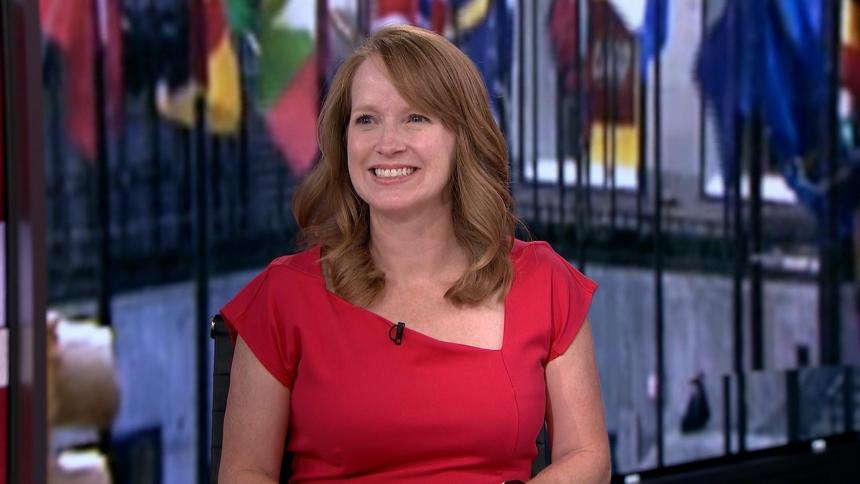
Also, make sure you’re ready for the meeting before you sign in. And if you need to adjust your clothes or hair, consider taking a moment to mute and turn off the video. “You don’t want the audio and visual distraction of fiddling on screen, and always assume the camera is on and the mic is hot; everything you do and say is going out in the world,” said Brzezinski.
Figure out the Technology
Every organization is using different platforms. Make sure you have whatever program you’re using, WebEx, for example, downloaded more than just a few seconds before the meeting begins.
Know how to share your screen, take your turn as a presenter, and use engagement features like chat or “raise hand.” If you don’t know how, ask. This is not the time to be embarrassed. If you don’t speak up, your voice will quite literally not be heard.
RELATED: On air and at home: How NBCU moms are juggling work, family while covering coronavirus
Be aware of in-person vs online etiquette
Meghan Dotter, founder and CEO of Portico PR, a presentation training and design company, said to “avoid the hostage look.” In other words, avoid sitting motionless, staring at the lens with a scared or surprised expression.

Use your hands and face as you would in normal conversation. But don’t necessarily use the same material and format from an in-person meeting. “We experience a higher cognitive load when we interact with people through a screen versus in-person. If we don’t adjust to shortened attention spans, we risk losing our audience,” said Dotter. Speak less, give your audience a specific role or request and take longer breaks. Send well-written material ahead of time so that people are more prepared once the meeting starts.
Get your setup in order
Pay attention to others when you are on video calls. When you see someone logging in from bed or with stacks of laundry in the background, how does that make you feel? Flip that question on its head and ask yourself, “how do you want the person on the other side of that video screen to feel?” A blank wall, or organized background conveys order and confidence, advised KiKi L’Italien, CEO of Amplified Growth, a brand strategy firm.

Brzezinski also suggested focusing on lighting. “Natural light, a soft lamp, or even a makeup light mirror angled towards your face helps,” she said.
Facilitate, and make room for all
Consider having a different facilitator for each conference call. This is a way to promote inclusion and collaboration among your team. If you’re leading the meeting, make sure every participant knows the objective and what success at the end of the session looks like. We are all juggling a lot these days, and every minute counts. If participants are unusually quiet, direct a question to him or her to make sure every voice is heard. If you advise participants to mute when not speaking, pay attention to the “mute off” button, it’s an important visual cue that someone wants to speak up. RELATED: How to maximize your time spent working from home Hair and makeup The irony of the stay-home order is that without a 6:35 a.m. bus for my youngest son or an hour-long commute, I finally have time to do my hair and makeup. And nowhere to go. Brzezinski, who has learned from experts over the years, told me “a tiny bit of effort goes a long way, no need to go crazy.” Dotter is a fan undereye concealer with some shimmer. “Find a YouTube video and upgrade your skills,” Dotter suggested. And when it comes to the eyes, Dotter said, “focus more on your brows. Again, nothing extreme, but you get more ROI – return on investment – with a stronger brow than eyeliner.” How you show up on camera matters “This is not just about the lights or the camera angle,” said L’Italien. “This is a time when people are feeling uncertain in all areas of their lives, and they are looking for something that feels safe, dependable, things they can trust.” RELATED: Author Minda Harts: 3 ways to promote a virtual work culture that prioritizes inclusivity To build trust, L’Italien encouraged consistency. Viewers want to see that you are the same, capable you that they met with in person just a month ago. If you typically lead team meetings in a suit, but show up to this month’s staff meeting on videoconference unshowered and in workout wear, you may set your team at unease. No, you don’t have to wear a suit at home, but you don’t have to go the other extreme either. And, let’s all try to remember to have grace for each other as we reconfigure our lives. “If your colleague shows up to a videoconference looking like they just lost an arm-wrestling match with a bear, grant them some leeway,” said L’Italien. “We all want to take our business relationships seriously, but we must remember that while professionalism is important, our humanity takes priority.” Jennifer Folsom is vice president of client delivery at Washington, D.C.-based management consulting firm RIVA Solutions Inc. She lives in Alexandria, Virginia, with her husband Ben and three sons, 17-year-old twins Josh and Will, and 12-year-old Anderson. Her practical guide to modern working motherhood,” The Ringmaster,” is out now.
Jennifer Folsom Recommended


