








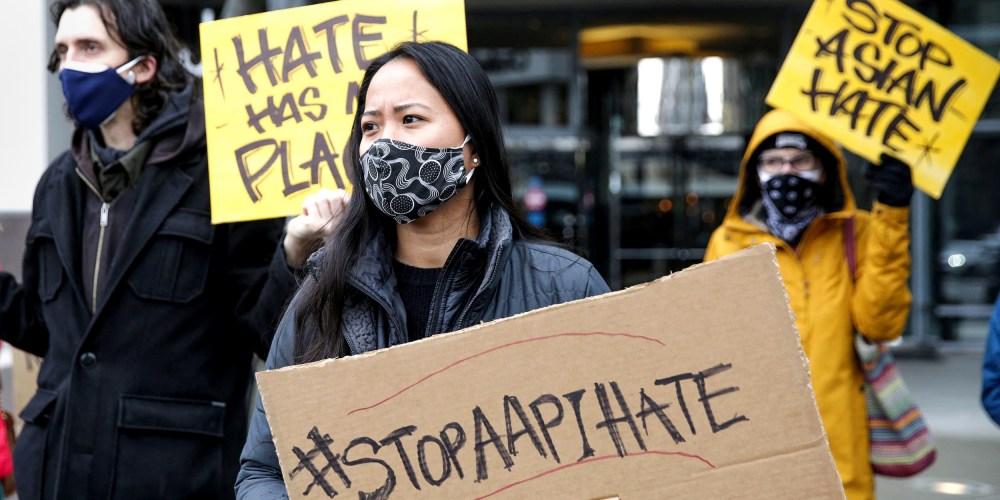
Violence against Asian-Americans has escalated in the past year, but it’s not just an Asian problem.
Allies have to be a major part of the conversation — and the action — in order to make communities safer, according to Connie Joe Chung, CEO of the legal aid group Asian Americans Advancing Justice.
“If only Asians care about this issue, it doesn’t change things,” said Joe in an interview with Know Your Value. “It’s only when other people say ‘this is a problem for us, too,’ can we actually address it.”
Violence against Asian Americans in major U.S. cities increased by 169 percent in the first quarter of 2021 compared to the same time period in 2020, according to the Center for the Study of Hate and Extremism. According to Stop AAPI Hate, women reported hate incidents 2.3 times more than men.

Videos of incidents have gone viral not just because of the heinous violence, but also because, in some videos, the bystanders appear to do nothing to intervene.
“What happens to most people is that, when they see something happening, it happens so fast that our natural reaction is to fight flight or freeze,” said Joe. “In order to create a safe society, everyone needs to do their part in order to support the community.
Joe shared five ways to be an ally during an incident, but also elsewhere in society.
“You don’t have to wear a cape or put your life at risk,” said Joe. “There are smaller ways to get involved and make societal changes, and it would make a difference.”
1. Get bystander training.
Asian Americans Advancing Justice and anti-harassment group Hollaback offer a free, one-hour virtual bystander training. The lesson aims to prepare people to react proactively during a hate incident.
Joe described the main tenets of the program, including the five D’s: distract, delegate, document, delay and direct.
Distract: “Let’s say you hear someone talking to an Asian person in an agitated way. Can you innocently ask the agitated person for the time, or how many stops there are until you need to get off? Sometimes that’s all you need to diffuse a situation,” said Joe.
Delegate: “Find someone in a position of authority to help. If you’re on a bus, you might go up to the bus driver and say, ‘you need to pull over,’” said Joe.

Document: “Capture any details that would be helpful should a police report be filed. If it’s safe to do so, video the incident, just don’t post it without permission of the victim,” said Joe. “However, only videotape if intervening has happened first and the victim is being supported. If the person is being harassed and people are only videotaping it, it doesn’t help the person in crisis.”
Delay: “Check on the person and see if they’re OK. They might want you to escort them, or stay with them until police arrive,” said Joe.
Direct: “If it’s safe to do so, directly confront the person and tell them to stop,” said Joe.
Very often, said Joe, being an ally isn’t about intervening during a violent act. It’s about watching for the little things. “Microaggressions are acts of discrimination that might not look so at first, but Asian women see it all the time,” said Joe. “We’re assumed to be more submissive or quiet followers. Asian women also experience being overlooked or being called the name of another Asian woman. It seems small, but if everyone was trying to prevent these microaggressions it would make a huge difference.” Across the country, neighbors are banding together to protect the Asian community, whether through escort programs for seniors, neighborhood watch groups or other volunteer programs, according to Joe. Allies can participate or donate. These groups can help communities stay safe, said Joe, especially in cases where police intervention isn’t appropriate. “A lot of hate incidents don’t rise to the level of a hate crime, and the police aren’t going to make an arrest,” said Joe. “Kids being called nasty names, people getting verbally harassed—we still think these incidents are terrible, and that’s when these community-based interventions can help.” Joe suggested that allies voice their support loudly, whether it’s on Instagram, Facebook, Stop AAPI Hate or by going directly up to friends, colleagues or local Asian-owned businesses. “Something you can say is, ‘What’s happening to the community right now is awful. I want you to know I support you and it’s not okay,’” said Joe. For those looking to get involved on a more political scale, allies can speak at council meetings or write to their representatives about Asian-American safety. Some states are working on new or tougher anti-hate crime laws, including South Carolina, Arkansas and Georgia. Allies can voice their support for laws like these. Joe also pointed to a nationwide movement that would incorporate more Asian-American studies into the K-12 curriculum. “It is largely absent from everyone’s curriculum,” said Joe. “Asian-Americans have been treated as foreigners and outsiders who are not to be trusted throughout history, whenever the nation feels threatened. If Americans understand that our country has a tendency to do that, we can do more to prevent it in the future.”
Halley Bondy Recommended


2. Be aware of microaggressions.

3. Get involved locally.
4. Show your support online or in person.

5. Support political causes.
