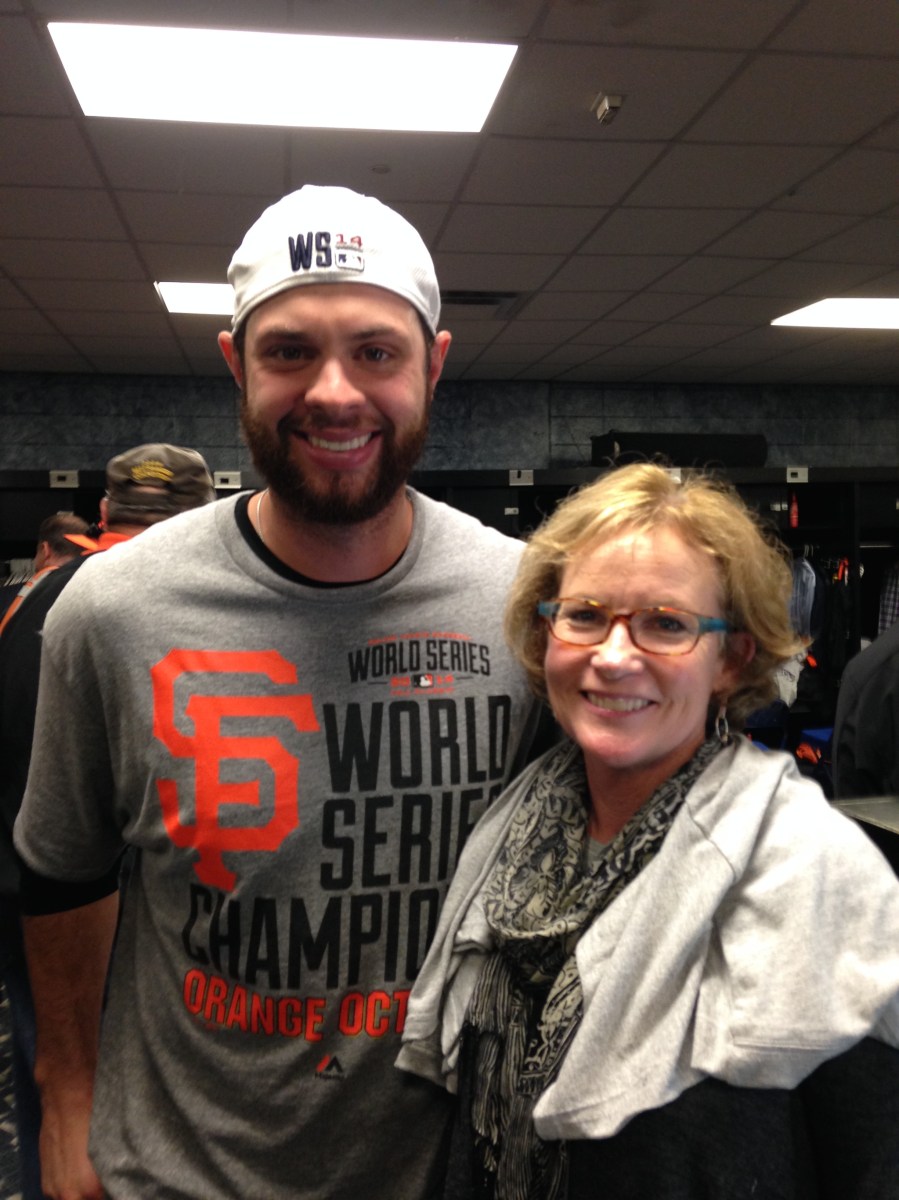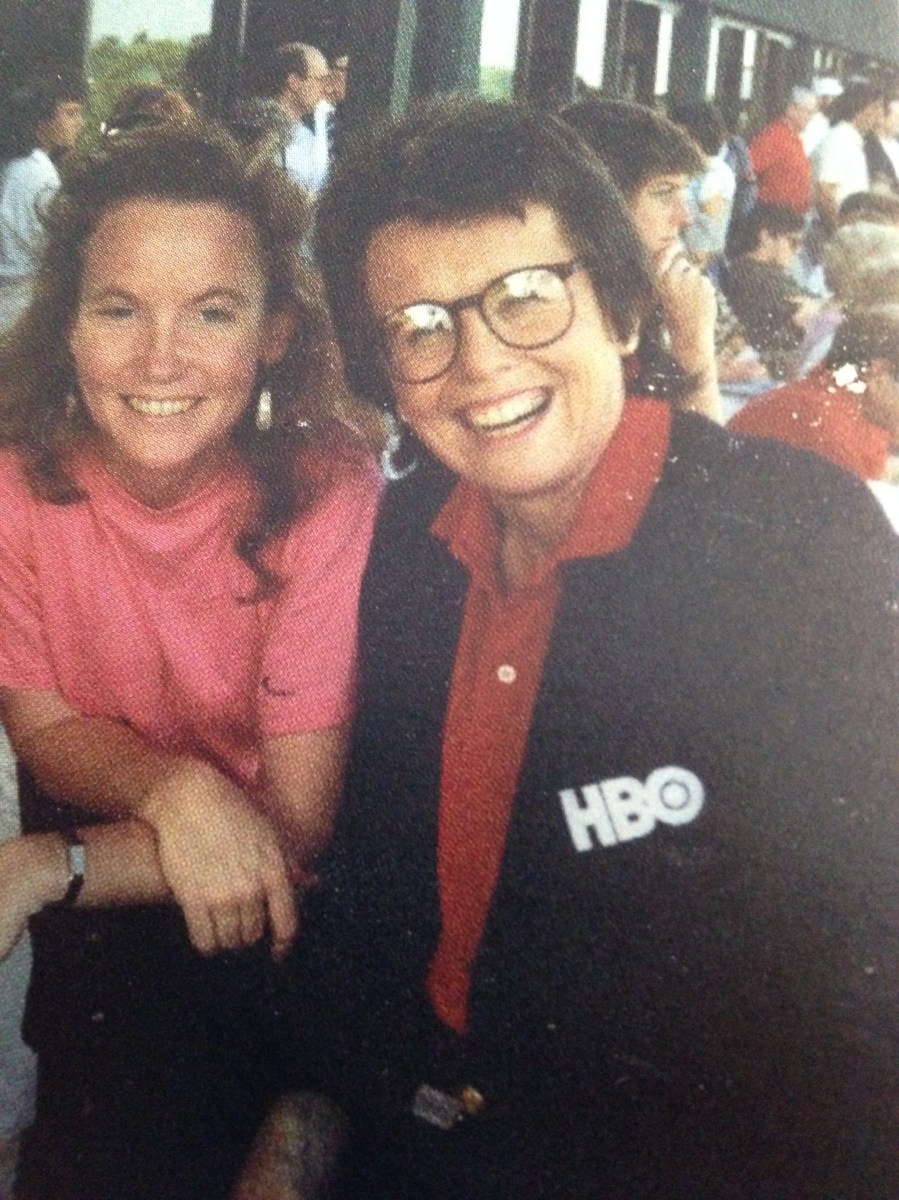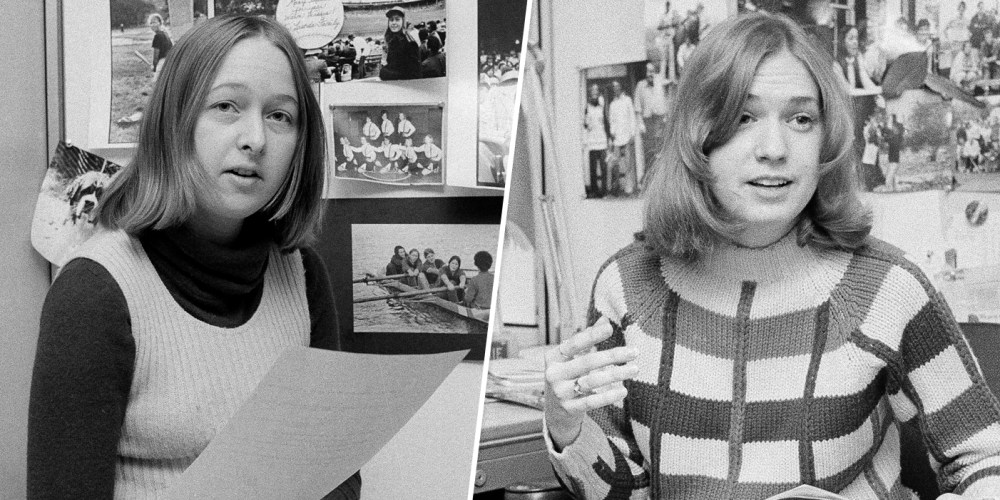
Today’s female sports journalists, like most women in male-dominated fields, still have to fight against stereotypes and sexism. But for the earliest women sportswriters trying to do their jobs 40-plus years ago, even getting into the locker rooms to conduct interviews was a major hurdle—one that required persistence, grit and in one case even a federal lawsuit to clear.
Know Your Value recently interviewed three women sports journalists who battled for access, equality and fair treatment in the 1970s and early 1980s.
Melissa Ludtke: The history-making plaintiff vs. Major League Baseball
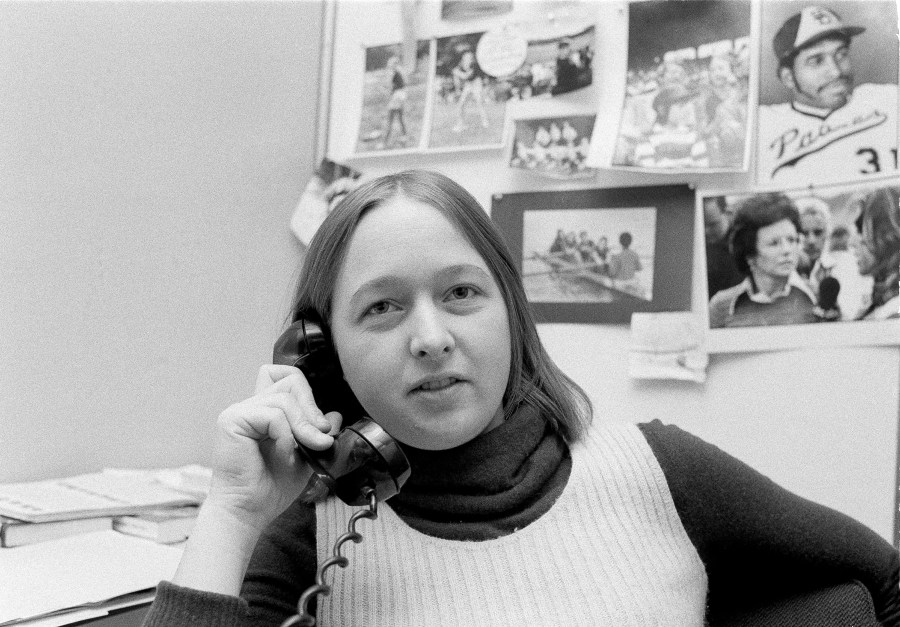
In 1977, the Commissioner of Major League Baseball stopped Melissa Ludtke from walking into the locker rooms, and her fight against him ultimately changed that journey for every woman after her.
She had been working at Sports Illustrated as a baseball writer — the only woman in the country covering baseball full time, she said. Ludktke had been on the beat for two years when the 1977 World Series took place, with the New York Yankees taking on the Los Angeles Dodgers.
She had already made inroads with the Yankees, using her New York location and a low-key approach to work her way into the locker room. “I never made a public request or banged on the door,” Ludtke said.
“I’d been hanging out for 18 months trying to get into the locker room. I worked with Mickey Morabito, the Yankees’ PR person, who was my age and kind of got it,” she added. “He had the idea to open up a side passageway through to get me into Billy Martin’s office, which is separate from the locker room, and I’d done that for the whole back half of the 1977 season.”
Morabito had also given her a formal locker-room pass a few games earlier, so Ludtke didn’t expect any problems at the World Series. She had press credentials, and she knew the Yankees would have no issue with her in the locker room.
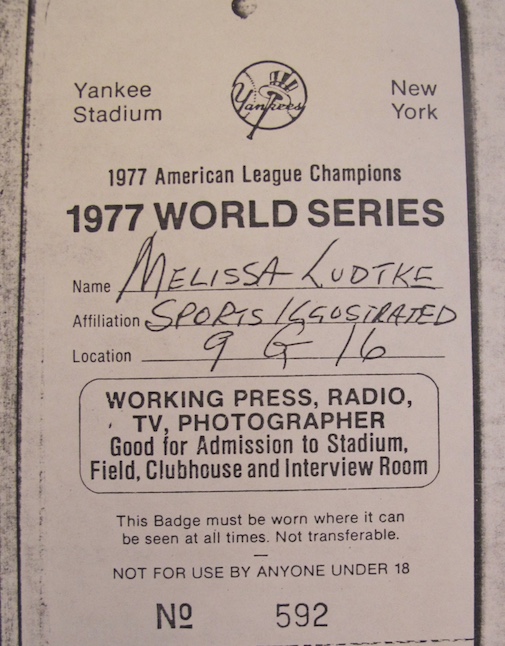
But she wanted to interview the Dodgers, too, and as a courtesy she approached manager Tommy Lasorda, who passed her to players’ rep Tommy John—who, in turn, asked players if they were OK with a woman in the locker room. The majority said ‘yes,’ John told Ludtke, so it was fine by the team. But he also asked her to give Steve Brenner, who handled public relations, a heads up.
“I told Brenner and he looked absolutely ghostly,” Ludtke said. “He said nothing and walked away. I enjoyed dinner with other reporters, and then I heard my name over the loudspeaker asking me to come to the press box.”
Her old pal Morabito was there, with a message from Major League Baseball commissioner Bowie Kuhn: She was formally banned from the locker rooms. It didn’t matter if the Yankees or the Dodgers or whomever had granted permission; Kuhn had not, and his decision was final. Kuhn would not speak to Ludtke, despite her requests.
The next few weeks were a whirlwind. The commissioner met with Ludtke’s editor. They suggested she get a male “escort” who would deliver the players to her outside the locker room after Game 6, an effort that failed miserably as she knew it would.

Finally, in November, Sports Illustrated asked Ludtke if she would be willing to be a plaintiff in a lawsuit against Major League Baseball arguing for women’s access to the locker rooms.
Ludtke, then 26, agreed. A month later, when Time Inc. filed Ludtke v. Kuhn in late December, the media frenzy began: Male columnists weighed in and took potshots, implying Ludtke and other women simply wanted to ogle the athletes. “Saturday Night Live” lampooned the concept, with a lewd Laraine Newman cornering O.J. Simpson in a locker room. During a play at Christmastime, Ludtke and her parents even overheard the people behind her debating the merits of her case.
“It was a wakeup moment for me that I had made a life-changing decision,” Ludtke said. “It was turning into a symbol of women’s lib, and that was something I just had to accept and steel myself for.”
Ludtke v. Kuhn carried on for most of 1978, with lawyers representing Sports Illustrated arguing the MLB’s ban violated Ludtke’s Fourteenth Amendment rights to due process and equal protection. U.S. District Court Judge Constance Baker Motley—herself a barrier-breaker as the first African-American woman named a federal judge—ruled in favor of Ludtke and Time Inc. that September.
“I was happy, of course, but I wasn’t surprised; I felt the lawyers had made the case beautifully,” Ludtke said. “Toronto was playing the Yankees that night. And I immediately decided I wasn’t going to the stadium.”
Ludtke knew, and knows, that might sound counter intuitive. But she also knew a lot of women would flock to the locker room that night, sent by editors who wanted to make a point and get a headline.
“But that wasn’t why I filed the suit,” Ludtke said. “The point was to be there when there were no cameras. I just wanted to do my job.”
Stephanie Salter: I was kicked out of the Baseball Writers Association Dinner
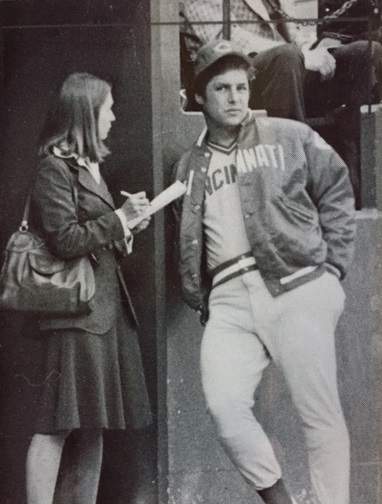
“I kind of backed into sports, like a lot of things in my life,” said Stephanie Salter, who worked at Sports Illustrated in the ‘70s. She grew up in Indiana, where Hoosier culture meant everyone had some interest in basketball and football, at least.
But she never planned to get into sports journalism; she simply liked the writing of a columnist, Kent Hannon, at Purdue’s daily newspaper during her college years. She marched into the paper’s offices and signed up as the only woman on the sports team.
“I was assigned to do a color piece at a football game in 1968, and they wouldn’t allow me in the press box because the language was too tough for ‘a female,’” Salter said. “And yet they were fine having women from [auxiliary organization] Angel Flight bring these male writers drinks and food.”
Unfortunately, Salter said, “it was just the first of stupid, insulting contradictions throughout my career in sports.”
Salter ended up following Hannon, who had become a mentor, to Sports Illustrated in New York City. Overall, the magazine was “still a pretty sexist place” when she joined as a fact-checker in 1971, but a few iconic writers like Dan Jenkins were supportive and helped her to “learn by osmosis how to write.”
Then, one Sunday night in 1973, a colleague swung by the publication’s office with tickets to the Baseball Writers Association dinner. The association had comped the tickets, as SI journalists weren’t daily writers as required for membership, and Salter asked to take one.
“Someone said, ‘Oh, it’s for men, they won’t let you,’” Salter recalled. “I said, ‘They won’t do that! It’s 1973!’ Well…ha.”
Salter donned a black halter dress and headed to the black-tie event with a few colleagues, not knowing she was about to make headlines.
“I got through the National Anthem and the fruit cup—about 10 minutes—when they sent over Jack Lang, the [executive secretary of the Baseball Writers Association],” Salter said. “I told him I had a ticket, and he started shoving money at me, telling me that if I didn’t leave he’d get security.”
Salter stood her ground, but by the time a “bent old security guard came up to me I decided it wasn’t worth it. Three of the guys at the table left with me.”
Others noticed the scene, and someone called The New York Times which, among other outlets, covered the incident in a short piece. SI’s managing editor was supportive, and he and Salter planned to sue, but the company’s legal team advised that because SI writers weren’t eligible to be members of the association the case likely wouldn’t proceed.
Ironically, Salter later became a member of the Baseball Writers Association when she joined the San Francisco Examiner (now the Chronicle) as a sportswriter in 1976. There she “covered everything but football,” including the Oakland A’s baseball team and the Golden State Warriors, the basketball team with whom she traveled.
Salter loved traveling with the Warriors, who at the time were an all-black team and coaching staff, save one white player. “What I dealt with isn’t the same as racism, but they’d say to me, ‘We get it—you look different from everyone else. We know what that’s like.’”
She spent a few more years on the sports desk, trying to fight her way into clubhouses and locker rooms. In the end, though, sports became “repetitive.” She transitioned to the Examiner’s city beat in 1982 and later became a highly popular columnist—ultimately spending 28 years at the paper and winning awards including a Pulitzer nomination. Like many cub journalists, Joan Ryan started her career in news working on the “regional desk.” She served at the Orlando Sentinel as a copy editor starting in 1981, but to move up, she knew had to try her hand at writing. Yet she had no interest in covering city council meetings and local arrests. So, recalling her years playing softball in a sports-loving family, Ryan expressed interest in joining the sports desk. “The editor got wind that there was this 23-year-old interested in writing sports, and suddenly I was a part of the sports department,” Ryan said. “By then this was 1983, and I didn’t really register that there had never been a woman on the desk before.” Ryan “lucked out” with the other men on the team, saying they were “the best guys you could want, guys who wanted to take people under their wing.” So Ryan had support at the Sentinel. But the rest of the world proved more challenging. She was assigned to cover a football game played as part of the short-lived United States Football League. She was meant to write a small sidebar story on the opposing team, which meant walking into the locker room to try to obtain interviews. “I pushed open the door and all the players stopped—then it erupted in pandemonium, with people hollering,” Ryan recalled. “It was like I was the new kid on the playground and everyone was a bully.” Ryan was standing near a bench where a player was cutting up tape, and she felt something on her leg. She looked down to find he was running the handle of his razor up the hem of her skirt. “I said, ‘What are you doing?’ and I turned around to leave,” Ryan said. “Everyone was absolutely cracking up. In the doorway were these middle-aged men in red V-neck sweaters: the coaches, who were absolutely delighted by this whole performance. The owner was the one laughing the most.” Ryan was infuriated and rattled, but she still had a deadline to meet. So she asked the team’s public relations staffer to bring a particular player out of the locker room for an interview. He refused; she asked again and again. The conversation went nowhere. The Orlando Sentinel filed an official complaint, and the editors asked Ryan to write about the experience. “I got murdered by the readership,” Ryan said dryly. “It was at that point I decided to become a sportswriter. I’ve basically made a whole career of resentment and bitterness; in sports you’re competitive, and it was like, you’re not chasing me out.” Ryan stayed in Orlando for another two years, covering the University of Central Florida’s football and basketball teams as well as writing other feature stories. While nothing rose to the level of the razor-handle incident, “there would always be some kind of issue to deal with periodically,” Ryan said. Happily for Ryan, her 1985 move to San Francisco quelled many of those issues. She worked as a sports columnist for the San Francisco Examiner, giving her the opportunity to work closely with home teams in San Francisco and Oakland. “Those teams get to know you, and once they do, there aren’t problems generally,” Ryan said. “I always had anxiety going into the locker room of a team I didn’t know, because you never know what’s waiting for you on the other side—and I never really got over that.” In fact, Ryan advocated for closing clubhouses and locker rooms after the games and instead having players come out for interviews: “When you think about it, it’s weird that that’s the official interview area,” she said. “You’re never on a level playing field in there as a woman, even when you’re allowed in.” On the sports desk Ryan went on to travel to the Olympics and Wimbledon, interview legends like Billie Jean King and cover “unique subculture” stories in sports like boxing. But eventually she grew a bit tired of sports and went on to write columns for the Style, Op-Ed and Metro sections at the paper, which had since become the San Francisco Chronicle. But Ryan’s sports days weren’t behind her. In 2006 her son, Ryan, suffered a traumatic brain injury in a skateboarding accident; after taking months off to care for him she decided to leave the Chronicle altogether to pursue book projects and other opportunities—including one she pitched to the San Francisco Giants. “Barry Bonds had been the person putting butts in seats, so now they were like, ‘Why aren’t people coming?’” she said. “I explained that sports is like a soap opera and you need people to make emotional connections with these characters. They hired me as a consultant to dig those stories out of the clubhouse and get the reporters to write it, while also training players on their interviewing skills.” Ryan is also currently working on her fifth book about team chemistry. Now on the other side of the reporting divide, Ryan sees progress but continued problems in sports journalism. “I think sports reflect the culture at large, and as we know from the #MeToo movement, there are still issues,” Ryan said. “You don’t see the egregious things I experienced—that could never happen now—but to be a woman in any male-dominated field you have to have a thick skin. You have to let it all go and do the best work you can.”
Julianne Pepitone
Julianne is the senior technology writer for NBC News Digital, covering large consumer tech companies' (Apple, Google, Facebook, etc.) news and trends, as well as cybersecurity. She also writes and appears in original videos for NBCNews.com, and speaks as an expert guest on live shows across the NBC and MSNBC networks.
She previously worked at CNNMoney.com where she covered large techs from a business angle, as well as the intersection of the tech and media industries.
In addition to NBC and CNN online properties, Julianne has written for several national magazines and online publications including Esquire, Self, Popular Mechanics and Cosmopolitan. Recommended


Joan Ryan: “The handle of his razor was going up the hem of my skirt”