








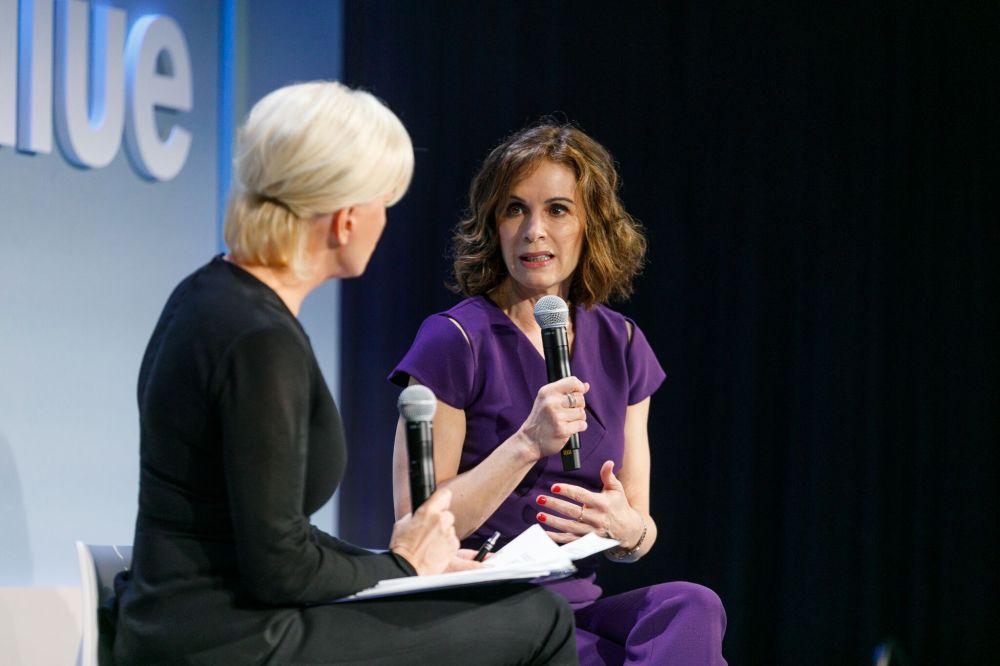
To outsiders, Elizabeth Vargas seemed to be the epitome of success, co-anchoring “World News Tonight” and co-hosting “Good Morning America” for over two decades. But behind the scenes was a different story, as the Emmy Award-winning journalist secretly battled an anxiety-induced alcohol addiction.
“It’s the bottling it up and stuffing it down that is most destructive,” she told me at Saturday’s Know Your Value conference in San Francisco. “Even those of us who manage to be very highly functioning in every other aspect of our lives – it’s because we’re perfectionists and we work so hard at it. But we’re keeping this terrible dark secret inside of us, and it eats away at you.”
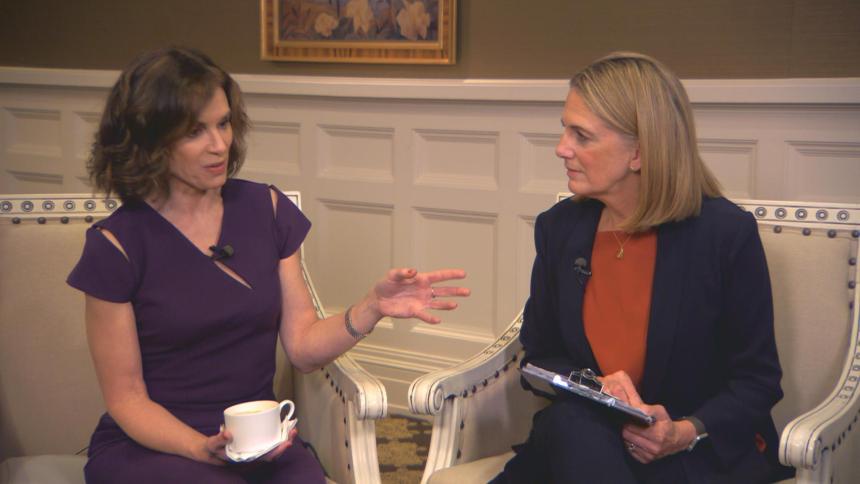
Vargas said her struggle with anxiety began at an early age when her father went off to fight in the Vietnam War. In her recent memoir, “Between Breaths,” she wrote that she suffered daily panic attacks as a child and was told by an adult that such anxiety was weak, shameful and to be hidden at all costs. As an adult, the anxiety and her need to hide it continued. In her book, she described covering up the panic attacks, even as she was anchoring live broadcasts.
Anxiety is the number one mental health issue in America, affecting one out of five adults, according to the Anxiety and Depression Association of America. The organization also says that women are twice as likely as men to suffer from anxiety disorders. Vargas said that especially for women, anxiety can lead to a dependence on alcohol. Vargas was one of those women.
Want more articles like this? Sign up for the Know Your Value weekly newsletter!
Vargas said her parents, brother and sister, while unaware of her lifelong struggles with anxiety and multi-year dependence on alcohol, were supportive of her during her battle to recover, starting in 2012 when a disastrous family vacation made her realize she needed help. Vargas sought treatment at an addiction center in Utah but left too early and relapsed. Over the next two years, she would seek treatment and relapse multiple times. Vargas has been sober since 2014, something she does not take for granted, according to her book.
Support and understanding, not shame, she told me is crucial to helping addicts. “Addiction is a tremendous, terrible disease in this country and for decades the [American Medical Association] has recognized it as a disease. But there are far too many families and companies and organizations in this country who do not treat it like a disease, they treat it as a character flaw or a moral failing or weakness and it’s not.”

So, what should we do if we think a friend or colleague might need help with alcohol addiction?
“I think just asking them, ‘Are you ok? I saw this happen to you. I noticed you were having a really hard time. I noticed you have been drinking a lot lately. Are you ok?’ Do it from a place of concern and compassion, not from judgement and shaming. [Shaming] is the most destructive thing you can do.”
The first step to recovery, Vargas learned, is raising your hand and asking for help.
“These aren’t small problems, anxiety and addiction,” she said. “They are life threatening issues and we should be able to reach out and talk about it. People don’t want to be seen as weak or flawed or in some way not right.” Hiding and covering up mental health and addiction issues instead of asking for help is destructive, Vargas said. “It’s embarrassing to be anxious in an elevator where the doors are taking too long to open and everyone else is fine. Anxiety is something that people keep hidden and they don’t talk about it openly. There’s such relief when you can say to somebody, ‘I’m just feeling a little anxious, give me a minute’ — and then maybe that person can even help you in that moment, say the right things that need to be said.” Vargas told me that she has been shocked but gratified by the reaction to her book — a project she almost pulled the plug on. “I was terrified to actually put this book out there and in fact woke up every night and said ‘I’m going to call the publisher and say never mind, stop the presses.’ But I never anticipated the reaction I am getting. I hear from somebody every day. They stop me at the gym, or the airport. Or, I get an email or a message on Facebook or Twitter from someone who read my book and finally got help or someone who read my book and finally understood their alcoholic mother or father or who read my book and were able to reach out to a colleague. I feel very gratified for that because I was able to take what was a dark, hard chapter in my life and make something good come out of it.” Vargas, who after 22 years at ABC, began this year with A&E Networks at A&E Investigates, said her anxiousness has subsided with her sobriety, and that meditation has been key. “Every person going through that feels like they are all alone,” she told me. Her message to anyone suffering from anxiety or alcohol addiction? “You are not alone.” And, as she learned from her rocky journey, it is never too late to get help or to get better. Ginny Brzezinski is Know Your Value’s comeback career contributor. She is co-writing a book on the subject with her sister-in-law, Mika Brzezinski. It will hit bookshelves in the fall of 2019
Ginny Brzezinski Recommended


