








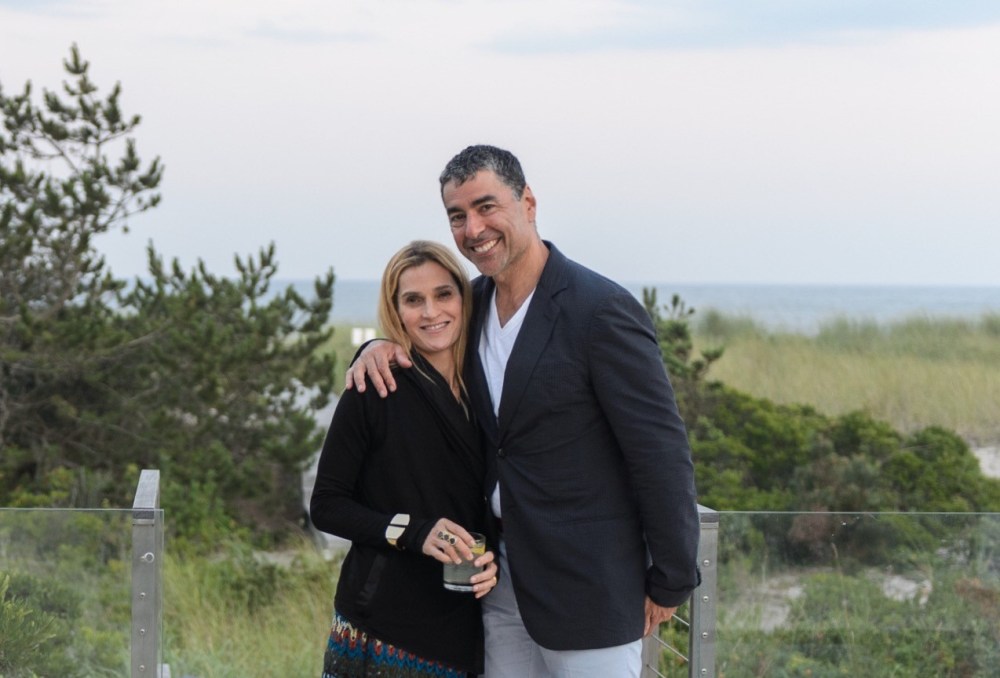
For months, Dr. Nancy Lipsitz didn’t believe that her husband was actually starring in a Netflix series.
“I just thought he was excited, talking about Netflix,” said Lipsitz about her husband, Dr. David Langer. “I’d say ‘sure, sure, sure.’ I didn’t think it was real.”
It wasn’t until she watched the docuseries, “Lenox Hill,” which premiered earlier this year, that she finally believed it. Named after the New York City hospital where Langer works as chair of neurosurgery, the show documents Langer and his colleagues toiling during normal times, in addition to the city’s first Covid-19 wave.
“I hadn’t been on board with the idea of a reality show, because I wasn’t comfortable with the limelight,” said Lipsitz, an anesthesiologist. “When it came out on Netflix, I was overwhelmed by it, in a good way. I loved it. I thought it really captured the integrity and the inside private world of what David goes through—what all of them go through.”
Lipsitz, 57, said that while the docuseries has given her outgoing husband an outlet, the couple’s lives haven’t changed much. The series is a small blip in their long lives together as high-achieving doctors and parents of four children.

They even had a courtship worthy of a different kind of reality show: they met as attending physicians in the operating room during a surgery.
“He was giving me a hard time about a patient’s biosigns. And I said ‘and who are you?’ He goes “who are you?’ I said ‘Oh no no, who are you?” she recalled. “It took us about a year to straighten out each other’s place in the operating room.”
About three years later, they were married.
Lipsitz had plenty to contend with during that time in her life. She was one of few women doctors in the hospital anesthesiology practice when she first started out years earlier.
“I’m tiny. I’m 5’3 and about 105 or 110 pounds. When I walked into the operating room, I used to get eye rolls. The thought process was ‘oh no, it’s a girl,’” she said. “I had to show up in a big way.”
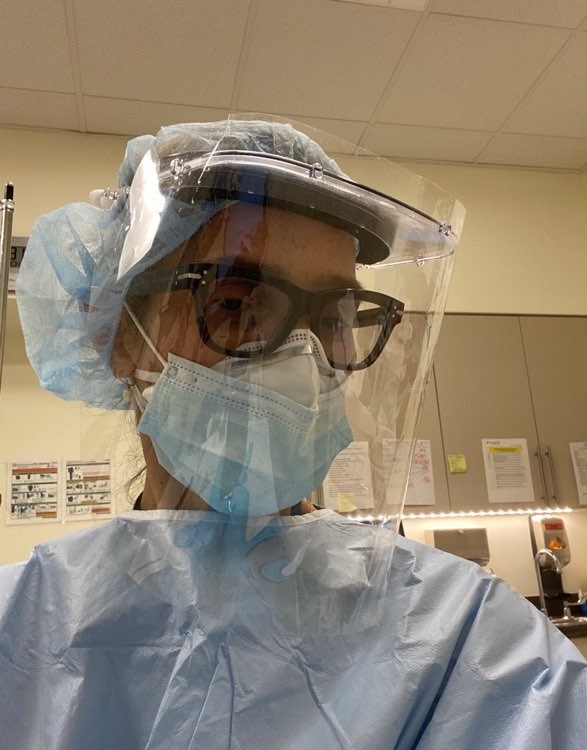
Becoming a doctor wasn’t even a question for her, however. Lipsitz’s German immigrant doctor father and lawyer mom had mapped out her career during her childhood.
“Being a doctor was the most respected profession in their eyes,” said Lipsitz. “My mother was ahead of her time. She was one of the first women to graduate law school. She would say, ‘you can be anything and do anything—as long as you’re a doctor.’”
Lipsitz attended medical school in Rochester, N.Y. and did her residency at New York University in the early 90s. She moved up the ladder in hospitals all over the city.
Balancing family life was not easy. Lipsitz had two children during her first marriage. She said she was the first woman in her practice at her hospital to have a baby.
“The men were like ‘you have to figure it out,’” she said. “They didn’t want to treat me any differently, and I didn’t want to be treated differently. But here I was, needing to be treated differently.”
In turn for the rewarding job with long, unpredictable hours, Lipsitz said she sacrificed time with her children. She felt a tremendous guilt that literally doubled when she later married Langer, who had two children from a previous marriage. Langer was also very busy, so the family depended heavily on a babysitter.
“Every day I prayed that nothing bad would happen,” said Lipsitz. “There was so much guilt and pressure knowing that I didn’t have any wiggle room. I couldn’t make my own schedule. You’re in the operating room until it ends.”

For a while, Lipsitz could compartmentalize the guilt and bury herself in the excitement of her job. That is, until the advent of cell phones.
“My kids could get hold of me 24-7. They could reach me with all their issues anytime. That’s when the true guilt started,” she said. “When my girls were freshmen in high school, they actually sat me down and told me I had to be more present in their lives and I had to show up for every game they played…They told me that I had to come to their games, like all the other parents. And they were right.” Lipsitz thought she had reached the pinnacle of her career in the operating room, but she decided to pivot. She spoke to her boss, who found her a leadership position at an endoscopy ambulatory center at Mt. Sinai Beth Israel. Nine years later, she is at the same center serving as its director. She said her children—now all in their 20s except for 17-year-old Molly—don’t even remember her absence. “They don’t remember me not being home or not putting them on the bus. I think they’re proud of the fact that I worked and was able to raise them,” Lipsitz said. Mothers should never have to give up their dreams, said Lipsitz, even if they sometimes have to make changes, a subject she recently touched on in an Instagram post. “What they don’t teach us in med school is how to deal with family and career in our lives. My mother told me I could do anything and be anyone. I had to learn on my own the art of compromise. Let me tell you, it’s not easy,” she wrote. “I was a pediatric and adult neuro-anesthesiologist from 1996-2012. I LOVED the OR, I LOVED the cases. I LOVED doing the most difficult and sickest patients. I wasn’t scared. I was inspired. I met Langer in the OR … I miss the OR terribly. I miss the babies I used to take care of. I even miss the parents…” Lipsitz explained how she left the operating room to work at the center. “What did I gain by leaving? I went to every lacrosse game my girls were in. I even made it to some plays and parent teacher conferences! Yup, still showed up with wild hair and my scrubs and clogs on. I was home for dinner and homework. Even though my girls didn’t talk to me, I represented their stability. That is priceless. I didn’t leave my job. I took another job with predictable hours. I work from 630-4 ish.” The lesson? “Life is full of compromises,” she wrote. “And compromise is not a bad thing. That’s what they don’t teach us in medical school. I shut one door and opened another…You can be anything and do anything. Just learn how to compromise and you will set the world on fire.” Lipsitz told Know Your Value that even though she’s not in her husband’s operating world, she has created goals and purpose that are just as real. “It’s okay to make concessions and to change trajectory,” she said. “I think it’s important for women to always think they can aim higher and go higher no matter what stage of motherhood they’re in.”
Halley Bondy Recommended


