








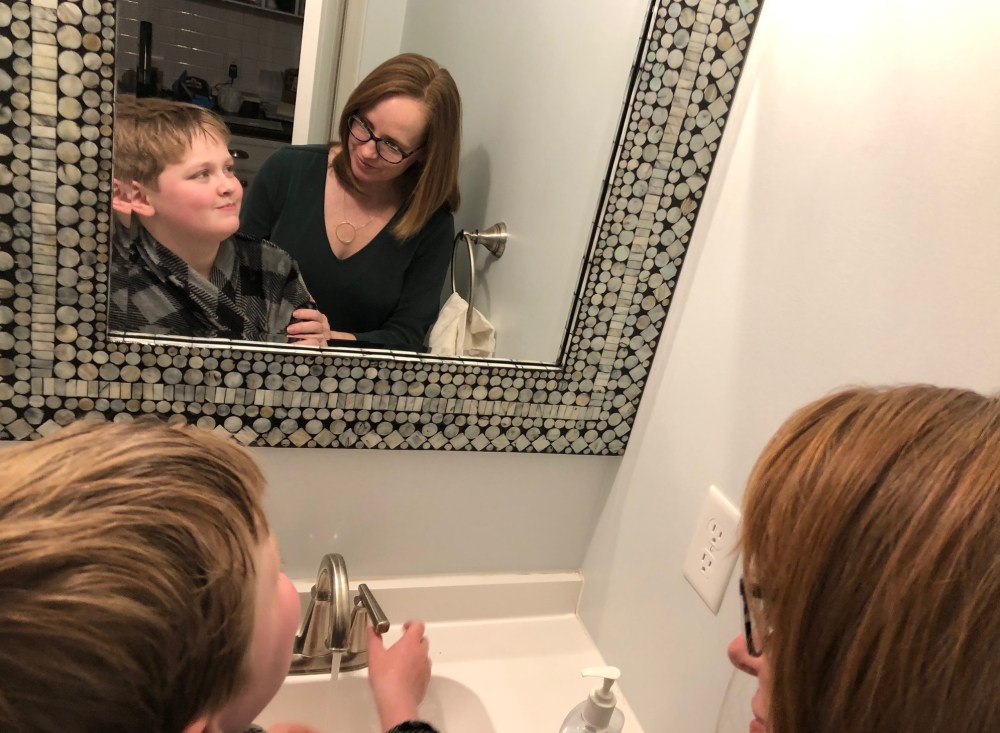
With all the talk of coronavirus and the World Health Organization on Wednesday declaring the outbreak a pandemic, the topic of conversation around my dinner table last night was naturally all about what it means for our family.
“Hey mom, when are schools being closed for coronavirus?” asked one of my three children. That was followed by a barrage of other questions on how bad this outbreak was going to be and how it would affect them. Would we be able to go on our spring break trip? Would mom and dad be working from home if their offices shut down? Would they be able to see their friends? This all got me thinking, what are public health officials telling their kids, and what could I learn from them?
I spoke to a handful of experts, and this is what they told me:
Reinforce good habits
“The things that keep you safe and healthy every day are the same habits that are going to keep you healthy through this outbreak,” said Christina Chang, executive vice president and deputy CEO at Vital Strategies, a global health organization working with governments in 73 countries on pressing public health issues, including pandemics.

Chang is also the mom of two sons, ages 10 and 13. “Wash your hands, then keep your hands out of your face, and cough into your elbow,” Chang said. “We make hand washing enjoyable, humming or singing whatever is in their head at the time.” Chang advised to build hand washing into regular intervals. In addition to washing up after going to the bathroom, wash hands when you walk into your home, before you eat, and after taking public transportation. “Our family favorites right now are Rachel Patton’s ‘Fight Song’ and ‘Hall of Fame’ by the Script,” she told me.
RELATED: The working mom’s playbook for coronavirus prep
Delete the drama
On top of all of the unknowns, we are facing a constant barrage of information, from credible sources to non-so credible sources, particularly on social media. “My sons have severe anxiety,” said Charlottesville-based organ transplant nurse Martha Hogan Perkins.
“If I gave them too much information, it could scare them and make matters much worse.” Her advice? Stick to the basics, and tell them only what they need to know. And keep the news exposure and grown-up speculation to a minimum. Another Charlottesville-based licensed practical nurse, Tanyell Frye Essex, has similar advice. When talking with her four children, ages 27, 23, 19, and 10, she tells them, “New viruses pop up in the news every year and fear arises. We are all afraid of the unknown.”

And don’t forget about mental health
Kate McCauley, LCSW, professor at George Mason University, founder of Center for Parents and Teens and mother of two young adult sons, says the pandemic is confounded by the already high rates of anxiety in young people.
“Kids can start perseverating on things a lot, hearing things at school or reading things on their phone. It’s really easy if you have a kid that already leans toward getting anxious, this is just one more thing to get anxious about.” With older children, McCauley suggested directing them toward credible resources like airline websites for how they are handling cleaning planes, if an upcoming trip is causing angst, for example. For younger kids, she advised asking in a curious tone “It sounds like you’re worried, can you tell me what you’re worried about?” And with that clarifying question answered, “Let’s see what we can find out.” And if you don’t know the answer, don’t lie. “The worst thing you can do is lie to a child. They will stop coming to you for answers, and go to their friends,” she said. Fairfax, Va.-based certified medical surgical registered nurse, Sara Mulhern, is telling her children, ages 16, 14, and 11, to wash their hands and keep their hands out of their faces. But how do you do that with an anxious nail-biter, or wrestler, or dancer who is touching every public school surface all day every day? “I’m not saying that I’m necessarily getting through to them, but it’s what I’m saying on repeat,” said Mulhern. Reinforce “social distancing” techniques like greeting friends with elbow bumps instead of ‘dapping up,’ or a simple “Hey what’s up” instead of a hug. In my own home of hygienically-challenged boys, we are now on the hand-washing bandwagon. Not that we weren’t before, but this wasn’t always a battle I chose to fight day in and day out. Now I’m demanding that every child (my own and their friends) wash hands when entering the house and before they raid the fridge. I am having regular, if eye roll-inducing conversations about what they can do to stay healthy. Because, as Chang reminded us, “It’s important for kids to understand that they have a role to play in this. That this is big and has a lot of unknowns, but there is some element of control.”
Jennifer Folsom Recommended


Hands down, the best advice
