








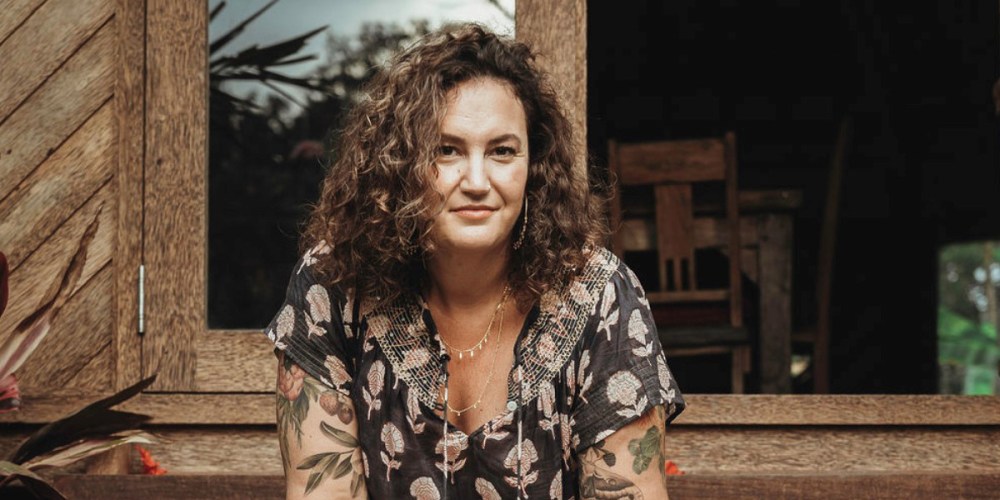
What do you say to a friend who is suffering from profound grief or illness?
Emily McDowell witnessed this anxiety at age 24, when she was diagnosed with stage 3, Hodgkins lymphoma and underwent chemotherapy.
“Friends and family were disappearing because they didn’t know what to say, or how to be around me when I was sick. I didn’t anticipate that,” McDowell told Know Your Value. “It was a surprise to me how ill-equipped we all are to handle stuff like that. And so, for a long time, I felt like it was me. I came out of that experience believing that there was something wrong with me … If I was a better person, people would have not bailed.”
McDowell’s cancer went into remission, where it has remained ever since. For a decade, she worked in an advertising agency and rose the ranks to become the company’s creative director. Her heartbreaking outlook on humanity might have prevailed, but her perspective changed when a roommate got sick and died of cancer in 2011. From McDowell’s point of view, the roomate was a completely beloved person — yet still, people disappeared from her life during her final days.
“That was the wake-up call for me to leave the ad agency. Seeing it from the other side,” McDowell said. “Experiencing her being sick and none of our mutual friends knowing what to say, seeing the helplessness, seeing people shy away because they were afraid. We get so scared of saying and doing the wrong thing that so many times you end up saying or doing nothing.”
McDowell, an illustrator and writer, left her job and formed the card company Emily McDowell & Friends. She designed cards acknowledging difficult moments in words and drawings. Instead of offering platitudes, McDowell’s cards charmingly embrace the awkwardness and sadness of the moment.
REALTED: Attention, entrepreneurs: Don’t make these 5 mistakes in the pitch room
“We have one card that just says ‘There’s no good card for this. I’m so sorry,‘” said McDowell. “It’s a super basic one. it’s applicable to so many situations. You can’t save someone from their pain. The most meaningful thing to do is to sit with them and acknowledge it … A traditional sympathy card doesn’t say the things that we want to say. They fall short.”
McDowell’s first popular card wasn’t about grief, however. After quitting her advertising job, she opened an Etsy shop. On Valentine’s Day in 2012, one of her cards went viral. It was about modern relationships, and like her empathy cards, it perfectly embodied the awkward reality.
“I know we’re not like, together or anything but it felt weird not to say anything so I got you this card. It’s not a big deal,” it read. “It doesn’t really mean anything. There isn’t even a heart on it. So basically, it’s a card saying hi. Forget it.”
“There was nothing like it out there,” McDowell said.
The card sold 1,700 copies in a week. Afterwards, she ramped up production, creating 40 new cards and began going to trade shows.
“It was a learning curve,” said McDowell, who is now 43. “I never considered myself an entrepreneur. I tell people that I got my MBA from Google. It’s free, but it sucks because half of what I know is wrong. It was trial and error to find out what was actually right. It was a massive learning curve for years.”
McDowell caught a few breaks early on, with Urban Outfitters signing a $30,000 deal for her greeting cards. She launched the empathy line in 2015, which received widespread media attention and remains the company’s bestseller. RELATED: This entrepreneur mom is on a mission to eliminate hunger—one granola bar at a time Emily McDowell & Friends, which is based in Los Angeles, also produces journals, tote bags, mugs, and other gifts. R,ecently Emily McDowell & Friends launched a line of cards in partnership with “Eat Pray Love” writer Elizabeth Gilbert. Each card features an inspiring Gilbert quote. All told, she has created about 600 products. The cards are available wholesale and online. By 2017, however, McDowell was on a burnout track. She had 15 reports and was handling everything from creative direction to international manufacturing. So, the company partnered with Knock Knock, an independent stationery company. The companies live under one roof and share resources, including 30 employees. Since the partnership, McDowell has been able to work remotely and let go of some of the day-to-day business operations. She spent six months traveling in Bali after a breakup (“I really ‘Eat, Pray, Loved’ it,” she joked), and she moved to Portland last week. “I’m trying not to fill all my time with work. After working agency hours for 10 years, I’ve had to unlearn some old deeply unhealthy habits,” she said. McDowell wonders what’s next for her, but she is still deeply satisfied by creating objects that help express our difficult emotions. “I really write for a younger version of myself,” said McDowell. “I’m telling myself: ‘it’s gonna be ok.’”
Halley Bondy Recommended


