








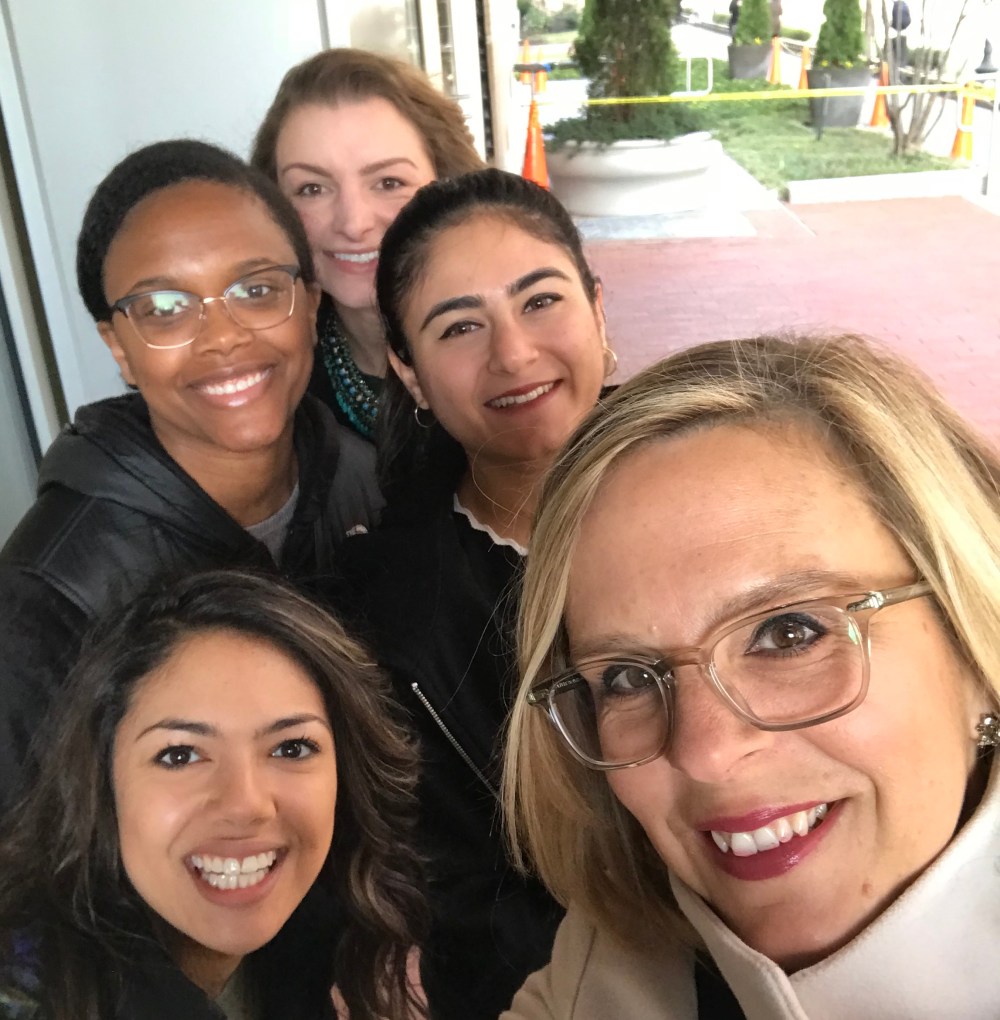
When I was starting out in the working world, I benefited from fabulous mentors who helped me grow. I played the role of an anthropologist, carefully observing the actions and qualities that made leaders successful. I tried to emulate them, going so far as dressing like they did in double-breasted blazers with shoulder pads (it was the 80s!) even when I didn’t need to.
Fashion aside, I learned a lot from these people, and now, as a leader myself, I’m honored to be in a position where I can help guide other women. In many ways, I’m learning as much from them as they are from me. But having been on both sides of the mentor/mentee equation, I know what makes the relationship work:
Be mindful in your approach.
I can’t count how many times I’ve served on a panel or spoken at an event and, afterwards, someone comes up to me, thrusts a business card in my hand and says, “Hi, I’m so-and-so. Will you be my mentor?” Nope. Hard stop from me. It doesn’t work that way. You’ll need to do some homework first.
Here’s another example: One day after I’d given a speech, a young woman approached me and said, “I want to have your job someday!” When I asked why, she replied, “Because I’d like to do what you do.” Well, what does that mean? What part of my job did she like? The title I have on my card? The responsibility of managing a big team? The mission of my organization?
You need to be able to answer the “why” before you approach a prospective mentor. Learn as much as you can about her work and about what you hope to learn from her. And remember: Rather than simply approaching someone out of the blue, it’s a good idea to get to know them a bit before making the request.
Move outside your comfort zone.
Yes, it makes sense to seek out mentors who are at higher levels in the same field as you, as most do. But don’t stop there: You can learn an amazing amount from people in different lines of work. I’ve worked in the nonprofit world for the past 25+ years, but some of the most important mentors in my career have never worked for a nonprofit. And they’ve helped to give me invaluable perspectives and counsel.
Before seeking out a mentor, have a specific idea of the kind of help you’re seeking. Then think beyond the usual suspects. For example, if you’re aiming to be a CEO, but don’t have any financial experience, consider connecting with a vendor you’ve worked with who started her own company. She may have good advice on how to gain some business and budgeting chops. Or say you’re eager to learn how to sensitively manage people in the face of organizational change. Reach out to a family friend who works for a company that was recently reorganized or downsized. Whatever your need, think creatively about who can help fill it.
Show more than a little respect.
I realize the goal of seeking out a mentor is to advance your career—and that’s just as it should be. But in sessions with your mentor, don’t make it all about yourself. Instead of asking what you should do or seeking suggestions on solving your latest problem, ask your mentor questions about herself and her career. Who were her favorite bosses? What were her biggest mistakes? What was the best career advice she ever got? Most people like talking about themselves, so take advantage of that and listen, listen, listen. Trust me: You’ll learn a lot by doing so.
And always show respect for your mentor’s time. If you ask to meet for coffee, plan on 30 minutes unless your mentor suggests doing more. If it’s a lunch, find out how much time she has then stick to it. We are all busy in our day jobs, so remember your mentor is giving up time that she could be using to kill it in the office. As far as other communications, brevity is important. Edit your emails to make them succinct and keep phone calls direct and to the point. A big thank you every now and then never hurts. Gratitude always wins. I’ve had several mentees who sought me out. After what seemed like productive meetings, we agreed on certain action items and made plans to reconvene in a couple months. Sadly, some didn’t follow through, or if they did, they failed to act on the next steps we discussed. That made me feel as though I’d wasted my time, so I didn’t feel guilty for cutting things off. But those bad experiences were the exception: More typically, I’ve had rich and rewarding relationships with mentees that continue to thrive. I see how eager these bright and ambitious women are to grow in their career and how hard they are working at it. I love when they tell me about the ways my advice has helped them – and even about ways my suggestions haven’t worked out. I value their honesty and I know they appreciate my time. I’m happy to give more to them. After all, I wouldn’t be where I am today without all those mentors who helped me along my path – and continue to do so! I feel honored and privileged to be able to do the same…ahem, minus those double-breasted blazers with shoulder pads. Kim Churches is the CEO of the American Association of University Women, a national non-partisan nonprofit that works to advance gender equity for women and girls through research, education and advocacy.
Kim Churches Recommended


Say what you mean, mean what you say.
