








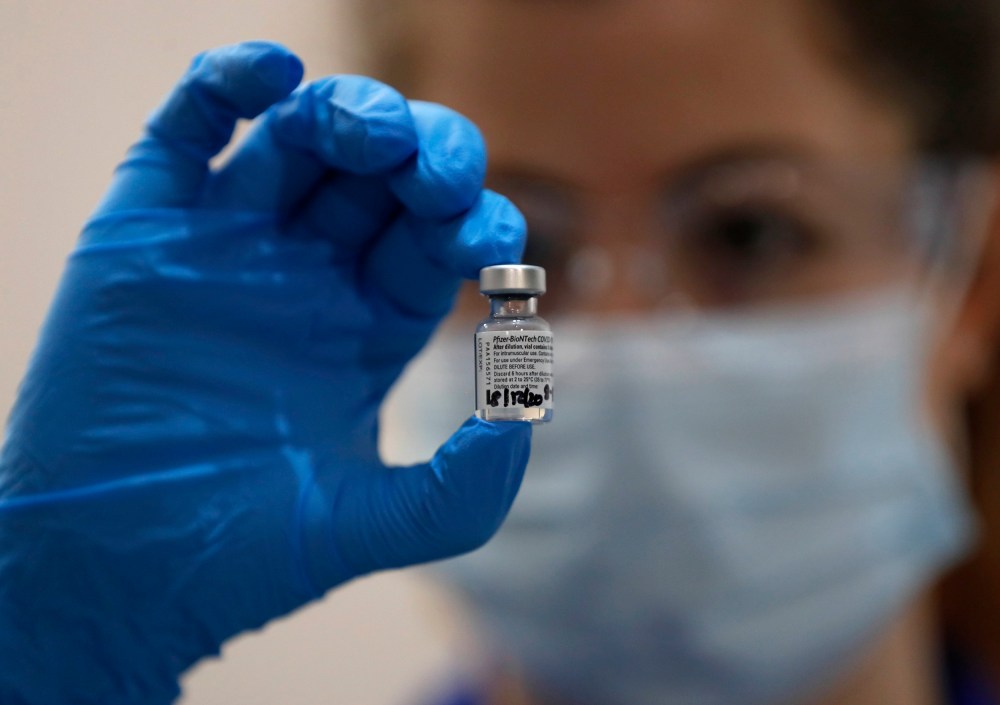
It’s exciting news that Pfizer—the maker of one of the new vaccines for Covid 19 — has received Emergency Use Authorization (EUA) from the FDA. And Moderna, which has a similar vaccine, has already submitted their application for EUA and isn’t far behind. Across the country, states are poised to start administering it.
While much of the population is ready to get vaccinated when it’s available to them, there’s still a fair amount of skepticism by some about the safety of the vaccine.

Why? Misinformation about vaccines (in general) has been circulating for almost two decades, making some people suspicious about the whole process, including during this pandemic.
It’s important to set the record straight, and use the science to support smart decision making. After all, your life — and those you care about —could depend on it.
Remember:
1. These “new” vaccines have been under study for many years.
While it might appear that the vaccine was developed in record time– less than a year—ongoing research and the science behind mRNA vaccines has been studied for more than two decades. The recent application of this process to the Covid 19-virus is based on many years of testing. And, the safety approval process is the same for any vaccine submitted for approval. Called a Phase 3 trial, this means a large population (for these vaccines, 30,000 – 40,000 people per study) has been studied to evaluate the safety and efficacy of the vaccine, compared to a non-vaccine control group.
RELATED: Meet the team of women who want to eradicate Covid-19 under Biden

2. Receiving an mRNA vaccine will NOT alter your DNA or genetics.
Messenger ribonucleic acid (mRNA) is a compound that tells your body how to make certain proteins. This vaccine cannot interact or modify your DNA (genetic material) because it is unable to get to the part of the cell where the DNA is stored – called the nucleus. The nucleus has a protective shell which is impossible for mRNA to crack. Instead, the proteins made from this mRNA interact with your body’s natural immune system to create a robust antibody response to Covid-19, without you getting sick.
3. Receiving a vaccine will not give you Covid-19.
None of the vaccines under study in the United States use a live virus that causes Covid-19. If you get a temporary side effect from the vaccine – like body aches or fever, it’s a sign that your immune system is recognizing and fighting the virus by generating an immune response. Any side-effect will likely be far less intense than getting the virus. This is true for immunizations from childhood through old age.
And the study continued for two months after the second of two vaccine injections, the time point selected because the likelihood of rare, severe side effects is anticipated during this time.
The vaccine helps protect you by creating an antibody response without having to experience sickness. And the success rate in prevention is over 90 percent for both the Pfizer and Moderna vaccines. It’s a big mistake to think that taking a chance and getting the virus will provide you with “natural” immunity, but without the risks of a vaccine. While many people with Covid-19 have only minor (or no) symptoms, the risk of severe illness and death is very real. And there’s no way to know how Covid-19 will affect you. Plus, if you get sick, you can also spread the disease to friends and family. The vaccine helps protect you by creating an antibody response without having to experience sickness. While the studies from both vaccines show a very high success rate for preventing the virus, it was found that there were a few people who did catch the virus, despite the vaccine. The good news from the data is that none of the people who were infected got severely ill. And if you do get sick, the study trial show you’re less likely to get seriously ill if you’ve had the vaccine. Madelyn Fernstrom, Ph.D. is the NBC News’ health editor. Follow her on Twitter @drfernstrom.
Madelyn Fernstrom, PhD
Madelyn Fernstrom, Ph.D., is the Diet and Nutrition editor for TODAY.
Fernstrom is a professor of psychiatry, epidemiology and surgery at the University of Pittsburgh Medical Center and a board certified nutrition specialist from the American College of Nutrition. She is the founding director of the UPMC Weight Management Center. Recommended


4. Getting vaccinated can help prevent you from getting sick with Covid-19.
5. If you do get Covid-19, if you’ve had a vaccination, you’ll likely be only mildly sick.
