








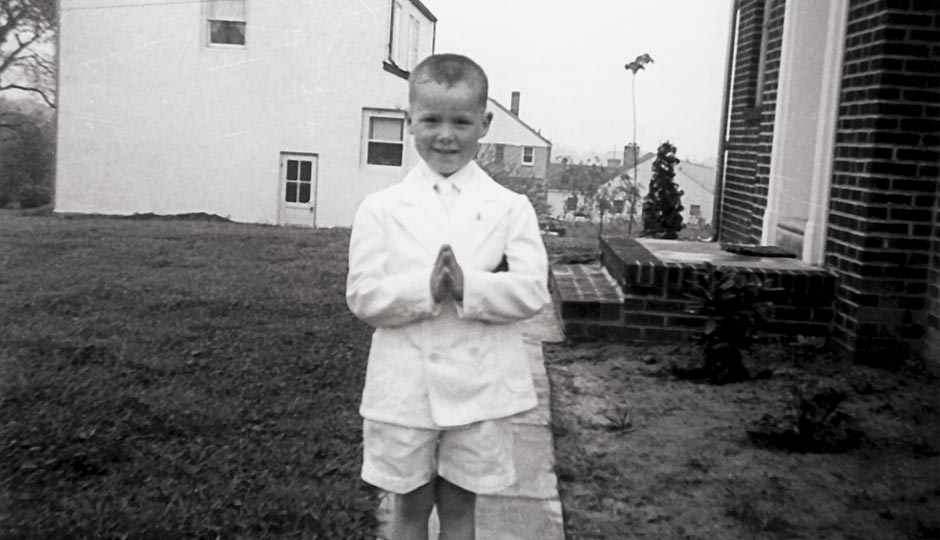
I remember when “The Greatest Show on Earth” came to Hunting Park. It really happened. I Googled it. In 1950, the Barnum & Bailey Circus really did come to Philadelphia. It’s in the books.
Better yet, it’s all in my head. I remember the day Dad and Mom took us across from where we lived in that tiny second-floor apartment above the Italian grocery at Hunting Park Avenue and Broad Street. They did it twice: in the afternoon to walk along the gangway and see the lions and tigers in their cages, and that night to the center ring to see all those clowns come climbing out of that little car.
What’s truly wondrous is that Hunting Park is where we and everyone else in the neighborhood hung out. We’d go there on a summer evening to stroll among the old gazebo, the merry-go-round, and the stand where they sold those cartons of orange drink that afterward you could turn into actual cardboard megaphones.
RELATED: Pope Francis holds mass in Philadelphia
All this was in those years our parents forever called “after the war,” as opposed to “before the war.” Or as Dad’s mom, Grandmom-in-Chestnut Hill, would always say when speaking of the distant past, “Oh, that was years and years ago.”
It was a great neighborhood back then. Grandmom and Grandpop Shields, Mom’s parents, lived around the corner from us on 15th Street. Everyone walked everywhere, including to the grand St. Stephen’s Church a few blocks down on Broad Street. To let you know how different things were, you couldn’t miss the big trough at the corner of Hunting Park and Broad where the horses that delivered our milk and collected the trash drank and splashed away.
Yes, that was “years and years ago.” It seems, looking back from 2015, as though that time was a lot closer to the 1800s than it was to today. In fact, it was. Do the math.
Though I doubt the words would have meant much to me at the time, we lived in a totally Catholic world — Irish Catholic. Mass at St. Stephen’s was definite old-church. You dressed up. Everybody did, especially the adults. Grandpop always put on his three-piece gray suit. It was all in Latin, and the priest stood with his back to us just like it showed in those stages of the Mass in the missal. The altar boys rang the bells more often than they do now. And people came on time. I remember once when Grandpop took us and we were maybe five minutes late. When Mass was over, he sent me and my older brother Herb — we called him Bert back then — home, while he stayed for the entire next Mass. He was like that. It was like that back then.
Ours was a religious family, round-the-clock religious. There were crucifixes in Grandmom and Grandpop’s house, and framed devotions to the Sacred Heart on the dining room wall. Grandmom was always talking about a “novena” that was about to be celebrated. When she got upset at something, she had a standard response: “Jesus, Mary and Joseph!” was both her prayer and her sigh at having kids forever around. One of her daughters, Eleanor, had joined the Sisters of St. Joseph at a young age and was already teaching what we call “special education.” Today, at 92, Eleanor is at St. Joseph Villa in Flourtown. I pray she gets to read this.
Auntie Agnes would also become a nun, but in the years when we were just becoming aware of things, she was going to school up at Mount St. Joseph’s. Her bedroom was in the front of the house on 15th Street. It was the nicest room, catching the sun and filled with her girl stuff, her field hockey stick, her perfectly kept marble-backed copybooks. The room smelled of talcum powder or something else wonderfully girly. I once dreamt of being in that room with the Devil talking to me. I can’t remember what he was saying, only the slow, commanding, menacing voice. It didn’t seem like a dream, not then, not in memory. It seemed real.
RELATED: Pope Francis to immigrants: ‘Never be ashamed of your traditions’
Aunt Agnes was still a teenager back then and therefore the coolest possible person to hang out with. She would take us to movies down on Broad Street and to a malt shop afterward. Her decision to give up a scholarship to Chestnut Hill College so another girl could have it — one who wasn’t becoming a nun — is part of our family story.
As religious as she was, Grandmom was stricken when she learned that a second daughter was heading to the convent: “Wait till your father hears it!” But the funny thing was Grandpop’s acceptance: “Whatever makes you happy,” he told his youngest. Agnes would for many years chair the Chestnut Hill College English department.
As I said, at the rowhouse on 15th Street and in our world near Hunting Park, it was all about the Church. I remember the morning Cardinal Dougherty had his funeral. It was on television the whole morning. The year was 1951. I was five years old. What’s amazing is that the great man had been archbishop of Philadelphia since 1918. It was as if he’d always been the Church’s leader. The treatment by local TV was appropriately reverential. The Mass at Sts. Peter and Paul was like an event at the Vatican. Or it certainly seemed that way at Grandmom’s.
Did I mention we were Irish? Grandmom’s maiden name was Conroy; her mother’s was Quinlan. Call it vanity, but I took great pride when my cousins agreed several years ago that I was “a Quinlan.”
Anyway, there were aspects of our lives that I now definitely connect with the country we all came from. One was what we ate and how we did so. My brother Bert and I would spend many a morning on Grandmom’s porch, watching the horses pull the milk wagon up 15th Street. Bert was the one who noticed how the horses always knew which rowhouses to stop at. The afternoons were just as memorable. We’d sit on the davenport, helping Grandmom make dinner. We’d get started about three, just when the Hunting Park outbound traffic began. Before us were the vegetables Grandmom had gotten for “Daddy’s supper.” Everything was from scratch: no cans, and frozen food hadn’t come along yet. We’d shell the peas, husk the corn, clip the string beans. Grandmom would then take it into the kitchen in the back and boil it all for two to three hours. Okay, I’m exaggerating, but the Irish know what I’m talking about.
Grandpop! Charles Patrick Shields was a character straight from Eugene O’Neill. (For a particular reference, see A Touch of the Poet.) He worked as a supervisor at a plant several subway stops away. He’d head off to work in his peacoat and cap, carrying his lunch bucket and Thermos. He could have been a guy making his way to his job in County Cork.
His true position, the one he kept in his head, was that of a greater man altogether. There’d been money in the family. A couple generations earlier, the Shieldses had owned the local dairy. Even when we were growing up, Grandpop would wear his three-piece suit all day on Sunday as a sign of his better station.
The Depression had been hard across the board. Family legend told how Grandmom pinched pennies and Grandpop walked the nine miles to and from City Hall every day of the week, looking for work. Only years later did I realize he’d been hoping to pick up a patronage job from the old Republican political machine, which dominated Philadelphia for 87 years.
%22Years%20later%2C%20Mom%20would%20ask%20a%20friend%20of%20mine%20during%20a%20wildly%20uphill%20Democratic%20primary%20campaign%20I%20was%20running%20for%20Congress%2C%20%27Do%20you%20think%20he%E2%80%99s%20just%20a%20dreamer%2C%20like%20my%20father%3F%27%20Talk%20about%20growing%20up%20Irish%20Catholic.%22′
Beginning in the early 1950s, all this changed — the city’s and Grandpop’s politics both. He was now a proud Democratic committeeman, leading, he would brag, “the best division in the city.” This was when the neighborhood, and 15th Street itself, began to change, with all those reliable African-American votes arriving under his political watch.
Switching parties was just what a lot of the Irish did back when the Republicans were dying and the Democrats, buoyed by FDR, were coming into their own. It was politics itself that Grandpop loved, and that I loved to talk with him about. He always kept up his personal notion of being a man of a certain distinction. As we grew up and visited, often staying overnight, my brother Bert and I would join him on his long walks through Nicetown and Tioga. After supper, he’d head off with his Phillies cigar lit. On his way home, he’d stop at the newsstand on the corner of Broad and Hunting Park and get the bulldog edition of the Inquirer, then sit reading it under the mantelpiece in the living room. Afterward he’d look up, smile, and repeat those grand words of recognition: “Christopher John.” Honestly, can you beat that?
Years later, Mom would ask a friend of mine during a wildly uphill Democratic primary campaign I was running for Congress, “Do you think he’s just a dreamer, like my father?” Talk about growing up Irish Catholic.

She later broke loose in a bigger way. She married a Protestant.
Dad had grown up in Chestnut Hill. His mom, our Grandmom-in-Chestnut Hill, was an Orangewoman of the first order. She had come to America from Northern Ireland early in the century to work for the rich, and married an English chauffeur who did the same. Tall and strong in bearing, she grandly survived Grandpop’s early death in the 1950s and ran a laundry business out of her house. Her accent and stout character were pure Mrs. Doubtfire.
Mom had her unique way of accounting for the religious difference between the two families — this matter of her engaging in a “mixed marriage.” First, she got Dad to convert, arguing the wrongness of Calvinism (another family story). While Dad was raised Episcopalian — Church of England — Grandmom-in-Chestnut Hill was an upstanding member of the estimable Presbyterian church right there on Germantown Avenue. Somehow we divined that Mom had made a strong, relentless charge against the un-American-ness of predestination, working on Dad’s deep Republican faith in self-reliance.
Dad’s conversion was apparently not enough. Mom still felt the need to account for Grandmom-in-Chestnut Hill. I remember the time it came to a head. As was the custom, Bert and I were staying at Grandmom’s while Dad and Mom were on a week’s vacation. (They always took us on a second one).
“Mom says the reason you’re Presbyterian,” one of us said, “is that there wasn’t a Catholic church when you moved to Chestnut Hill.” Grandmom’s response was brisk, clear and final, rejecting the heresy she’d just heard out of hand: “I’m a Presbyterian,” she said, slow, sure, and generously defiant. “I’ve always been a Presbyterian.”
The wondrous thing is how all this worked together, these separate worlds of grandparents, the rowhouse people in North Philadelphia, the Protestant Irish grandmother in Chestnut Hill, worlds overlapping to love the fortunate five sons — Bruce and Charlie and Jim were soon to come — of Herb and Mary Matthews.
Grandpop called it “God’s country.” It was the acre of property Dad and Mom bought on Southampton Road to be their new world. We’d been cooped up too long in that tiny apartment on Hunting Park. Like other young couples after the war, our parents were making their break for it, in their case to that fine hamlet of Somerton, right next to Bucks County.
There weren’t many Catholics up there. Our neighbors on either side on Southampton Road were Protestant. Our other neighbors were the cows out back and the five farmhouses that surrounded us.
Mom took a certain pride in the fact that we were “among the first 25 families” in what was about to be the new parish of St. Christopher’s. But when we arrived, it was still a mission church up there: St. Edward’s. For school, we had to take a long school-bus ride down to Bustleton, to Maternity of the Blessed Virgin Mary.
Maternity was the perfect name for what was coming. Our first grade of baby boomers had a hundred kids in it. It was so big they had to put us in the auditorium.
By third grade, we were headed for the new school up in Somerton, on Proctor Road. Father Purcell, the first pastor, was also the first person I ever met named liked me, Christopher. I assume it’s how the new parish got its name. Certainly, Father had a good deal of power. The school, at his direction, was built entirely on a single floor, much like the motels that were springing up across the country. Concerned about fire, he — or someone — designed all the classrooms to have their own doors opening to the outside.
%22Every%20kid%20knew%20that%20his%20parents%20were%20much%20tougher%20than%20the%20Sisters%20of%20Mercy.%20They%20were%20always%20on%20the%20side%20of%20the%20Sister%2C%20always%20ready%20to%20add%20to%20any%20punishment%20she%20decreed.%22′
A lot happened that year I was in third grade at St. Christopher’s. Part of it was inherited ritual, starting with the teasing among the grades: “First-grade babies, second-grade brats, third-grade angels … ”
Those years hold memories of prayers, regimentation and discipline. “Thank you, Lord, for the light. Grant us the light of eternity.” “Hands folded. No talking.” And, yes, all the familiar aphorisms passed down from nun to nun: “Empty barrels make the most noise.” Or “You’ll burn for that” when someone failed to use up both sides of the paper. One of the more interesting punishments was having to stand in the back of the room and hold a pile of textbooks up high and at arm’s length. The scariest thing was being told to go out and stand in the empty corridor. There you would wait, wondering when — if — Sister would come out and tell you to come back in the classroom. The fear was that she’d call your parents. That was capital punishment indeed. Every kid knew that his parents were much tougher than the Sisters of Mercy. They were always on the side of the Sister, always ready to add to any punishment she decreed. It was the beginning of the Cold War back then. We would be reminded of that fact by the regular air-raid drills. When the alarm sounded, we would get under our little desks and pray. Fifteen minutes is all we would get before the Soviet missiles struck. It was just enough time to examine your conscience, because the general assumption was that a nuclear war, a Third World War, threatened the end of the world. That meant the General Judgment would be at hand. Looking back, I can see that the entire exercise was an opportunity to instruct us third-graders in personal safety, current events and religion, all in a quarter of an hour. I can laugh now. Then, it was all deadly serious. The Cold War was a special concentration for us. Those “Captive Nations” in Eastern and Central Europe, especially Poland, were heavily Catholic. Every Mass back then ended with a special prayer for “the conversion of Russia.” The Church itself was rightly seen as the “world’s greatest bulwark against Communism.” In March 1954, we got the word in class that Josef Stalin, the Soviet dictator, had died. Sister asked us all to pray. I wondered even back then for what: that he’d been converted on his deathbed, the way we were told the Jewish gangster Dutch Schultz had? That he be sent straight to Hell? What? What were we praying for? Perhaps our supplication was thanksgiving, pure and simple. In that case, our prayer was answered. Certainly, no one worse than Stalin has come along. Vladimir is no day at the beach, but he’s no Stalin. Even up there in Somerton, we were still living very much in the Irish Catholic world. On Monday nights, before we got our own TV, we would join all the other kids in the neighborhood — Catholic kids — over at the O’Learys’, watching Superman at seven o’clock. The floor would be filled with us. Even when it came to popular culture, there was a well-recognized Catholic subculture, one we celebrated with pride. Bishop Sheen was on Tuesday nights. Grace Kelly was in the movies on the Ocean City boardwalk. When Dad and Mom would go out for the night, Dad would tell us what movies to watch. Choosing between Going My Way and The Quiet Man was a close call, a view shared by his close buddy Gene Shields. They agreed that the Bing Crosby movie was better for us. Our entire week turned on being Catholic back then. On Monday nights, Dad went to Holy Name; on Tuesday, Mom went to Sodality; Thursday night was the Knights of Columbus weekly get-together; Friday was K of C bowling night, which was followed by a late-into-the-night card game at the Mother Katharine Drexel Hall. Dad played golf on Saturday, usually with his K of C best friend, Gene Shields from down the road. Mom was in the K of C “auxiliary.” On Sunday, Dad would drive to the Lumar Park bakery on the way home from eight o’clock Mass. Our own social existence revolved around the kids we went to St. Christopher’s with. Certainly, it had its rituals — and its rankings. The head of the Milk Boys was number one. Jimmy Schuhl got to get out of school well before lunchtime to go collect the heavy metal crates of regular milk, chocolate milk and orange drink. Then there were the altar boys. This was, for all of us, our first time performing in public. You had to have the Latin down cold. You went to bed some nights knowing that well before dawn, you’d be awakened for an experience far beyond what we now call our “comfort zone.” RELATED: Pope Francis delivers homily in Philadelphia Convent Mass was at 6 a.m. It was mysterious, murky, more than a bit frightening. One minute I was in the ’54 Chevy listening to Johnnie Ray sing “Just Walking in the Rain” and smelling the Vitalis I’d just poured into my hair. The next, I was knocking on the convent door, perilously close to that moment I’d feared. It was opened by a sister I knew from school, only this time in the totally different mode of early-rising communicant. She would walk me to the chapel, where I would put on my surplice and head out to light the altar candles. This was another moment to dread — the inevitable glance out into the pews at the nuns from school with their heads now bowed in prayer. My greatest fear is that I would catch one of their looks. For whatever reason of family prominence, I was named to the funeral team. There were four of us. Whenever someone in the parish died, we’d be let out of school to serve the Mass. It was an adult experience any way you look at it. We were not yet teenagers, but were ritually surrounded by death and grief and the hope of everlasting life. By seventh grade, a clique had developed in our class. Many of us, boys and girls both, had been together since first grade at Maternity. Now a social group was forming. My admission came with an invitation to Regina Thomas’s birthday party. It was a Saturday afternoon of pure joy. It featured dancing to Elvis Presley, spin the bottle and post office. I arrived home that afternoon with the taste of lipstick in my mouth. It was simply great! Bandstand was big back then, especially since it was one of Philadelphia’s great bragging rights. It would be on in people’s houses when I went to collect on my Bulletin paper route. While we didn’t get to Bandstand, a bunch of us did get to Grady and Hurst, the Saturday dance show. I remember how small the studio seemed, and how we had to walk over the wrestling ring from Fabiani’s Mat Time to get to the dance floor. It was my first appearance on TV. It was getting close to eighth-grade graduation. Now came a series of memories I’ll certainly never forget — nor want to. One was Sister Esther’s feast day. It was a school-wide tribute to the principal of St. Christopher’s. Each of the classes was to perform a song-and-dance number from a different country. Ours was Ireland. I was paired with the popular Regina Thomas. I remember the lyrics: “All the boys and girls did gather to bring greetings from the old sod, thanking God for many favors and to bless the ground we’ve trod.” Regina’s older sister and her father, a doctor, had been killed in a car accident that year on the way home from the Shore. My funeral team was at the Mass. It was a moment I’ll never forget — not knowing what to say to the girl who was the darling of the class. There was no better word for her than that. It was all rushing to an end. I remember our eighth-grade nun telling the girls to leave the room, then pulling up her sleeves to give us a serious talk. “I’m not going to beat around the bush,” she began, before doing just that. But I do remember her strange admonition to us: “You’ll keep control long after she’s lost it. You have to be the one to stop.” My God, this woman had her imaginings. It was like one of those over-the-top movie previews: “Passion like you’ve never seen it!!!” She was thinking Peyton Place. We were still playing spin the bottle. That eighth-grade year, Kathie Trainer, another social star of the class, and I won 50 cents each in a St. Christopher’s dance contest. I’d say we ended on top, all of us. If it all sounds like a thousand years ago, it was certainly a different world. You know how Grandmom-in-Chestnut Hill liked to dismiss such memories as “years and years ago.” Well, after this long look back, I can only say I wish it weren’t. Originally published as “Growing Up Catholic” in the September 2015 issue of Philadelphia magazine.
Chris Matthews Recommended


