











The Supreme Court on Thursday decided a case about venue, meaning the place where a crime is charged. The decision would have escaped widespread notice if its emergence didn’t coincide with Donald Trump’s federal indictment, in which special counsel Jack Smith chose to charge the former president in Florida instead of Washington, D.C.
Ahead of the ruling and after, I’ve noticed some speculation that this otherwise obscure Supreme Court case might have factored into Smith’s charging decision — but I’m not sure that’s so.
To understand why, let’s examine what venue is, what the Supreme Court case is about, and how this all factored into Smith’s venue decision — or didn’t.
For starters, venue is a super important issue generally. It’s a constitutional requirement that says prosecutors need to bring cases where the crime allegedly occurred. So, for instance, a prosecutor can’t charge someone for murder in New York if it happened in California and there’s no New York connection. Making the wrong venue choice can be fatal to a criminal case.
In this new case decided Thursday, which, annoyingly for purposes of this discussion, involves a defendant named Timothy Smith, the issue wasn’t whether venue matters but how it matters. Specifically, the question was whether the Constitution permits a retrial following an improperly venued trial with a jury from the wrong district, or whether the case is over for good. In a unanimous opinion, the Supreme Court said retrial is the answer.
So if you’re a prosecutor who tried a case with improper venue, you’re happy with Thursday’s decision. Perhaps you’ll get another shot to do it right. But what does that have to do with Smith choosing Florida over Washington?
That’s not entirely clear to me. For Timothy Smith v. United States to have mattered to Jack Smith’s venue choice, we would need to entertain the possibility that, had this Supreme Court decision come out before the special counsel made his venue decision, he would have chosen Washington over Florida.
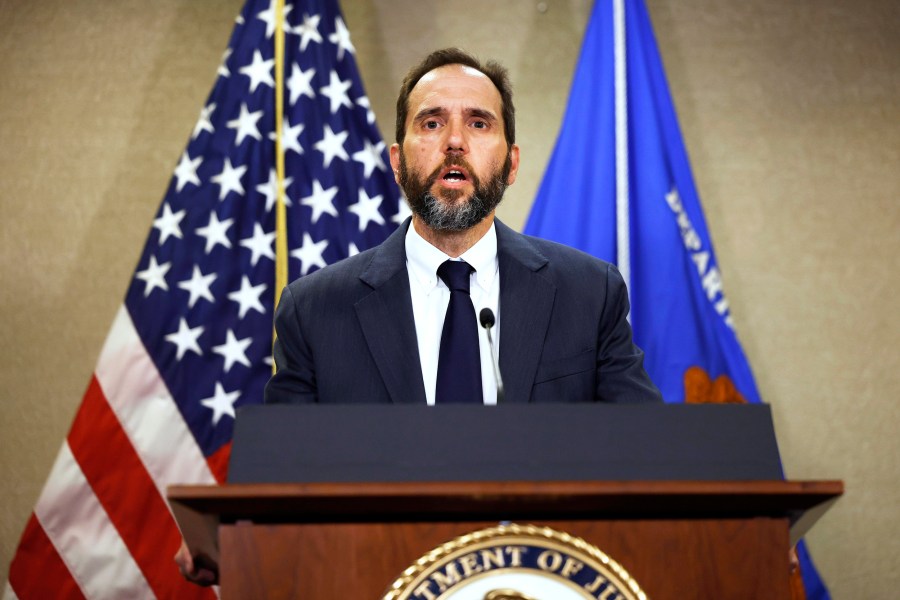
While we don’t know what exactly went into Smith’s thinking, there are at least a couple of reasons that seems unlikely. For one thing, if Smith thought this now-favorable ruling for the government would have enabled him to charge Trump in Washington instead of Florida, then he could have waited at most a month for the Supreme Court to finish issuing decisions this term. We don’t know ahead of time which cases are coming each opinion day, but the court generally wraps up in late June.
So if the only thing stopping Smith from drawing from a more favorable jury and judge pool in Washington was this decision, it would have been worth the wait — especially if the upshot is him having the option of retrying the entire case again in Florida after a court rules that he errantly did so in Washington, a process that would take much longer than a month to play out. Perhaps more fundamentally, Smith wants to make the correct venue decision in the first place. If it turns out that he didn’t, then he’d obviously rather have a retrial than an outright dismissal. But that doesn’t change the fact that the venue choice still needs to be correct or else the case is thrown into question, even if it isn’t gone for good under this new precedent. Ultimately, it seems Smith chose to bring charges in Florida because he thinks that’s the proper venue, not out of fear that he wouldn’t be able to retry the case if he brought it in the wrong place. Especially against the backdrop of the 2024 election whose outcome could make the case go away, Smith didn’t bring this historic prosecution to retry it. Subscribe to the Deadline: Legal Blog newsletter for weekly updates on the top legal stories, including news from the Supreme Court, the Donald Trump investigations and more
Jordan Rubin is the Deadline: Legal Blog writer. He was a prosecutor for the New York County District Attorney’s Office in Manhattan and is the author of “Bizarro," a book about the secret war on synthetic drugs. Before he joined MS NOW, he was a legal reporter for Bloomberg Law.
Latest Post
Recommended


