








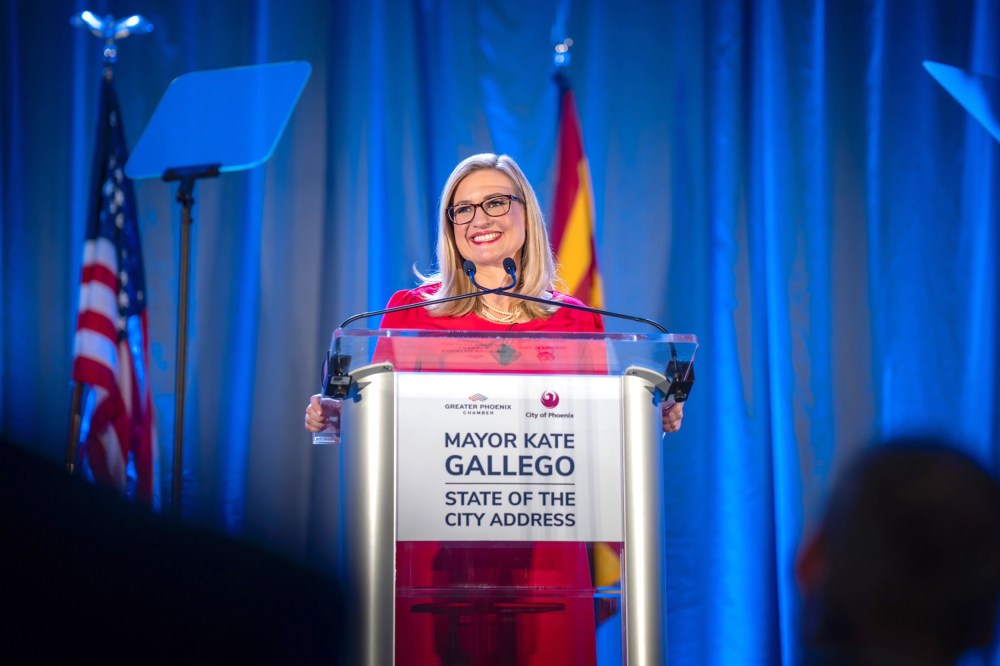
In her younger years, Phoenix mayor Kate Gallego, 42, never imagined she would one day run the fifth largest city in the country. “I wanted to be a veterinarian,” she recalled. “As a young kid, to me, mayors were tall guys with puffy hair — I had not lived in a city that had a female mayor — and so when I picture a mayor, I don’t picture someone who looks like me.”
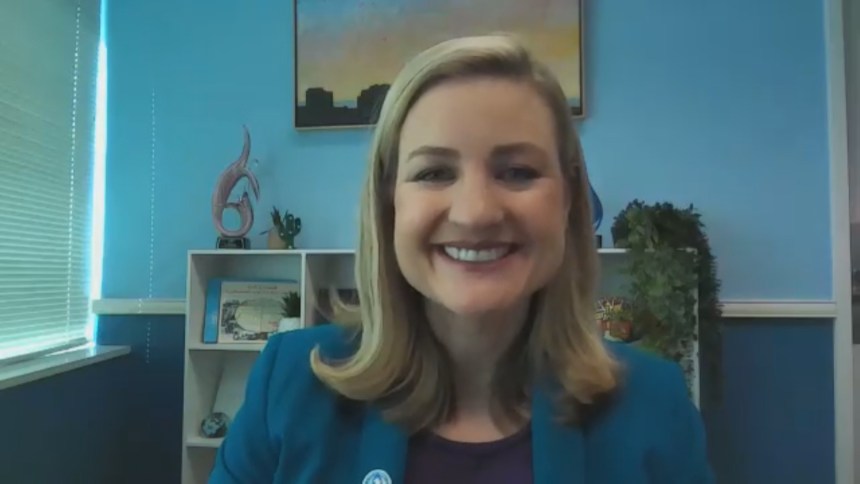
But in 2019, that’s exactly what happened. Gallego won a special election to become the second female mayor in Phoenix history, despite dealing with extraordinary personal circumstances. “I had a very bumpy 2017 — I got divorced, I had a baby — and my mother had been recently diagnosed with late-stage cancer,” she told Know Your Value. “I was very nervous how people would react to a young mother who didn’t have a husband, trying to seek executive office.
Gallego — who was serving on the Phoenix City Council at the time — spent months debating whether not she should run, but she saw a rare opportunity to do so after then-Mayor Greg Stanton left the post to run for Congress.
When she decided to act, the young mother soon learned her fears surrounding her personal life were unfounded.

“The people of Phoenix were much more focused on what I would do for the city and my values than the fact that I had a kid at home,” she said. “Many people really appreciated that I was a little bit of a sandwich generation — trying to support my mom through her cancer diagnosis, raise a kid and have a meaningful career — [they] could identify with that, and wanted a mayor who would help try to make life easier for people in that sandwich situation.”
In 2020, Gallego handily won her second term as mayor with a landslide 60 percent of the vote. Under her leadership, Phoenix hosted a record-breaking Super Bowl and has become a boomtown of economic development.
In 2022, the Biden administration dedicated federal subsidies from the CHIPS Act to Maricopa county, which sparked enormous investment and transformed the vital swing-vote region into a major hub for manufacturing the computer chips that will power everything from the brains in Apple iPhones to F-35 fighter jets. As a result, the Phoenix metro area is outpacing the rest of the United States in population and wage growth.
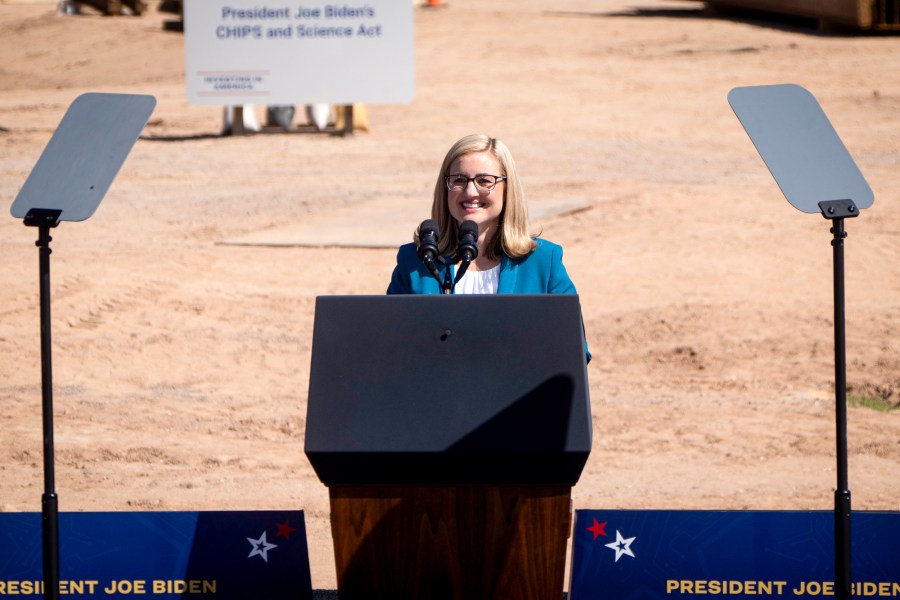
Just this month, the mayor spoke before President Biden at the site of a new Intel campus in nearby Chandler, supported by the $8.5 billion influx in CHIPS funding to build two semiconductor plants and upgrade an existing one 30 minutes southeast of downtown Phoenix, which is expected to bring thousands of high-paying roles to the area.
“I’m really excited about how we’re transforming Phoenix toward even higher wage jobs and opportunities,” Gallego said. “Losing my mom to cancer was very impactful on me and I’m committed to being part of the solution to that terrible diagnosis. So, I’ve worked really hard to bring new medical education opportunities as well as grow and support our biotech, anti-cancer, manufacturing and more. I want the path to cure cancer to be a quick one, and I want it to go through Phoenix. I’ve tried to take tough moments in my own life and turn it into opportunities for the people of Phoenix.”
That includes creating pathways to success for working parents. In 2022, the city implemented a 12-week paid leave policy for public employees, one of the most generous packages offered by any local government agency. “I think just being a mom of a young kid really informs my public policy decisions,” she said. “I was so proud to join my colleagues to unanimously expand to 12 weeks paid leave. I want parents to be able to spend time taking care of and bonding with their babies.” And for those parents who are thinking about a run for elected office more broadly, Gallego offered her best advice. “If you’re debating taking a leap in your career for public service, take this as the message, you should go for it,” she said. “Even if your personal life is not flawless, you can progress in your career while you’re taking care of your parents or raising a child. I rarely talk to anyone who says their personal life is flawless and perfect. Don’t let that hold you back.” Gallego did, however, issue a warning from her own experience that she says all parents should push back on. “It’s particularly been valuable for me to talk to other parents who are mayors because I want to make sure that I do a good job supporting my kid and insulating him,” she explained. “So often, when people want to change my mind, they talk about my family —sometimes people who are anti-abortion talk about attacking my child. I’m proudly pro-choice and I wish they wouldn’t bring him into it … don’t allow political candidates to get away with bringing people’s families in. We want parents to serve in office, and so we have to make sure that they can do so while their kids are safe. So, if you see political tactics that involve people’s kids, say no to it — we will all be better off if people’s children, particularly young children, can be safe and left out of the craziness that is American politics.”
Bianca Brosh Recommended


This is how we can drastically increase the number of women in politics
