









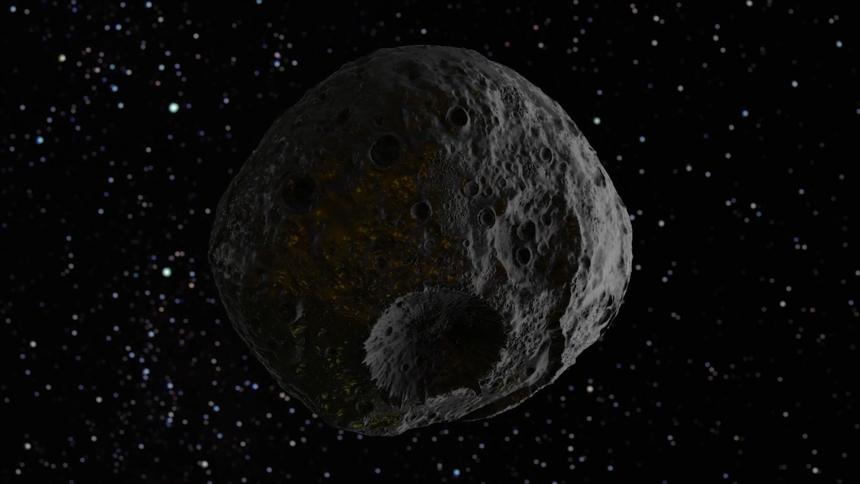
In less than 100 days from now, NASA plans to launch an unmanned spacecraft on a 4-year mission bound for the asteroid 16 Psyche over 250 million miles away. If the journey is successful, this will be the first exploration of a world not made of rock or ice but out of metal.
The woman leading that effort is Professor Linda Elkins-Tanton, the principal investigator for the Psyche mission at NASA’s Discovery program. The hard-won endeavor took her six years to secure, with an ambitious agenda to explore the building blocks of planet formation.
A National Academy of Sciences member, she’s only the second woman to take the helm of a NASA mission. Fittingly, she even has an asteroid named after her, 8252 Elkins-Tanton.
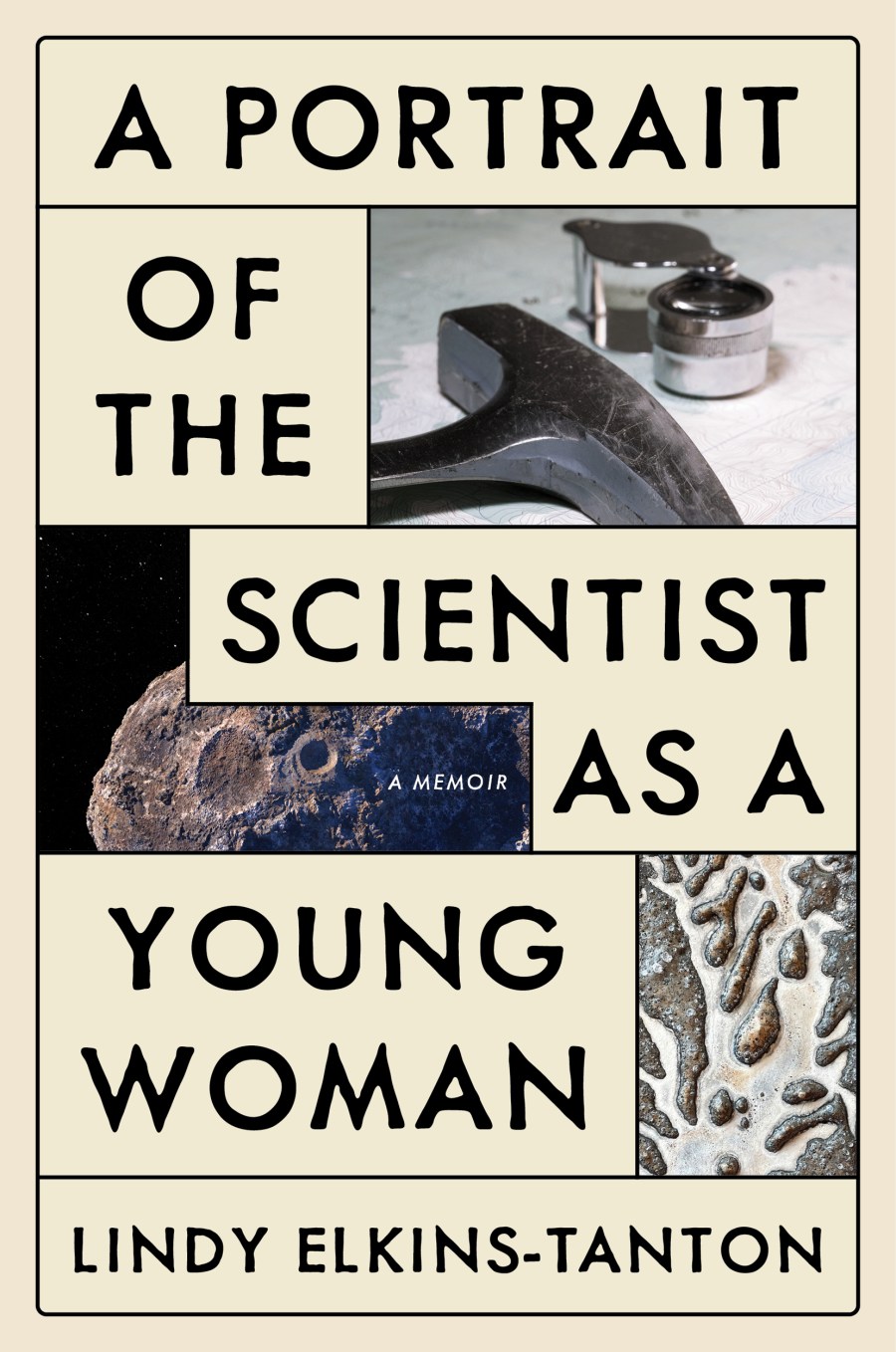
The trailblazing scientist – who also directs Arizona State University’s School of Earth and Space Exploration – is out with her first memoir, “A Portrait of the Scientist as a Young Woman.”
She recently spoke to Know Your Value about her unlikely path into the planetary sciences, overcoming her personal struggles with childhood trauma, and shared advice for navigating gender bias in science leadership.
Know Your Value: Who is this book for and why did you write it now?
Elkins-Tanton: This book is about going beyond what people expect of you. When I was younger, I did not expect to be highly effective or able to make a difference.
At 30, I was a single mother and recently divorced with a 3-year-old son. I was working two jobs and thinking of going back to graduate school. I was not a model for success in scientific research; I was 10 years behind already. But I put my nose to the grindstone, and when I looked up again, I was in a better place. I learned that determination and persistence really do count, just like your grandmother told you.

This story is not about completing the NASA Psyche mission – it’s about the curvy trails that brought me, and the team, this far. It’s a story of one foot in front of the other, which is something I think we can all relate to.
Know Your Value: Tell us about your non-traditional career path. Did you ever see yourself in the field of space exploration?
Elkins-Tanton: Who knew that the path to the forefront of science leadership would lead through desperation, a great wish to be a good parent, and maybe some guilt and anger?
Some kids know from the moment they look through a telescope and see Saturn, or watch ‘Star Trek,’ that they want to study the solar system and the universe. Not me.
Rather than going straight from my undergraduate degree to my PhD, which is needed for the professorships and leadership positions I’ve ended up having in academia, I went into business. I realized, in retrospect, that a lot of my curiosity is around how teams of people can become more than the sum of the individuals.
So, I had a curvy career path: I worked for Touche Ross management consulting, U.S. News & World Report, and I ran my own business consultancy before going back to scientific research.
But a curvy career path can be a great asset, it’s the knowledge most people in one area don’t have that can transform that area.
An example is my learning about budgets, forecasts and teams while in management consulting, and then bringing that to academic science. I’ve learned to trust that who I am and what I value is enough to bring to the table.
Eventually, I became too committed to education, too in love with asking harder questions in research and too in love with discovery. I stayed in academia and was blessed with this opportunity to lead a space mission for NASA.
Know Your Value: Did you experience imposter syndrome?
Elkins-Tanton: Yes, I’ve definitely had imposter syndrome, that feeling that I don’t really deserve the good things that happen professionally and that I doubt my abilities. I suspect most people who are sensitive to the thoughts and actions of others have had these moments.

I’ve largely solved it by being content with who I am and what I have to offer. If I inhabit myself authentically then what can go wrong? However last year when I was elected to the National Academy of Sciences – a very high honor – I suddenly thought, ‘Wow, now I really am a scientist, forever.’ That’s a high bar to reach in order to feel authentically like a scientist! Perhaps there’s still a few hidden pockets of imposter syndrome.
Know Your Value: What were some of the challenges you faced as a woman in science?
Elkins-Tanton: As a young woman in business and as a young scientist I had in general good experiences. But I also received some cutting remarks that really stuck with me and caused me to have doubts, like the time my high school math teacher told me I didn’t really understand math and would never get into MIT. And when I got to MIT in 1983, undergrads generally thought women were less worthy to be there than the men. Bigger gender-based challenges have come to me in leadership positions. Top leadership in most organizations is still a group of similar men with the same backgrounds and attitudes. For top leadership, fitting in can be the final hurdle. Fitting in to that group closest to the highest leader, which almost always looks and acts like that highest leader. How do you say just the right things to fit in? How do you dress the right way, sit the right way? It can be very, very hard for women or people of color or those from different backgrounds to be selected to join those groups. Know Your Value: You weave in some very difficult experiences from your youth, including being a survivor of childhood sexual assault. How did you recover? Elkins-Tanton: Writing the story of my childhood was a special challenge. I can tell it from the point of view of a happy child with pets and an interesting, eccentric family, enough money, good schools. Or I can tell it as a chain of nightmares, of anxiety and depression, of health problems and of sexual assault. But can’t each of us tell our stories in at least two ways? It’s about how we behave and feel every day afterwards, what we learned and our how determination to progress. For me, talk therapy was highly effective. During that therapy I took anti-depressants, and they were greatly helpful to me. Once I had resolved enough that my symptoms had gone, I stopped taking the prescription, and I haven’t needed anything for 20 years now. Those therapies really resolved my challenges, but I wasn’t ready to start that work until my late 20s. Know Your Value: The gender gap in academic leadership is still surprisingly wide. Talk about changing the culture around gender bias in academia. Elkins-Tanton: Gender gaps in positions of prestige or power are caused by bias. Explicit bias, where people are conscious of their bias and act on it on purpose, is terrible enough. Implicit bias, the unconscious bias we all carry, is pernicious and surprisingly powerful, and discouragingly difficult to fix. In 2021, Yuhao Dao, Jessica Nordell and Kenneth Joseph built a simple model of how implicit bias applied during performance reviews creates a deficit of women at the top of organizations. They showed that even if you start with a 50:50 ratio of men and women in the C-suite, if women’s performances are devalued by just three percent, then after 10 years there are no women at all left in leadership. Combine that with a 2020 United Nations report that showed that 90 percent of men and women have biases against women, and you can see that it’s an uphill battle. I talk about bias on my teams in the attempt to take the taboo out. And it’s not a zero-sum game; every person is in the “out group” at some point in their lives. To create change, in the organizations I’ve experienced, we need discussion among the ranks and support for good leadership. In leadership, we need determination and ethics, and support and willingness to listen to the ranks. It takes everyone.
Bianca Brosh Recommended


