









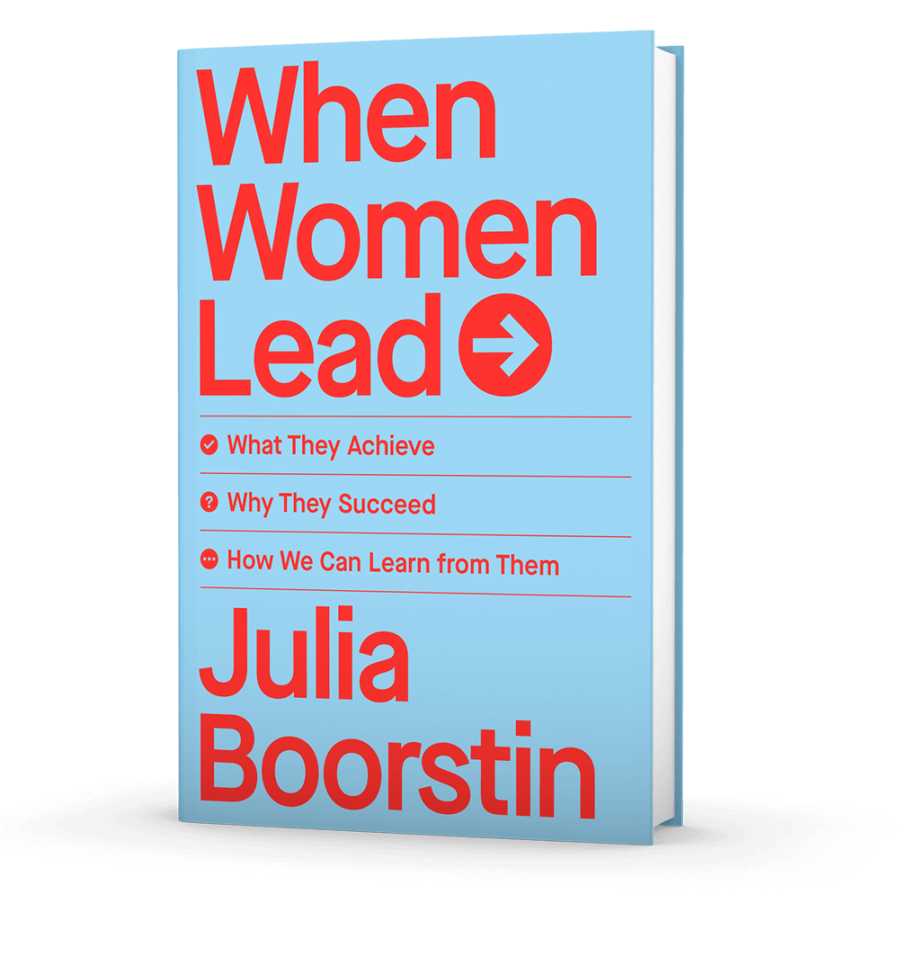
Below is an adapted excerpt from Julia Boorstin’s new book “When Women Lead: What They Achieve, Why They Succeed, and How We Can Learn from Them”:
As I made my way through dozens of academic studies, I found myself stuck on a particular pile of reports that detailed all the different ways women in business were judged more harshly. I struggled to figure out how I could organize that demoralizing research into a positive, practical framework. It all felt overwhelming and depressing.

But then I saw a use for all those data in my own professional life, when on CNBC on Dec. 8, 2020, I interviewed Ann Sarnoff, the CEO of WarnerMedia Studios and Networks Group. Warner Brothers had just made the controversial decision to release its next 18 movies simultaneously on the company’s HBO Max streaming platform and in theaters—without warning the filmmakers and actors, whose paydays, which were normally driven by theatrical box office revenues, would be affected. I asked Sarnoff to respond to the criticisms of the filmmaker Christopher Nolan and other Hollywood names and inquired about concessions the company would have to give to theater chains in order to simultaneously release films on HBO Max—and pressed her when she evaded questions.
After the interview, a PR executive called. “I thought you were kind of mean in that interview with Ann,” he told me. “I mean, your tone just felt really harsh.” Umbrage from PR flacks is a professional hazard of business reporting, but it can be harrowing because this kind of opprobrium often comes with a threat—implicit or explicit—of blocked access to an entire organization. (In TV reporting, executives’ on-air participation is valuable currency.)
My general strategy in these kinds of situations had always been to take a warm and upbeat tone and defuse the tension with a comment about what a great opportunity it was to address the headlines. Occasionally I would review a tape with colleagues and ask whether, in fact, I had pushed too hard. After more than 20 years at this, I think I know my stuff. And even when I’m tough, I know I’m fair. Executives continue to return my phone calls. The earth continues to spin. But when it came to that particular call and that particular comment, I had all that research thrumming through my head. At that moment, one study conducted by my old employer, Fortune magazine, was particularly vivid. Called “The Abrasiveness Trap: High-Achieving Men and Women Are Described Differently in Reviews,” it detailed the way women tend to be judged for their style and personality, whereas men are judged for their performance.
So when the PR exec told me I had been “mean,” I heard that word in a way I hadn’t before. “That’s odd,” I replied. “I thought I was incredibly fair.” Then I blurted out, “Would you have given the same critique to one of my male colleagues?” There was an awkward silence. Then he said something surprising. “Well, maybe I would expect it of him. I don’t know.” He sounded more reflective than chastened. “I’ll think about it.” Maybe he was admitting that I had a point. Or maybe I had scared him a little. Or maybe it was a bit of both. In any case, it was empowering: I wasn’t crazy for perceiving bias. The knowledge I had gained in my research helped me distinguish fair criticism about my performance from unfair criticism relating to my gender. In that moment, I could understand the word “mean” for what it was: a discomfort with my “unfeminine” tone rather than a genuine criticism of my performance. What was particularly interesting to me is that Sarnoff herself hadn’t seemed to notice anything out of the ordinary. We emailed after the interview, and she later volunteered to join me for a fireside chat for a group of women executives in the entertainment industry. She invited me to interview her on the Warner Brothers lot about the studio’s post-pandemic plans. At issue wasn’t the reality of the exchange between two professional women on CNBC’s air; at issue was a man’s perception of that exchange. As I conducted more research and interviews, I realized that although the data about ways in which women are judged more harshly can be discouraging, they can also be a valuable tool to empower women. Defining the shapes of an obstacle can naturally help you circumnavigate it. Understanding how leaders have handled tough situations and the science behind their strategies will, I hope, help others find ways to thrive in the face of adverse conditions. Julia Boorstin is CNBC’s Senior Media & Tech Correspondent and has been a reporter since 2006. In 2013, Boorstin created and launched the CNBC Disruptor 50, an annual list she oversees, highlighting private companies transforming the economy and challenging companies in established industries.
Julia Boorstin Recommended


