








While all eyes are on the renewal of Israeli-Palestinian peace talks, the possibility for real negotiations elsewhere in the region took an optimistic turn this week.
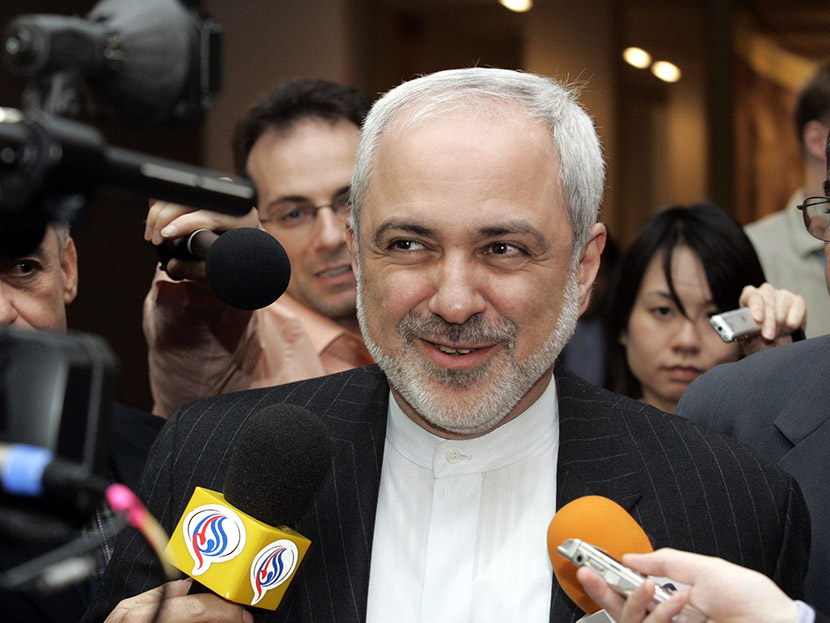
On Monday, Iranian media announced that the country’s new foreign minister would be Javad Zarif, the American-educated, seasoned Iranian diplomat who is best known and widely respected by Washington’s corps of Iran experts. The appointment still needs to be made official and Washington diplomats would not comment until it was.
Zarif’s appointment by Iran’s new reformist president, Hassan Rowhani, would be a strong signal that he is interested in renewed talks with the West. Relations between the United States and Iran have been in tatters since the 1979 hostage crisis when students stormed the U.S. Embassy in Tehran and held 52 Americans for 444 days.
The once-close allies became committed foes for decades while Iran chafed under U.S. sanctions. But in the last decade, Iran’s economic woes worsened as evidence of its nuclear program emerged, and European allies joined sanctions against the Persian state. Iran has consistently maintained that its nuclear program is designed to produce energy, not bombs. But doubt has only increased as U.N. nuclear inspectors in Vienna stumbled upon too many clues and unanswered questions that all seem to point in the direction of a military program.
As U.N. ambassador when the nuclear program was on a much smaller scale, Zarif led attempts to negotiate for a peaceful end to years of conflict with Washington.
“Zarif is an exceptionally talented and a creative diplomat,” said George Perkovich, a vice president at The Carnegie Endowment for International Peace. Perkovich, who took part in a series of attempted backdoor negotiations over the years with Iranians, said that with Zarif’s selection, “the Iranians seem to be trying to be on the same page with the United States.”
Perhaps no other Iranian has had the kind of access to the corridors of U.S. power as Zarif has had, from members of Congress to nuclear experts and policy makers.
As Iran’s ambassador to the United Nations in the early 2000s, Zarif was granted special waivers to travel to Washington for private meetings with some of the same people who have since become top Middle East diplomats in the Obama administration. Those who have spent time with Zarif include Martin Indyk, the newly named special envoy for Mideast peace talks.
Zarif was 19 years old when the Iranian revolution began in 1979, ushering in the religious reign of Ayatollah Khomeini. But he spent those formative years in the United States, at college in San Francisco and then earning a PhD at the University of Denver at a time when other international relations students included a young Condoleezza Rice.
Returning home to a much changed Iran, he joined the Foreign Service and rose to deputy foreign minister before he was named ambassador to the United Nations in 2002 by an Iranian regime interested in exploring relations with the West.
As U.N. Ambassador, he played a leadership role in trying to coax his country and the Bush administration toward a Grand Bargain that would repair decades of mistrust and bring Iran back in to the first-world economy in exchange for an end to Tehran’s nuclear ambitions.
But the Bush administration, divided internally among skeptics and neocons, chose first to ignore the Iranian overtures. Then a series of administration moves only exacerbated tensions, beginning with Bush’s claims that Iran was a member of an “axis of evil” that could provide the worst weapons to the worst people. Still, Zarif pressed for cooperation and demonstrations of good faith. Just a week after Bush’s remarks, which were included in his 2003 State of the Union speech, Zarif even personally handed over the names and identities of nearly 300 al-Qaeda suspects who had fled Afghanistan into Iran. The Iranians had detained them all, many of whom were Saudis, and then turned them over to their countries of origin. Iran had been eager, even desperate at the time, for counterterrorism cooperation as the U.S. invasion of Afghanistan sent hundreds of Arab fighters across the Iran-Afghan border. Iran’s proximity to Afghanistan, the world’s largest poppy grower, has also accounted for the country’s worsening heroin problems with a high addiction rate among young people. But architects of Bush’s preemption doctrine had other plans in mind for Iran and hoped that with troops on two borders, following the invasion of Iraq, it could squeeze Iran into submission. The opposite occurred. Iran dug in, sped up its nuclear program and elected one of the harshest leaders in decades when Mahmoud Ahmadinejad came to power in 2005. Zarif promptly resigned from the nuclear negotiations when Ahmadinejad was elected and quit the U.N. post altogether two years later in 2007. Zarif spent the last six years quietly in academia back in Tehran, writing papers and waiting for a chance for Iran’s reformers to reemerge.
Dafna Linzer Recommended


