








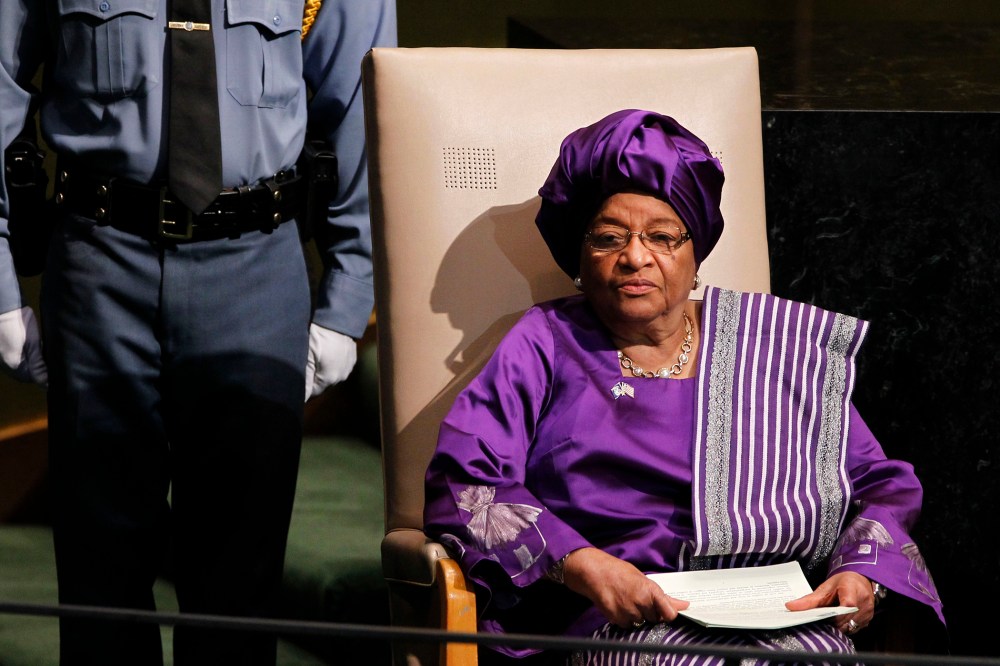
With the enormous growth of women as business leaders over the last 50 years, researchers from Columbia University and Northwestern University set out to explore how a similar trend in the world of politics could be measured for its economic output.
Put simply, the researchers asked: Do women leaders make a difference? And how can we measure it?
They cross-referenced information about male and female leaders in 139 countries over 55 years with the gross domestic product (GDP) of those nations, as well as “ethnic fractionalization levels,” or diversity. (The researchers said that their data confirmed a long-held association: the more diverse the country, the slower its economic growth.)
Here’s what they found: When diverse nations elect women to their highest office, the country’s GDP rises more significantly than compared with their male counterparts.
Researchers said that having a woman at the helm of a particularly diverse nation “was correlated with a 6.9% greater increase in GDP growth in comparison to nations with a male leader.” In Liberia, a particularly diverse nation, the study predicted GDP growth of 6.15% under a woman’s leadership and 0.69% under a man’s.
But the researchers cautioned that their data does not mean every woman leader is better than a man, or that all women foster more inclusive governments. “The message is not, ‘If you’re a man, you shouldn’t be leading a diverse country going through internal conflict,’” said Nicholas Pearce, an assistant professor at Northwestern’s Kellogg School of Management and a co-author of the report, in a statement posted to Northwestern’s website. “The idea is that any leader in such a situation should perhaps be more intentional about leading inclusively and collaboratively. It just so happens that these characteristics tend to be embodied in or associated with female leadership styles.” There are exceptionally few women leaders in the world, though rates have ballooned in the last half-century. While four women served as heads of state in 1950, the number grew to 18 in 2004.
Erin Delmore Recommended


