









Aimed at combating censorship efforts across America, “Velshi Banned Book Club” is a multi-platform series rooted in literary and cultural analysis. Read (and watch, and listen) along with Ali as he discusses books that range from the courageous and illuminating to the misunderstood and powerful.
Never boring, but always banned, this post will keep updating as we add new books to the list. Season Two of the club is now available wherever you listen to podcasts.
Read and download as resistance below:
“Heroine” by Mindy McGinnis
“Heroine” by Mindy McGinnis is not just a deeply effective cautionary tale, but a direct and multi-layered examination of how quickly addiction takes hold and the deeply emotional and lasting toll it takes on a family, a community, and a young person in its grips. Gritty and alarmingly realistic, “Heroine” is careful to make the point that addiction, especially addiction to opioids, can and will claim anyone — wealthy and poor, white and black, young and old. Fentanyl overdoses are claiming young Americans at an unprecedented rate. According to the CDC, fentanyl has largely fueled a more than doubling of overdose deaths among children ages 12 to 17 since 2020. Statistic after statistic, study after study, shows the same thing: we are in a crisis. “Heroine” has been removed from library shelves and classrooms for “glorifying” drug use. But if you read this book, you know the opposite is true. “Heroine” is harrowing and hard to read — but necessary. One way to protect your children from the very real and present danger of opioid addiction is by offering them safe exploration — a book.
“Whale Talk” by Chris Crutcher
Chris Crutcher’s “Whale Talk” centers on the hot-headed T.J. Jones, a student who occupies a unique social position at Cutter High School. Being adopted and one of the few multi-racial students in school, he’s a bit of an outcast, until he gets an opportunity to lead the school’s swim team. It soon becomes clear that what they’re doing isn’t chasing Letterman’s jackets or winning a few swim meets, but building a community. As a teacher, “I started changing my idea of what a hero is,” says Crutcher, watching kids in “situations that would have crushed me growing up.” Crutcher masterfully blends together humor and high-school dialogue with serious, weighty topics to create a coming-of-age story that proves how necessary friendship and community is to discover who you are as an individual.

“Far From the Tree” by Robin Benway
Robin Benway’s “Far From the Tree” is a story about the emergence of love and support in an unconventional familial structure. It also explores the challenging, deeply personal topics that some teens have to confront as they mature: the way alcoholism devastates a family, the emotional complexities of adoption, inescapable racism, LGBTQ+ love, and the realities of teen pregnancy. “Sometimes, as a teenager, things just feel so wacky.,” says Benway. “You feel so big one minute and you feel so small the next.” Life as an adolescent is hard. But books like “Far From the Tree” provide support and guidance to teenagers as they navigate difficult life circumstances or confront new emotions.

“All the Light We Cannot See” by Anthony Doerr
Set in World War II Europe, Anthony Doerr’s Pulitzer prize-winning “All the Light We Cannot See” grapples with what becomes of morality, of legacy, of human connection, and of fate when confronted with the shattering brutalities of war. Doerr’s lyrical, writing style propels the story forward, allowing the reader to slip into blind Marie-Laure’s. Despite the praise, the awards, and the fierce loyalty of its readers, the novel is regularly removed from classrooms and libraries across the country and was not permitted as reading material for a 12th grade English class in the Glendale District School in Cambria County, Pennsylvania, putting the book banning epidemic in critical context.

“The Last White Man” by Mohsin Hamid
Mohsin Hamid’s latest surrealist novel, “The Last White Man,” is a fresh look at a well-trodden metamorphosis concept. It asks the question: What would happen if every white person woke up with darker skin? “The Last White Man” is an exploration of the construct of race, the realities of death, and a masterclass in surrealist narrative. Why surrealism? Hamid says it reflects reality. “Who we are is a story we tell about ourselves — something we imagine into existence.”

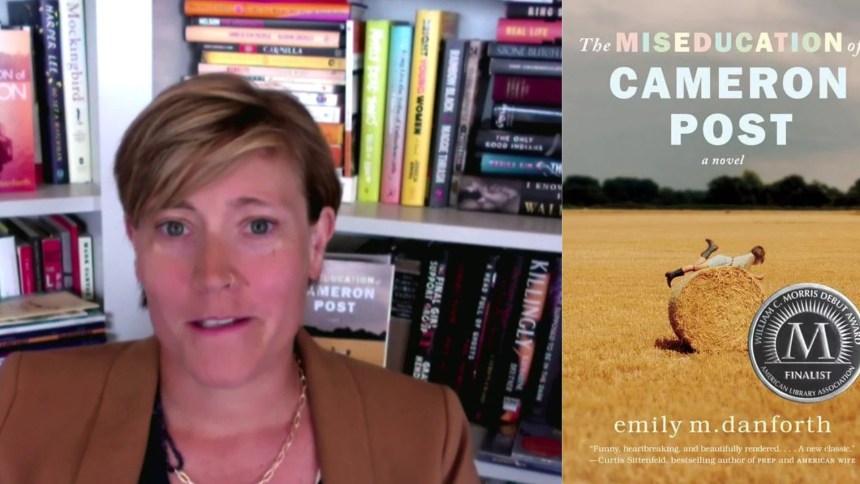
“The Miseducation of Cameron Post” by Emily M. Danforth
In the award-winning novel “The Miseducation of Cameron Post,” author Emily M. Danforth tells a moving coming-of-age story that chronicles first love and heartbreak, family obligations, and the fight for self-acceptance as her teenage protagonist comes to realize her lesbian identity — even as her experiences in a so-called “gay conversion” camp try to prevent her. Danforth says that she set out “to speak to young people” who grew up feeling that they, because of their LGBTQ+ identities, didn’t have a place in the literary canon.
“And Tango Makes Three” by Justin Richardson & Peter Parnell
25 years ago, two male penguins at the Central Park Zoo bonded, caring for an egg that hatched into a chick named Tango. The true story inspired authors Justin Richardson & Peter Parnell, becoming “And Tango Makes Three,” a feel-good, beautifully illustrated story about family dynamics, love, identity, and acceptance. On the page, readable and family friendly — off the page, an emblem of the censorship and freedom of speech firestorm that has engulfed our nation’s libraries and public schools. The story has become ubiquitous in literary and education circles and the penguin characters — real and in the story — have become political warriors in and of themselves.

“The Things They Carried” by Tim O’Brien
Inspired by his real experiences as a young soldier in the Vietnam War, Tim O’Brien’s widely acclaimed 1990 book “The Things They Carried” is an engrossing collection of stories about the varied experiences of war, from its violent horrors to heart-wrenching moments of friendship, sacrifice, and beauty. O’Brien’s writing is equal parts hallucinatory and concrete, surreal and corporeal, as the novel’s chapters vary in time period and perspective, to fully explore the futility of war, the power of friendship, and the motivating effect of death, shame, morality, isolation, and survival. “Part of the job of the writer is to be an iconoclast,” says O’Brien, and to tell the public the things it may not want to hear.

“Heavy: An American Memoir” by Kiese Laymon
Written in the second person, directly addressing his mother, “Heavy” chronicles author Kiese Laymon’s life from his boyhood in poverty-stricken Jackson, Mississippi to an adulthood spent on prestigious college campuses. The award-winning novel is at once a coming-of-age story and a searing condemnation of the racism and misogyny that perforate the fabric of this country. It’s a story of the power of education, the complexities of family dynamics, and the realities of what it means to be a Black man in America.

“Dragonwings” by Laurence Yep
Laurence Yep’s acclaimed 1975 novel “Dragonwings” is a vivid coming-of-age story of Chinese immigrants in the U.S., blending history and fantasy as its protagonists struggle against racism and strive toward the American dream. Masterfully creating a world that is equal parts real and fantasy, American and Chinese, Yep gives us the world through the eyes of an immigrant child. As the family grapples with cruelty and kindness — finding community with all different kinds of people, and surviving a deadly earthquake that destroys much of the city that had slowly become their home.

“The Giver” by Lois Lowry
Initially published in 1993, Lois Lowry’s “The Giver” grapples with heavy themes including the weight of memory, the freedom of choice, society and governmental control, and individualism. While dystopian literature has become increasingly popular in recent years — especially in the young adult and children’s genres — “The Giver” was the first. It served as a proof of concept that weighty themes are not too complex for middle-grade readers to understand. Telling the story of 12-year-old Jonas, “The Giver” allows its readers to come to the conclusion that we must have reverence for human life, that our differences are our greatest strengths, and that the darkest parts of humanity are needed to make way for the most beautiful. They’ve “rescinded all the richness that diversity gives to our lives,” says Lowry of the “terrible compromise” made by society in the novel. “Every year it seems more and more relevant.”

“The Glass Castle: A Memoir” by Jeannette Walls
Written coupling frank language and vivid descriptions, “The Glass Castle” is a masterclass in thought-provoking memoir. It chronicles Walls’ deeply abusive and dysfunctional childhood, which was constantly uprooted at the whims of her parents. Walls and her siblings faced bullying, hunger, homelessness, and sexual abuse. Yet, where Walls could depict her parents as one-sided abusers, she doesn’t, writing, instead, with nuance, depth, and love. The book bans are “breaking my heart,” says Walls. “The way to protect children is not to put them in a bubble… Give them the tools… It’s very empowering to these kids to know ‘I’m not the only one going through it.’”
“Bridge to Terabithia” by Katherine Paterson
Heralded as one of the most enduring and poignant children’s books of the 20th century, “Bridge to Terabithia” demands its reader confront the realities of childhood — including family dynamics, class division, friendship, identity, and, of course, death. Author Katherine Paterson wrote the book in reaction to the senseless death of her own son’s best friend. Paterson reminds us that those intense feelings of longing and belonging, of searching for a ‘why’ that does not exist, of turning to your family for support, of life-affirming friendship do not just begin at adulthood. Paterson discusses the universality of the themes the book explores. “Books are a wonderful rehearsal for what you’re going to meet in life,” she says.
“A Kids Book About Israel & Palestine” by Reza Aslan
Reza Aslan discusses the challenges of writing a unifying book on a divisive topic. “Kids are a lot more sophisticated than we think they are”, says Aslan — they’re “not burdened” by the same preconceptions that prevent us from seeing the other side. “A Kids Book About Israel & Palestine” provides readers with crucial context on the history of the conflict, but it also prepares children to have difficult conversations, hear other perspectives, and practice being peacemakers. “All you have to do is bring the conflict down to the human level.”
“Hunger: A Memoir of (My) Body” by Roxane Gay
“Hunger: A Memoir of My Body” by Roxane Gay, is a powerful look at identity, trauma, and what it means to claim your body as your own. In the award-winning memoir, Gay explores her past, including a horrific trauma, to understand her future and finally accept herself and her body. “Hunger” grapples with more than that, though — it is a look at societal demands of appearance, family dynamics, self-acceptance, and the fraught landscape of women’s pleasure and consumption. There are so few works that so radically and persuasively demand empathy, change, and self-reflection.
“Nineteen Eighty-Four” by George Orwell
In the days that followed Trump’s inauguration, George Orwell’s magnum opus “Nineteen Eighty-Four” became the best-selling book across every genre on Amazon. While some literature helps us make sense of our current world, others foreshadow a reality we can’t yet imagine. It is impossible to discuss authoritarianism, surveillance, and the manipulation of the truth without invoking “Nineteen Eighty-Four” or Orwell’s name. The book is full of lessons that can help us to understand our political world today — from book bans to “alternative facts.” Williams College Professor James McAllister and “Boy Erased” author Garrard Conely join Ali Velshi to discuss the book’s relevance today. “One of the ways that you check against fundamentalist thought is you have to be open to challenging your own beliefs and listening to your own side and criticizing your own side when that happens,” Conely says.
“American Street” by Ibi Zoboi
Set on the corner of American Street and Joy Road in Detroit’s west side, “American Street” centers on 16-year-old Fabiola Toussaint, her Matant Jo, and three cousins. Born in Detroit but raised in Haiti’s capital city Port-au-Prince, Fabiola emigrates back to the U.S. with her mother to reunite with her extended family, finish high school, and live “on this side of the good life”. When her mother is detained by U.S. immigration, Fab is left to find herself in the streets of Detroit without a parent. Soon Fab faces gang violence, drug use, first love, and an untimely death that force her to question who she is and where she belongs. Author Ibi Zoboi’s story is similar to Fab’s, immigrating to Brooklyn from Haiti in the 1980s. “We discard certain things, and we hold on to certain things,” when we immigrate, says Zoboi. When it comes to Haiti especially, “We have to tell the full story.”
“The Fire Next Time” by James Baldwin
Despite being written in 1963, the relevancy of James Baldwin’s “The Fire Next Time” is undeniable. It’s comprised of two essays — “My Dungeon Shook: Letters to my Nephew on the One Hundredth Anniversary of the Emancipation” and “Down at the Cross: Letter from a Region of My Mind” — which masterfully explores structural racism, white privilege, and the role of religion in the Black community. Eddie Glaude Jr., author of the award-winning “Begin Again: James Baldwin’s America and Its Urgent Lessons for Our Own,” joins Ali Velshi to discuss Baldwin’s frustration with America, as well as his belief that a better future can be had. “In order to become better human beings […] we have to confront the ugliness in the world, which means we have to confront ourselves,” Glaude says.

“Kindred” by Octavia E. Butler
Before the word Afrofuturism even existed, Octavia Butler was writing about it. Before climate change was considered a crisis, Butler was writing about it. Before our country threatened to slide towards autocracy, there she was. Butler is rightfully considered one of the most important voices of the past 100 years. Her magnum opus, “Kindred,” tells the story of Dana, a Black writer living happily with her white husband in 1976 Los Angeles, when she is suddenly transported back in time to antebellum Maryland. “Kindred” is equal parts historical fiction, science fiction, and a blistering commentary on the generational consequences of slavery. Award-winning authors and editors Nisi Shawl, a friend of Butler, and Sheree Renée Thomas, student of the icon and the recent winner of the 2023 Octavia E. Butler award, join the Velshi Banned Book Club to reflect on “Kindred” and Butler’s legacy.
“Boys and Oil: Growing Up Gay in a Fractured Land” by Taylor Brorby
For a young Taylor Brorby, author of “Boys and Oil,” his local North Dakota library was a treasure trove and a safe haven. Young people in North Dakota today won’t encounter the same kind of library. North Dakota libraries are under attack. Last year, two pieces of legislation took aim squarely at libraries and librarians. While just one became a law, the two bills have already done their job. Libraries across North Dakota are self-censoring — choosing not to keep books that could leave them vulnerable. This is just the beginning — for the rest of the nation.
“Salvage the Bones: A Novel” by Jesmyn Ward
Jesmyn Ward’s “Salvage the Bones” begins with a birth. 15-year-old Esch, her brothers, Skeetah, Randall, Junior, and their father watch in a small, dilapidated shed as China, Skeetah’s white Pitbull, delivers puppies. This moment, masterfully written over the course of an entire chapter, introduces themes we will see again and again throughout the book: the thin line between life and death, the intricacies of family dynamics, the all-encompassing restriction of racialized poverty, and the complexities of love. Set in the 12 days leading up to and just after Hurricane Katrina makes landfall, “Salvage the Bones” is broken down into vignettes that read as complete stories of their own. Every chapter is a single day as told to us by our protagonist, Esch. The author is just as crucial as the book. Jesmyn Ward is historic: the only woman and only Black person to win the National Book Award for Fiction twice.
“The Perks of Being a Wallflower” by Stephen Chbosky
“The Perks of Being a Wallflower” honestly grapples with adolescent anguish, the numbing pain of a close death, finding yourself amongst pressure to confirm, and the generational toll that sexual abuse within a family takes. But, at its core, it is a story about the power of friendship. The themes the book addresses are dark and heavy, but it doesn’t read that way. “The Perks of Being a Wallflower” is sweet and poignant. That is high school. That is adolescence. The painful meeting of adulthood, lingering childhood naivety, and teenage feelings. It is not easy to strike that note, right at the crossroads of those three things, but author Stephen Chbosky does again and again. The result is a book that is so specific in its story, its frequent ‘90s cultural references, and its nuanced characters that it feels universal. This book’s power is in its ability to reach so many. “To me, it’s all about the next kid,” says Chbosky. “It literally is a matter of life and death and [we should] take it that seriously.”
‘The Perks of Being a Wallflower’ captures the bittersweetness of being a teen
“The Bell Jar” by Sylvia Plath
There is a reason Sylvia Plath’s “The Bell Jar” is a modern classic and an enduring rite of passage for generations of women. Emily Van Duyne, Plath expert and author of the upcoming book “Loving Sylvia Plath” explains that the book grows with you. “I read the book for the first time when I was 14 and I thought ‘this is so strange and sad’ and then I read it again when I was struggling with depression and I felt like Plath was telling my story.” On the page, “The Bell Jar” tells Esther Greenwood’s story. Esther, a high-achieving college student from Massachusetts, has been selected to spend a summer in New York City working at the prestigious “Ladies Day” magazine. Esther is confronted with the artifice and isolation of city life, the daunting prospect of 1950s motherhood, and an increasingly debilitating depression. Upon returning to her small suburban town, she succumbs to her struggle with mental health. “The Bell Jar” culminates with Esther’s suicide attempt and then life-saving shock therapy at a mental institution. Off the page, “The Bell Jar” is Sylvia Plath’s story.
Despite its reputation, Sylvia Plath’s ‘The Bell Jar’ is a life-affirming story of hope
“All the Rivers” by Dorit Rabinyan
Liat and Hilmi meet in a Greenwich Village café in New York City not long after September 11th changed the City skyline and the people in it. Their love is immediate and all-encompassing but, like all good love stories, complicated. Despite being raised just miles apart; they are from completely different worlds — Liat from Israel and Hilmi from the occupied West Bank. “All the Rivers” demands the reader look squarely at the “other” and see them for the person they are — for their humanity and their heart. Off the page, “All the Rivers” became the center of controversy when the Israeli Education Ministry refused to include it in high school curriculum. There are necessary lessons in the book, though, says Rabinyan, “Only literature can allow us to see each other as individuals.”
‘All the Rivers’ asks if love of country and love of each other can co-exist
“The Diary of a Young Girl” by Anne Frank
On June 12th, 1942, Anne Frank was given a red-and-white checkered journal for her 13th birthday. Over the next two years, she would go on to write hundreds of pages in that diary. Frank would write about fights with her mother, her changing body, and her first love. She would write about human nature and her identity as a young Jewish woman. “The Diary of Young Girl” is not just one of the most widely disseminated accounts of Nazi occupation, it’s also one of the most-read books of the 20th century. For generations of readers, Anne Frank’s diary is a gateway — their first exposure to the dark depths of the Holocaust. It is no wonder that the diary has inspired many, many adaptations. In 2018, Israeli artist David Polonsky and Israeli filmmaker Ari Folman, whose parents survived the Holocaust, worked together to reimagine the book. They called it “Anne Frank’s Diary: The Graphic Adaptation”. In September of 2023, a teacher in Texas was fired for assigning it for their 8th grade class. Preventing Anne Frank’s modern-day peers from reading her words and experiencing her story is deeply troubling.
There’s no defending this ban keeping students from reading Anne Frank’s diary
“Romeo and Juliet” by William Shakespeare
One of Shakespeare’s most popular, most performed, and most famous plays — “Romeo and Juliet” explores familial ties, the inevitability of fate, and the power of love. It’s typically either beloved or derided by Shakespeare enthusiasts. And now it is all but removed from some Florida classrooms. Hillsborough County says it will assign only excerpts of “Romeo and Juliet,” and not the entire play, in order to comply with Governor Ron DeSantis’ education restrictions which regulate books with so-called “sexual content.” “Romeo and Juliet” belongs to a tradition of tragic and forbidden romance that precedes Shakespeare. 400 years later, the play still masterfully captures the belief that love is a powerful force.
‘Romeo & Juliet’ go from star-cross’d lovers to just crossed-out in Florida
“Persepolis: The Story of a Childhood” by Marjane Satrapi
Set amid the Iranian Revolution, award-winning “Persepolis” by Marjane Satrapi centers around Marjane and her family — first as a 10-year-old child just beginning to understand the chaos around her and then as a young adult who returns to Iran with the salient understanding that “freedom has a price”. “Persepolis” masterfully combines historical accuracy and memoir with powerful illustrations. This book tells the story of what happens when a nation crosses an ideological, political, and cultural threshold.
‘Persepolis’ offers a glimpse of growing up amid a revolution
“The Best at It” by Maulik Pancholy
“The Best at It,” the semi-autobiographical debut novel by author and actor Maulik Pancholy, explores Rahul Kapoor’s journey to self-acceptance and self-love as a seventh grader in a small Indiana town. “The Best at It” masterfully balances serious topics with breezy, first-person writing — for its intended audience of 8 to 12-year-olds. You don’t need to go very far below the surface to find a story that deftly explores mental health, sexuality, and what it means to be a minority. While it may seem ambitious to tackle all three of those topics at once — the result is heartbreakingly authentic and poignant.
“I Know Why the Caged Bird Sings” by Maya Angelou
Most everyone knows the name Maya Angelou — poet, activist, essayist, educator, singer, dancer, and even one of Hollywood’s first Black female directors. One of America’s most prolific artists, everything Angelou touched brimmed with unparalleled creativity and brilliance, including her magnum opus “I Know Why the Caged Bird Sings.” It tells her story of her “tender years” from ages 3 to 16 in the American South. If you’re in search of an easy, light read — look elsewhere. “I Know Why the Caged Bird Sings” grapples with serious, demanding themes: racism, resistance, community, sexual assault, identity, and freedom. But for each moment of pain, abuse, and searing injustice, the reader is treated to a moment of beauty. Ultimately, this autobiography is an exploration of the late Angelou’s growth: from self-loathing to self-love.
“The Hate U Give” by Angie Thomas
16-year-old Starr Carter has her feet firmly planted in two different words — one foot at home in her predominantly Black neighborhood, and the other at her mostly white Prep school. These two worlds never mix — until Starr witnesses the murder of her childhood best friend, Khalil, at the hands of a police officer. Suddenly, the line between these two worlds becomes blurred over questions of justice, identity, and equality. At its core, “The Hate You Give” is a coming-of-age story: Starr navigates her place in the halls of her high school, grapples with her first love and broken friendships in ways we’ve seen before. Thomas masterfully uses the familiarity of these Young Adult themes and first-person perspective to tell a more nuanced story — one made infinitely more complex by questions of race, tragedy, and shifting cultural viewpoints.
This YA novel shows the importance of the genre
“Lawn Boy” by Jonathan Evison
A semi-autobiographical coming-of-age story, “Lawn Boy” grapples with sexual orientation, family dynamics, opportunities for immigrants, classism, and Capitalism. At its core, “Lawn Boy” is a story of identity. As both a Mexican-American and a gay man, Mike grapples with who he is and whom he loves. “It was very important for me to write this book, […] I take a lot of privileges for granted — there is this American mythos that the American dream is open for all of us and it’s a lot harder for people of color and a non-binary persuasion,” says Evison. And yet, despite the important subject matter, one parent’s condemnation of the book sparked a mass-banning across the U.S. Some 35 school districts in 20 states temporarily removed “Lawn Boy” from library shelves.
“This Book is Gay” by Juno Dawson
The reality is this: at some point between high school, college, and young adulthood most everyone will be confronted with a situation related to sex and sexuality. Relationships can be the most beautiful and rewarding part of life, but for many they can be the most damaging. And for LGBTQ+ youth, the stakes are even higher. Despite all of that, adequate sexual education is rapidly disappearing from schools across America. Even if it exists in your high school, it will likely exclude information that is pertinent to LGBTQ+ youth. So, 7-year teaching veteran and LGBTQ+ advocate Juno Dawson decided to write her own. “This Book is Gay” is a guide. “This Book is Gay” is divided into sections: identity, stereotypes, queer history, coming out, relationships — including sex — and interspersed with candid first-person narratives from real people. It is a crucial read for all LGBQT+ youth, their parents, and their allies.
‘This Book is Gay’ provides comprehensive, and inclusive, sexual education
“The Return of the Taliban: Afghanistan after the Americans Left” by Hassan Abbas
While lauded by scholars, Professor Hassan Abbas’ book, “The Return of the Taliban: Afghanistan After the Americans Left”, has attracted the attention of senior leaders among the Taliban — with some of them even calling for his assassination. “They said I’m taking away their credit for the victory,” says Abbas. “So, they want to be seen as very powerful, and that’s the image they have built today to their younger people.”
“Maus” by Art Spiegelman
The first ever graphic novel to win a Pulitzer Prize, Art Spiegelman’s “Maus” is a frank and visceral look at the Holocaust through his father’s eyes. When the school board of the McMinn County School District in Tennessee banned the contemporary classic from the 8th grade curriculum, it was thrust back into the spotlight for a new generation of readers. Spiegelman famously depicts his characters in “Maus” as animals — Jewish mice, Nazi cats, Polish pigs, French frogs, and American dogs — subverting common Nazi propaganda portraying Jewish people as “rats,” “vermin,” and “sub-human.” The black-and-white drawings masterfully illustrate anguish, love, fear, and brutality. The reader is not just hearing about the depravity of the Holocaust — they’re seeing it. While “Maus” is a memoir and a story about the Holocaust, it also explores intergenerational trauma, the complexities of family, mental health, and enduring love.
A Tennessee school book ban is robbing students of history
“They Called Us Enemy” by George Takei
George Takei’s “They Called Us Enemy” is a powerfully crafted graphic novel about finding strength in pain. In response to the deadly strike on Pearl Harbor in 1942, President Franklin D. Roosevelt signed Executive Order 9066 — systemically stripping Japanese-Americans of their civil rights, their homes, their property, and their dignity. 120,000 Japanese Americans, including the Takei family, were forced into barbed wire-lined concentration camps across the nation simply for having Japanese heritage. Using the clear language and expressive, comic-book style drawings of a children’s book to tell a very adult story, the book moves effortlessly between the naivete of a young boy in the internment camps and the more complex and darker reflections of older Takei. While “They Called Us Enemy” is a poignant memoir and commemoration of this brutal time in America’s not-so-distant past, it also honors heritage, community, and family.
“Fates and Furies: a Novel” by Lauren Groff
Told from dueling perspectives, “Fates and Furies” successfully illustrates that all stories and interactions are multi-sided. Even the combination of the protagonists’ perspectives does not paint the entire picture for the reader. “Every story has 100 different ways to tell it,” says Groff. Groff is a master at using poetic language, creating a magic-realism setting, and seamlessly incorporating mythological elements and allusions. The result is a beautiful book about love, relationships, power, and perspective.
“You Sound Like a White Girl: The Case for Rejecting Assimilation” by Julissa Arce
“You Sound Like a White Girl” by Julissa Arce tells the story of Arce’s immigration to the United States from Mexico, and her attempts to assimilate to American culture in hopes of fitting in. Her awakening and internal reckoning are sparked by a single sentence spoken by a high school crush: “You sound like a white girl.” Those six words buried themselves deep in her subconscious and remained there well into adulthood, until Arce eventually reclaimed her Mexican heritage and roots.
“How the García Girls Lost Their Accents” by Julia Alvarez
“How the García Girls Lost their Accents” tells the story of four sisters after they flee a sheltered life in the Dominican Republic for a new one in New York City. It is also partly the story of its author: Julia Alvarez. “When you’re an immigrant, you’re this hybrid person.” Part coming-of-age story and part historical fiction, “How the García Girls Lost Their Accents,” explores themes of identity, assimilation, family, sexual assault and memory. Themes that have led to numerous calls for removal since the book’s publication in the early 1990s. “People are afraid of anything that is going to be disturbing, or I guess other than what they want in their bubble.”
“Ready or Not” by Meg Cabot
Best known for “The Princess Diaries” book series and the smash movie adaptation, it is impossible to overstate the magnitude of author Meg Cabot — especially for those who came of age in the early 2000s. Cabot’s 80-plus catalog of titles have subverted the notion of so-called “chick-lit,” and created genre-bending books that are as thought-provoking as they are funny, as deeply relatable as they are light, and as romantic as they are empowering. Today’s feature, “Ready or Not”, focuses on high schoolers grappling with the magnitude of sex and consent. The novel has been removed from shelves in Florida and Texas so far, at a time when sexual health education in schools is especially crucial. “It’s OK to talk about these things,” urges Cabot.
“Grey Bees” by Andrey Kurkov
What is “home” when a foreign enemy has destroyed your neighborhood, your garden, and your feeling of safety? Andrey Kurkov explores this concept and more in his satirical novel “Grey Bees.” Says Kurkov, “The concept of home for Ukrainians is very important — it’s more than a castle.” Andrey is one of Ukraine’s most prolific and most well-regarded writers, publishing some 13 novels and 5 children’s books, and writing more than 20 scripts for feature films and documentaries. Born in Russia in 1961, but raised in Ukraine, he writes his books in Russian language, but readily and often clarifies: “I write in Russian. I am not a Russian writer. All writing in Ukraine belongs to Ukraine.” As Russian troops crossed the border in 2022, Andrey received a warning from a friend that he, along with other Ukrainian writers and artists, was on a list of so-called “pro-Ukrainian activists” — a blacklist with potentially life-threatening consequences. Of course, his work is banned in Russia. Since then, he has dedicated himself to contextualizing the war for the entire world through articles, radio, lectures, television appearances, and of course, his books.
“Winterkill” by Marsha Skrypuch is historical fiction, but the Holodomor, or the Ukrainian Famine, is fact. In the early 1920s, dictator Joseph Stalin conceived of a plan to initiate rapid industrialization of the USSR — at any cost. The plan included forced agriculture collectivization — giving the Soviet state control of all of Ukraine’s abundant farms and lucrative grain exports. Unsurprisingly, Ukrainian farmers, labeled as kulaks, tried to resist — but eventually were forced to surrender their land, forced to work at government collective farms, and murdered. Then, came the hunger. The very people who provided bread to the USSR, to Europe, and to the entire world starved to death. Their own food was held back from them as the primary weapon in their own genocide. As Skrypuch said, “Stalin wanted to destroy Ukrainian culture.” It didn’t take long for Russia to ban “Winterkill”. It’s crucial for children to be able to access banned books, says Skrypuch, especially books like this one. “Kids need to be exposed to all kinds of literature or they won’t be able to think for themselves.” Harry and Craig have an idea. They’re going to protest a recent homophobic incident by kissing until they’ve broken the world record. And they’re going to do it in front of their entire high school, their families, and rolling cameras. It is an act that is both political and personal. Harry and Craig’s story is just one of four separate narratives that weave together to create David Levithan’s award-winning young adult novel “Two Boys Kissing.” The novel grapples with freedom, equality, intergenerational mobility, and community through a tender, coming-of-age lens. The reader is not alone in observing the impact of that titular kiss — the book employs the use of a literary device: a Greek chorus. The ghosts of a generation of gay men who died in the AIDS epidemic function as an omnipresent, collective narrator. Something, Leviathan says, was inspired by his uncle, who lived with AIDS for 30 years, and the way he lived his life. Grace Lin’s “A Big Mooncake for Little Star” shouldn’t be on a banned book list at all. The glossy black book and its illustrations dig into numerous themes, including a mother-daughter relationship rooted in understanding and love, the phases of the moon represented by a mooncake, and a celebration of Chinese heritage. The book was written to honor the Mooncake, or Mid-Autumn, Festival. Books like “A Big Mooncake for Little Star,” featuring non-white protagonists written by a non-white authors, are necessary. “We each have our story and we need to appreciate each other’s stories,” says Lin. Chinese children need to see themselves centered in the pages of books. Chinese parents need to have that special moment before bedtime where they can read their young child a story — a story that celebrates their culture and their identity. The life of American author Zora Neale Hurston is a story in and of itself. She wasn’t just an author, but an ethnographer, a novelist, an essayist, a folklorist, a voo-doo expert, and a filmmaker. She’s considered by scholars to be the most prolific Black woman writer of the 1920s and 1930s. It’s said that she wrote her magnum opus “Their Eyes Were Watching God” in just 7 weeks on a trip to Haiti. Like Hurston, “Their Eyes Were Watching God” isn’t just one thing — it’s a love story, a feminist declaration, a coming-of-age exploration, and a celebration of the South. At its core, “Their Eyes Were Watching God” is an exploration of modern, Black womanhood. It tells the story of a woman searching for dignity and agency. Even today, more than 85 years since the novel’s publication, the concept that women — especially Black women — are worthy of the sort of love they want is revolutionary. Data from a nonprofit research group called Mapping Police Violence shows that 2022 had the highest number of killings by police on record. Black Americans are more than three times more likely to be killed by police than white Americans. “All American Boys,” co-authored by Jason Reynolds and Kiely Brendan, explores police brutality and white privilege from the perspective of two teenage boys, one white and one black. The young adult novel shows the stark differences between their experiences of growing up in America. “Extremely Loud & Incredibly Close” follows 9-year-old Oskar as he searches for answers after his father’s death in the September 11th attacks. It is part of a new literary canon of 9/11 literature — books used to dissect the trauma from that day. At its core, “Extremely Loud & Incredibly Close” is a story about grief. Oskar is mourning the loss of his dad and the gaping hole in his city — his home. For Oskar and the United States as a whole, 9/11 meant a loss of innocence, a shattering of safety, and a visceral reminder of mortality. “The point is not to create definitive versions. The point is to metabolize. That’s what literature does. And frankly, that’s what the conversations about literature should be doing,” says Safran Foer. “We live in an incredibly problematic, scary, oftentimes tragic, oftentimes really beautiful world.” “The Tempest,” one of Shakespeare’s most celebrated plays, has captured academic and casual readers alike for generations. It is the play that has sparked a thousand adaptations and iterations — even from the likes of prolific author Margaret Atwood. Her version, called “Hag-Seed,” explores “The Tempest” in a modern context. Yet it still grapples with themes central to the original story, including the illusion of justice, the sanctity of family, reality, and even colonization. The first chapter of Alex Gino’s award-winning book, “Melissa,” is entitled “Secrets.” The reader becomes entrusted with some of our fourth-grade protagonist’s secrets — like a hidden stash of glossy fashion magazines and then another, bigger secret — one that’s a little closer to the heart. Melissa, known to the world only as George, is a transgender girl. She reveals this with notably little fanfare, it’s a fact as real as the pages in the very book they’re written. Perhaps your child identifies as transgender and this book will help them feel seen, or perhaps this book will help them learn compassion and open-mindedness. Of course, “Melissa” has been subject to relentless bans and challenges since its publication in 2015. This is dangerous for so many reasons, most importantly because so many young people who need access to the book don’t have it. Gino says they “could have used this book when they were a child.” The “Girls Who Code” book series is not contentious. It’s written in collaboration with the Girls Who Code, a non-profit organization which aims to close the gender gap in technology jobs. There is no debate, no need for close-reading, no potentially alienating topics — these books are simply not controversial. And yet, the series has faced a ban in Pennsylvania and has generated an intense backlash. The books have been swept up as a painful and insidious causality in a culture war that is damaging American children. If even one person wanted to and was unable to access “Girls Who Code” for any amount of time, the district has failed. “Aristotle and Dante Discover the Secrets of the Universe”, by Benjamin Alire Sáenz has been critically acclaimed, the basis of a new movie, and heavily banned. Ultimately, it is a moving story of identity, but it is impossible to talk about “Aristotle and Dante Discover the Secrets of the Universe,” without commenting on the masterful way it’s written. It is lyrical, with a cadence that only makes sense once you learn that the author is a poet. In this work, Alire Sáenz doesn’t pander or use heavy-handed metaphors; he trusts the reader will be able to do some of the legwork themselves. “Young people of the world are my children, and I think we should all think that way,” says Alire Sáenz. “I wanted to write a book to support them. To let them know they’re loved.” “Nickel and Dimed” is the first of many books to highlight the very real experience of being working-poor in America. It illuminates aspects of our nation that many would prefer remain shrouded in darkness, including systems of oppression and people — 37.2 million of them are living below the poverty line in America today. It also directly addresses the American can-do spirit, the “pick yourself up from your bootstraps” mentality and proves what a fallacy it truly is. “Nickel and Dimed” proves that the American dream is impossible and inconceivable for most. Written in verse and following a teenager’s struggle with sudden meth addiction, Ellen Hopkins’ “Crank” grapples with themes most teenagers and their family will likely face, including loss of innocence, identity, and the power of choices. Loosely based on Hopkins’ own experience watching her daughter’s harrowing journey, and its honesty resonates with its readers. Some parents, school-board members, and lawmakers would like to believe removing books like “Crank” from the hands of students and children will remedy the dire drug crisis in this country, but that isn’t true. Reading books like “Crank” is a safe way — sometimes the only safe way — to explore. “This is how we change,” says Hopkins. While millions know Salman Rushdie’s name, many have never read his most controversial novel, “The Satanic Verses,” including the two men who were, allegedly, willing to kill him over it. Rushdie’s accused assailant reportedly only read two pages of the book. Despite a literal interpretation by some Islamic fundamentalists, “The Satanic Verses” is far from a direct commentary on Islam — it grapples with identity, modernity, and conformity. Centrally, it focuses on alienation and the plight of an immigrant. Today, the book and Rushdie himself have become a beacon for free speech and freedom of expression. “Fundamentally, the novel is about the right to change,” Rushdie’s friend and colleague Homi Bhaba says. When reading “Lord of the Flies” — either for the first time in school, or the 15th time as an adult — you cannot help but ask yourself which of the characters you would most behave like, should you find yourself stuck on a desert island. Historian and author of “Humankind,” Rutger Bregman, wanted to answer that question by finding a real-life example. Stunningly, he succeeded — stumbling across a 1966 Australian newspaper article concerning six boys who had been found on a small, rocky island south of Tonga after being marooned there for more than a year. Those boys fared much better than Piggy and Ralph. Both the book and the real-life example address questions of morality, inherent good, and the role of society. One just has a little bit more of an optimistic ending. Laurie Halse Anderson’s “Speak” poignantly explores the immediate aftermath and emotional repercussions of sexual assault. It is among the first young adult works to explore this reality. “Speak” has appeared on the American Library Association’s “Top 100 Banned and Challenged Books” since its publication in 1999, climbing higher on the list each year. There is a voracity behind the calls to remove “Speak” from school syllabuses and library shelves that we have not seen for many other books. Banning a book like this sends a clear message that these topics are not to be discussed. They are something that should be kept silent. “You would think that people would find the educational system, as well as homes, the right place to talk about these things,” says Halse Anderson. “Our kids need us to have the courage to talk about things that many parents are uncomfortable with.” Mark Twain’s “The Adventures of Huckleberry Finn” follows Huck’s internal struggle between his conscience and his acceptance of societal acceptance of slavery. Since its publication 137 years ago, “Finn” has faced equal parts celebration and ardent calls for a ban. It’s been condemned for its excessive use of the N-word, and also lauded by literary figures like Toni Morrison and Ernest Hemingway for its deliberate use of dehumanizing language in order to show perspective and signal racism. “Huckleberry Finn’s not a hero. There are no heroes,” Mark Twain scholar-in-residence at Elmira College and host of the “American Vandal” podcast Matthew Seybold reminds us. “Twain believed individuals were products of their environment, and he used language to transport us into that environment, whether derogatory or satirical.” Jacqueline Woodson’s “Brown Girl Dreaming” is the first book of prose to be featured on the Velshi Banned Book Club. It is autobiographical, following Woodson’s childhood as a “brown girl” in the late 1960s and 1970s splitting time between segregated Greenville, South Carolina and New York City. Jacqueline grapples with her growing awareness of the Civil Rights movement, her identity and individuality, as well as the power of community. Woodson vividly and skillfully captures the mind of a young person searching for sure footing in a fragmented world. “Brown Girl Dreaming” is widely celebrated, winning the prestigious National Book Award for Young People’s Literature in 2014 as well as a Newbery Honor Award, and the NAACP Image Award. “I’m always surprised when people want to keep stories from young people,” says Woodson on book banning. “Which, of course, shows us the power of these stories.” “Out of Darkness” could be categorized in several ways. It’s a tragic interracial love story. It’s an honest and brutal look at racism in the 1930s. And it examines the painful realities of objectifying women. It’s also historical fiction, set against a real-life tragedy. In 1937, a natural gas leak destroyed the entire Texas school, killing nearly 300 students and teachers. “Out of Darkness” is not an easy read or appropriate for every reader. It is brutal and searing. This book harnesses the power of discomfort we have talked so much about as a book club. “Boy Erased: A Memoir of Identity, Faith, and Family” is a poignant and powerful coming-of-age memoir set against fundamentalist religion and the American South. While “Boy Erased” centers around author Gerrard Conley’s two-week treatment at conversion therapy center, it is really a story about much more than that. “Boy Erased” grapples with the crucial role of family, understanding of religion, and, of course, identity. “Give a Boy a Gun” by prolific Young Adult author Todd Strasser was initially published in 200, just one year after the Columbine High School massacre. It is one of the first works of fiction to grapple with the new reality that followed after Columbine; a world where students can die in their classrooms. It is also one of the few books on this topic written for a young adult audience. Jodi Picoult’s “Nineteen Minutes” is named for the amount of time it takes the novel’s school shooter to kill 10 people. The story is told from a place of healing. The reader is not asked to feel compassion for the shooter, but the story lays bare the bullying, taunts, and complicated family dynamics that help to explain the “why.” The novel is quintessentially Picoult: compelling, absorbing, and ferociously readable. “Beloved,” widely regarded as the centerpiece in Toni Morrison’s canon, has been banned and challenged hundreds and hundreds of times in America. Morrison scholars Dr. Imani Perry and Dr. Eddie Glaude get into what is undeniably a hard read. It is not a work of fiction you pick up to escape; it is active. It asks you to look squarely in the face of not only the institution of slavery in this country, but also slavery’s continued effect. “Beloved” intimately and emotionally encapsulates a visceral, haunting, and painful part of American history. Shutting the cover of “Beloved” and removing it from shelves won’t make that past go away — a past that is supposed to be hard to read about. How do you teach children about something as gruesome and disturbing as the Holocaust? It’s painfully necessary, but admittedly challenging. Enter best-selling author R.J. Palacio’s newest book, “White Bird,” a fictional account of a young Jewish girl’s battle for survival in Nazi-occupied France. “I think it’s important that kids be able to understand that one mistake never defines them,“ says Palacio. “White Bird” leaves a lasting impact. Robin DiAngelo’s “White Fragility” explores the phenomenon of, well, white people’s fragility. When white people are confronted with the racist structures of our society they respond with, “…emotions such as anger, fear, and guilt and behaviors such as argumentation, silence, and withdrawal from the stress-inducing situation.” Many of the themes inherent to Margaret Atwood’s magnum opus “The Handmaid’s Tale” are covered every single weekend on “Velshi:” including women’s bodily autonomy, the environment, autocratic regimes, and book banning. We take an in-depth look at the acclaimed best seller, themes within in it, and its seismic societal impact with the celebrated author. Nic Stone’s best-selling YA novel “Dear Martin” is a poignant, torn-from-the-headlines, coming-of-age story that grapples with the stress of being 17 and the perils of racism. Parents and school boards across the nation have called for the removal of “Dear Martin,” but Stone’s characters and themes are more universal than those calling for bans would admit. Books are still being banned in the U.S. in droves. However, it’s much worse in Russia, where publishing something the government doesn’t like can get you killed. That has not stopped Russian American historian and author Yuri Felshtinsky. The co-author of his book “Blowing Up Russia: The Secret Plot to Bring Back KGB Terror,” Alexander Litvinenko, paid the ultimate price for speaking out against Mother Russia: death by radiation poison. He spoke with Ali Velshi about what he believes is now “a fascist state” akin to 1939 Germany and why “people are so afraid.” In 2013, professor of African American studies Dr. Imani Perry was one of a handful of scholars who got together to “reimagine” Harper Lee’s classic “To Kill A Mockingbird” through an interdisciplinary law and humanities lens for the current era. Despite its clear limitations, “Mockingbird,” “does the thing that literature is supposed to do — it excites the imagination, it engages people in critical thinking, and it also is a subject of debate.” “All Boys Aren’t Blue” is a poignant coming-of-age story as-told by a series of essays. It follows Johnson from New Jersey to Virginia and from childhood to young adulthood as they grapple with their identity and agency as a black, non-binary person. It is inherently intersectional, as is Johnson’s life. “All Boys Aren’t Blue” touches on a wide breadth of crucial topics including institutional and racialized violence, sexual abuse, and gender identity. “The 1619 Project,” named for the year the first enslaved African people arrived on the shores of Virginia, began as an editorial franchise for the New York Times. Since its inception, “The 1619 Project” has faced sharp criticism and relentless calls to ban it from school libraries, state Senates, and even from the White House. “The 1619 Project” encapsulates exactly why the books featured on Velshi Banned Book Club are targeted each and every day. It represents change that is not just coming — change that is already here.
Hannah Holland
Hannah Holland is a producer for MSNBC's "Velshi" and editor for the "Velshi Banned Book Club." She writes for MSNBC Daily. Recommended


“Winterkill” by Marsha Skrypuch
“Two Boys Kissing” by David Levithan
“A Big Mooncake for Little Star” by Grace Lin
“Their Eyes Were Watching God” by Zora Neale Hurston
“All American Boys” by Jason Reynolds & Brenda Kiely
“Extremely Loud & Incredibly Close” by Jonathan Safran Foer
“The Tempest” by William Shakespeare
“Melissa” by Alex Gino
“Girls Who Code” series with Reshma Saujani
“Aristotle and Dante Discover the Secrets of the Universe” by Benjamin Alire Sáenz
“Nickel and Dimed: On (Not) Getting by in America” by Barbara Ehrenreich
“Crank” by Ellen Hopkins

“The Satanic Verses” by Salman Rushdie
“Lord of the Flies” by William Golding
“Speak” by Laurie Halse Anderson

“The Adventures of Huckleberry Finn” by Mark Twain
“Brown Girl Dreaming” by Jacqueline Woodson

“Out of Darkness” by Ashley Hope Pérez

“Boy Erased: A Memoir of Identity, Faith, and Family” by Gerrard Conley

“Give a Boy a Gun” by Todd Strasser

“Nineteen Minutes” by Jodi Picoult

“Beloved” by Toni Morrison

“White Bird: A Wonder Story” by R.J. Palacio

“White Fragility: Why It’s So Hard for White People to Talk about Racism” by Robin DiAngelo

“The Handmaid’s Tale” by Margaret Atwood

“Dear Martin” by Nic Stone
“Blowing Up Russia: The Secret Plot to Bring Back KGB Terror” by Yuri Felshtinsky and Alexander Litvinenko

“To Kill a Mockingbird” by Harper Lee

“All Boys Aren’t Blue: A Memoir-Manifesto” by George M. Johnson

“The 1619 Project: A New Origin Story” by Nikole Hannah-Jones
