








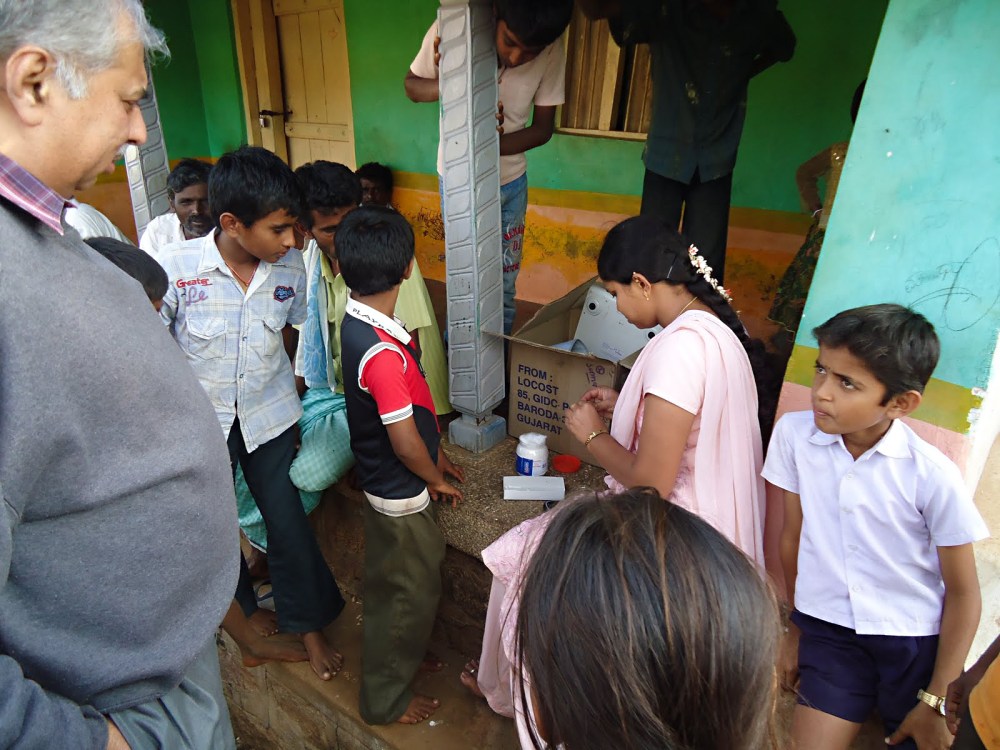
Erin Little’s inspiration to establish India’s Sucre Blue stemmed from the problems she encountered with a Type 1 diabetes diagnosis during her childhood.
“It was getting to a point where it was really, really hard to take care of myself,” Little told MSNBC about her health insurance costs.
The nonprofit that she started this year as a result of her frustrations aims to bring access and affordability to chronic disease treatment in the southern area of Bangalore, India. She chose to focus on 10 high-risk villages where people earn the equivalent of 60 cents to $1.50 each day.
About 70% of the country’s population lives in communities almost 60 miles from doctors, clinics, and pharmacies. Doctors assigned to the villages sometimes don’t fulfill their required visits, leaving the residents without health care and access to treatment or medicine, Little said.
“Showing that health care should be affordable and that the everyday person shouldn’t go into poverty just because they have a disease or something happens with their health, it shouldn’t mean that is a financial death-sentence for you and your entire family,” she said.
Sucre Blue, which is comprised of nine staff members including three volunteers, employs diabetic women within each community to diagnose, screen, and follow-up with patients at-risk for or diagnosed with the disease. They become the equivalent of a physician’s assistant, a role that prevents them from prescribing medicine but allows them to provide low-cost testing.
They take patients’ blood pressure, pulse, weight, and body mass index before assessing if they are at-risk for the chronic disease. If necessary, the women then refer them to a doctor who can prescribe medicine.
“The response is good; however, making it sustainable is the challenging component,” Little said.
Originally from Kansas City, Mo., she previously co-founded a water-purification designer and manufacturer start-up company in Chicago. As with many newly established businesses, though, employees didn’t have access to health insurance. Patients who have access to daily diabetic test strips should typically gauge their blood-sugar level eight times a day, she said.
After traveling to India two years ago on a fellowship, she started the nonprofit earlier this year in July. She has sacrificed her own lifestyle, living inside the clinic where she works. Little said her vision is to take the practice worldwide, including to the United States. But she currently struggles with the costs of supplies. The developing world poses different issues than in other countries. For example, she has managed the nonprofit to function on the equivalent of about $100,000 in India, which would be almost a million dollars in the United States. “The biggest challenge is fundraising because in terms of development, diabetes is a very, very low priority,” she said. Sucre Blue was chosen as one of five finalists in the Feast contest. Each innovator has received one ticket to the 2013 Feast Conference, which focuses on learning, health, and veterans. The organization with the most votes by Oct. 6 will receive a speaker spot at the three-day conference, which begins on Oct. 16 in New York City, for the chance to call participants to action. Like what Sucre Blue is doing? See the other Feast contestants and vote for your favorite here.
Michele Richinick Recommended


