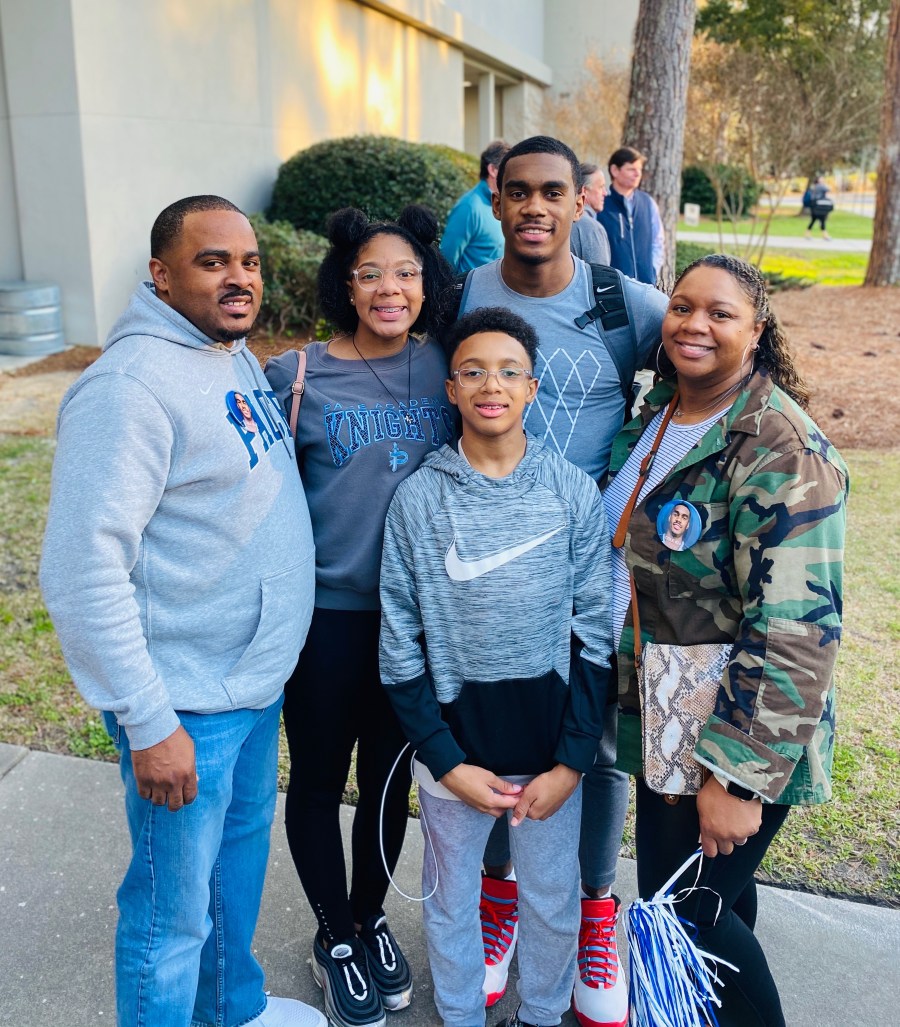
In the early hours of Oct. 4, Andrea Middleton could not sleep. It was well past midnight in Atlanta, and she was plunging deep into the comment sections on social media. It was political jabber with strangers on the internet, but it was a virtual rabbit hole that she found herself unable to crawl out of.
Middleton is no stranger to educating herself on multiple sides of an argument. A recently-laid-off teacher for highschoolers with developmental disabilities, she regularly watches and reads the news and makes herself open to hearing viewpoints she doesn’t necessarily agree with. But on social media, she has found many arguments around the upcoming presidential election incomprehensible.
“We’re a Black family raising our kids in a predominantly Black area in town, and our kids all attend a predominantly white institution,” she told NBC News’ Know Your Value. When she read what some of her friends from church or her children’s school shared online, she said, “I found it hard not wanting to engage myself in what they posted. Honestly, I began to take it personally, like, ‘You’re talking about me. That’s my family.’”
The stress became too much. So, at 1 a.m., Andrea turned to her husband, Jerry, and they made a pact. They were going to go on a “social media hiatus” for the entire month. Together they went and woke up their three kids, ranging from age 12 to 17, and asked them to take part. All five of them, starting the next day, would avoid Facebook, Instagram, and Twitter until Election Day had passed.
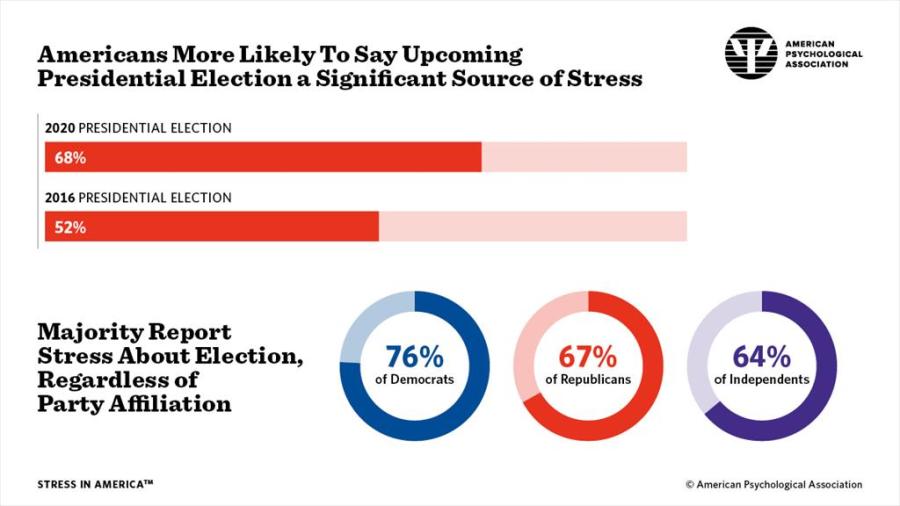
Middleton, 43, is far from alone. In fact, 68 percent of adults in the U.S. say that the 2020 election is a significant source of stress in their lives, according to new research by the American Psychological Association. That’s a substantial increase from the 2016 presidential election when 52 percent said the same. In addition, the survey found that regardless of party affiliation, majorities feel the election is a significant source of stress in their lives, including 76 percent of Democrats, 67 percent of Republicans and 64 percent of Independents.
Dr. Steven Stosny, a Washington D.C.-based therapist and relationship expert, said there’s a name for what many Americans are going through: “election stress disorder.” The symptoms range from increased amounts of anxiety, restless night’s sleep and difficulty concentrating in other areas of life. He coined the term after the 2016 election, when he observed that the “pervasive negativity of the campaigns, amplified by 24-hour news cycle and social media, created a level of stress and resentment.”
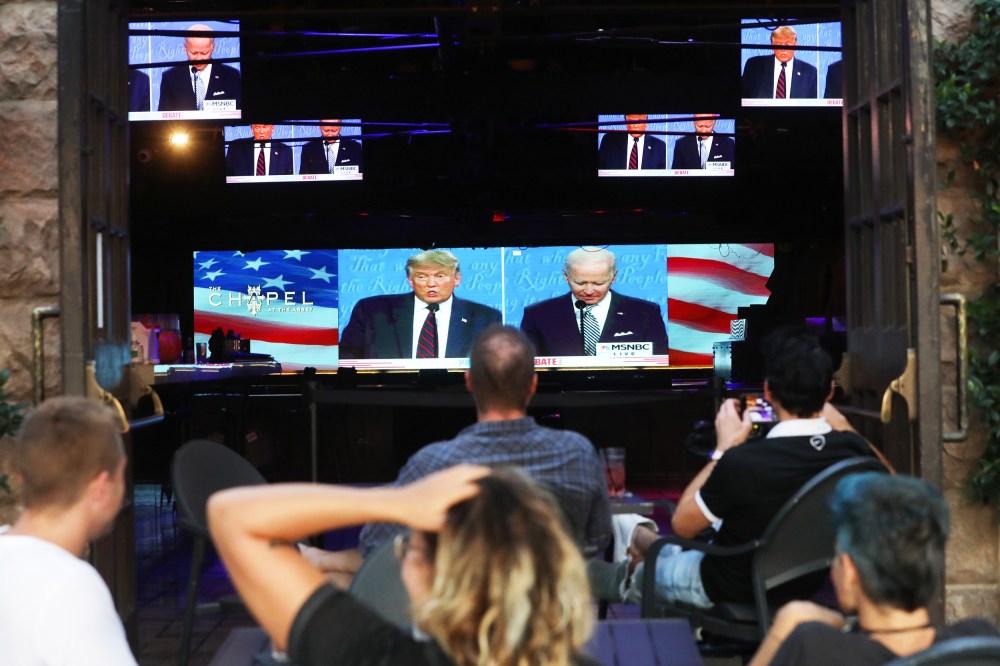
But what was overwhelming in 2016 seems modest in 2020. “Election Stress Disorder is far worse this season against the backdrop of the pandemic, future job uncertainty, social justice confrontations, the unprecedented vitriol and downright hatred from the candidates and their supporters, and the ubiquity of social media,” Dr. Stosny said.
“Political messages over social media seem more personal because they are mixed with personal messages,” he added. “When your candidate is attacked, it feels like you’re attacked.”
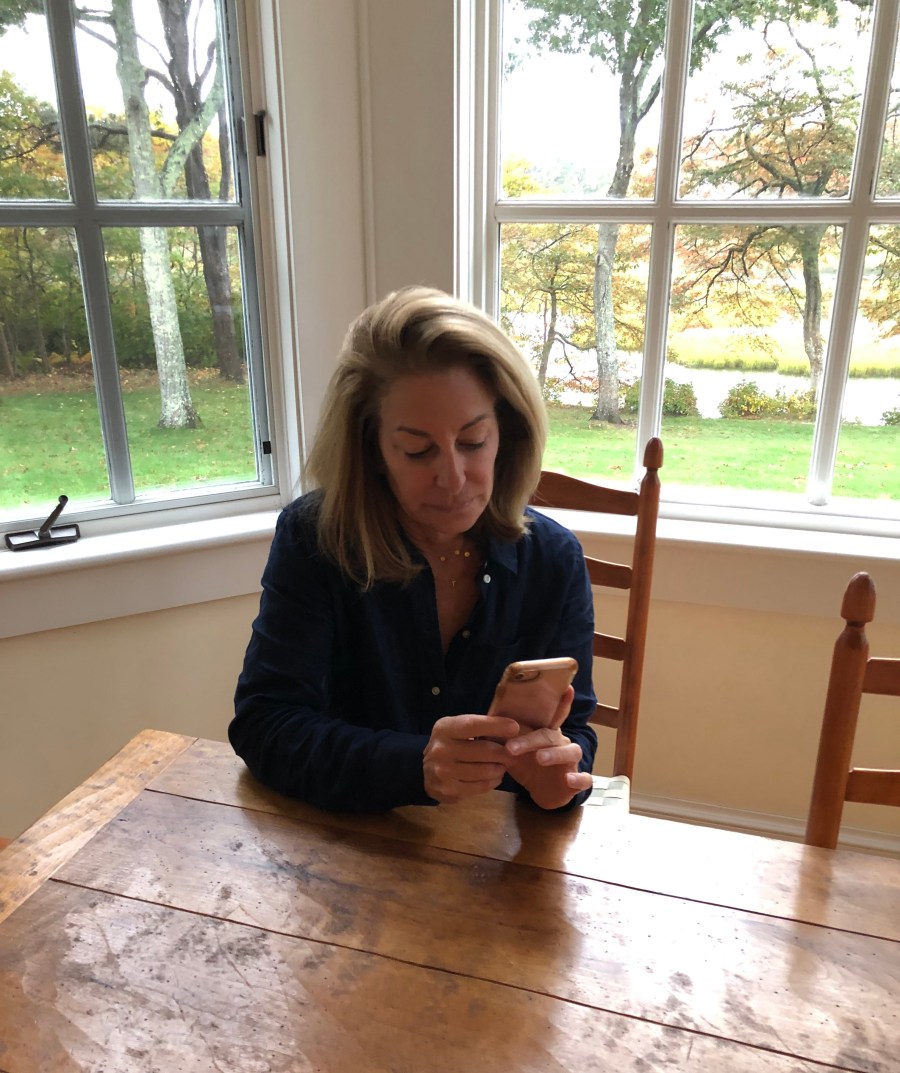
In New York City, election stress has taken its toll on Peg Spanfeller. She does not typically bring her phone with her everywhere she goes. But in the last few months, she and her iPhone are inseparable as she relies on every possible news update. She’s not a dramatic person, she explained, but the election’s uncertainty is weighing on her. “I have to visualize the good stuff because otherwise, I would go down that very long tunnel of despair,” said Spanfeller, a 62-year-old small business owner. There are strategies people can adopt to deal with election stress, according to Dr. Alice Boyes, author Of “The Anxiety Toolkit.” First, limit the activities that work you up. “TV watching isn’t activism, so it’s better to put your energy into what will actually have an effect,” she explained. Second, consider taking small practice actions, like making calls to young people and neighbors about their voting plans. Taking action in your daily life can help restore a sense of control, Dr. Boyes said. Finally, make a plan for yourself post-election. Find a way to unplug, and if you can, plan a socially- distant weekend away, Dr. Boyes suggested. The stakes are high in this election, but, your own wellbeing matters far beyond Nov. 3.
Natalie Johnson
Natalie Johnson is a segment producer for “AM Joy” on MSNBC and an illustrator from Brooklyn, NY. Follow her on Twitter @nataliejohnsonm. Recommended