










Who won Tuesday night’s presidential debate? It’s generally best not to answer a question with a question, but consider this: which candidate spent the day seeing coverage about his reluctance to condemn white supremacists?
On the national stage, Donald Trump not only hedged when asked to denounce right-wing racist radicals, the Republican president also went so far as to send extremists a message: “Proud Boys, stand back and stand by.”
Some GOP officials were not pleased. Sen. Tim Scott (R-S.C.), for example, told reporters, in reference to Trump, “I think he misspoke; I think he should correct it. If he doesn’t correct it, I guess he didn’t misspeak.”
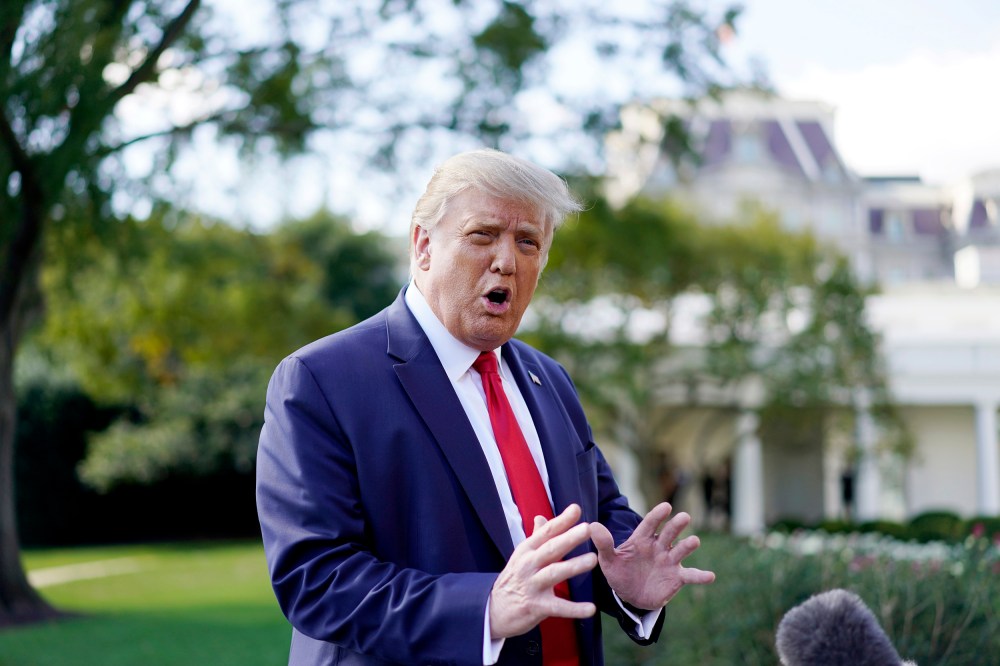
Soon after, during a brief Q&A with reporters at the White House, the president had an opportunity to put things right. He let that opportunity pass.
“I don’t know who the Proud Boys are. I mean, you’ll have to give me a definition, because I really don’t know who they are.”
A reporter followed up, noting, “White supremacists, they clearly love you and support you. Do you welcome that?” Instead of saying, “No,” Trump replied, “I want law and order to be a very important part — it’s a very important part of my campaign.”
He then tried to change the subject.
Eventually, after repeated pressing, the president said, “Any form of any of that, you have to denounce” — passive-voice phrasing that omitted the obvious words Trump’s own party wanted him to say.
The insanity of the circumstances was, and remains, breathtaking. A reporter told Trump, “White supremacists, they clearly love you and support you.” Instead of interrupting to dispute the premise, the Republican simply nodded as if the assertion were obviously true. When the reporter added, “Do you welcome that?” it should’ve been the easiest question the president has ever been asked.
But Trump flunked the test. Again. As for the president’s selective ignorance, he now expects the public to believe he has no idea who the Proud Boys are, despite sending them a direct message from a debate stage less than 24 hours earlier. It’s part of a familiar pattern: pressed on his support from David Duke four years ago, Trump pretended not to know who the former KKK leader is. Pressed more recently on his support from adherents of the crackpot QAnon nonsense, Trump claimed to know very little about it, before quickly expressing his appreciation for the conspiracy theorists’ support. It’d be easy for the president to go through the motions, condemn white supremacists and other right-wing radicals in no uncertain terms, and leave others to speculate about his sincerity. But Trump apparently doesn’t want to. To borrow Tim Scott’s phrasing, I guess this means he didn’t misspeak.
Steve Benen is a producer for "The Rachel Maddow Show," the editor of MaddowBlog and an MS NOW political contributor. He's also the bestselling author of "Ministry of Truth: Democracy, Reality, and the Republicans' War on the Recent Past."
Latest Post
Recommended


