









When it comes to a coronavirus vaccine, Donald Trump has spent much of the year struggling with the basics. In March, for example, the president hosted a White House meeting with pharmaceutical executives, at which Trump said he expected a vaccine to be developed in two or three months. Everyone at the meeting tried to explain why that couldn’t happen, but the Republican filtered out inconvenient details.
Two months later, the president switched gears, announcing that a vaccine wasn’t especially important. “I feel about vaccines like I feel about tests: This is going to go away without a vaccine,” Trump said in May. “It’s going to go away.”
The president now seems to realize that waiting for the vaccine to simply disappear “without a vaccine” is folly, so he’s back to making unrealistic assessments about a medical breakthrough.
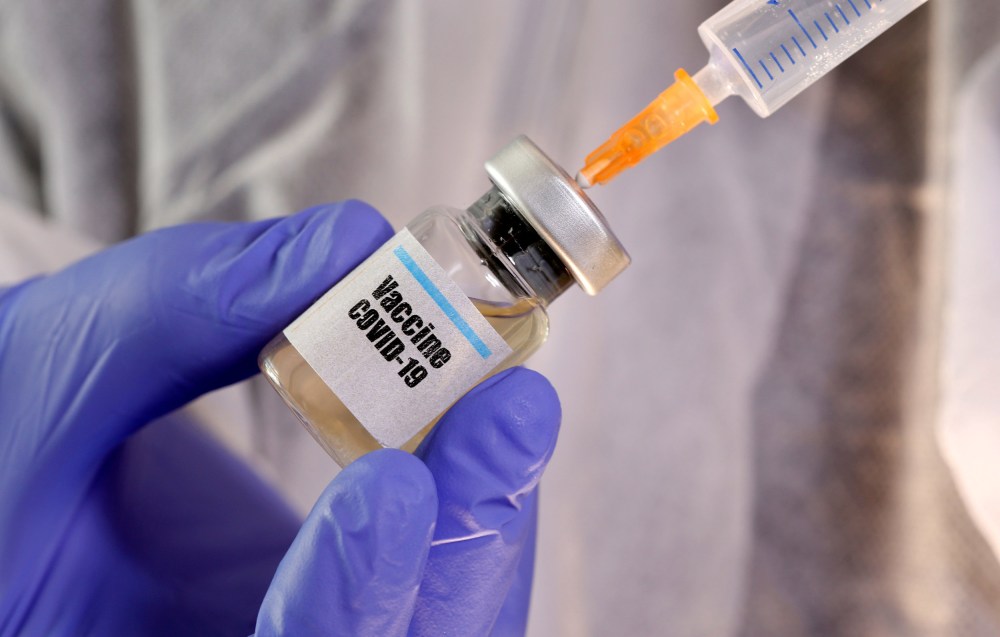
President Donald Trump again suggested that a coronavirus vaccine would “probably” be available in October, contradicting assessments this week by top health officials who have said it would be very unlikely. Trump said in a press briefing Friday that there would be a vaccine “before the end of the year and maybe even before Nov. 1. I think we can probably have it sometime in October.”
In other words, as far as the president is concerned, it’s not unrealistic for Americans to think we’ll have a COVID-19 vaccine next month.
Last week, NPR spoke yesterday with Moncef Slaoui, chief adviser for the administration’s vaccine development program, and he said he expects to have “enough vaccine to immunize the U.S. population by the middle of 2021.” Dr. Anthony Fauci, director of the National Institute of Allergy and Infectious Disease, is a bit more optimistic, but even he doesn’t see October as feasible.
But Trump doesn’t care about their reality-based assessments. The president has his own expectations, which he considers reasonable, based on his own baseless hunches.
It reminded me of an exchange from the spring, after Trump assured the public that “within a couple of days,” the number of coronavirus cases in the United States would drop “to zero,” as a result of the “good job” he said his administration was doing. Asked in April to defend his spectacular error, Trump told reporters, “[Y]ou have to understand, I’m a cheerleader for this country…. I think a president has to be a cheerleader for their country.”
The unscripted comments represented an important peek behind the curtain. Throughout the coronavirus pandemic, the president has offered Americans all kinds of assurances. The virus would soon disappear. The death toll could be as low as 50,000. The release of a vaccine is imminent. “Breakthrough” treatments are available. The White House has a “very powerful” strategy to deal with the crisis, which Trump wouldn’t identify, but which he was certain existed.
The president believes he’s playing the role of “cheerleader” for the United States, and in the abstract, that may seem justifiable: Trump may believe that if he just keeps making bogus promises, maybe he can instill a sense of optimism in a country tempted to give in to despair. By this reasoning, Trump’s coronavirus lies and false assurances could be seen by his allies as at least being well-intentioned.
The trouble, of course, is that reality keeps getting in the way, and once the president’s promises fall short, his “cheerleading” has the opposite of the intended effect: Americans grow understandably weary and cynical as the dramatic progress that Trump keeps talking about remains stuck on the horizon. The Associated Press’ Calvin Woodward had a related analysis a while back on the White House casting “a fog of promises meant to reassure a country in the throes of the coronavirus pandemic,” but then failing to deliver on critical ones. That was published in April. Trump has apparently learned nothing about the hazards of over-promising and under-delivering. This is more than a lament about a president with a strained relationship with the truth. As we recently discussed, it’s also about a leader who’s proven — and continues to prove — that his promises and assurances about an ongoing crisis are not to be accepted at face value. And when a populace can’t trust their chief executive to tell the truth about a crisis, no one, including the president himself, benefits. Postscript: At a weird press conference yesterday, Trump accused Democrats of “reckless anti-vaccine rhetoric.” That’s not even close to being true, and given the Republican’s record of actually reckless anti-vaccine rhetoric, the whole line of attack is quite ironic.
Steve Benen is a producer for "The Rachel Maddow Show," the editor of MaddowBlog and an MS NOW political contributor. He's also the bestselling author of "Ministry of Truth: Democracy, Reality, and the Republicans' War on the Recent Past."
Latest Post
Recommended


