Republicans and even some hawkish Democrats greeted the Iran nuclear accord with skepticism Sunday, in a challenge to President Obama as he tries to bring about a peaceful, negotiated end to decades of hostilities
In a statement late Saturday, President Obama credited the deal to a bipartisan partnership with Congress, whose tough sanctions provided the pressure needed to get Iran to the negotiating table. He called the deal a first important step and promised to work closely with lawmakers to achieve a stronger and more lasting agreement with Iran.
But while the administration touted the deal as a path toward a safer world, a number of Republican pols and pundits were loath to recognize any measure short of a full dismantling of Iran’s nuclear program as a victory. Among the most cynical responses came from Republican Rep. John Cornyn of Texas, who suggested in a tweet Saturday night that the nuclear deal was a ruse meant to distract attention away from the botched rollout of the administration’s health care website.
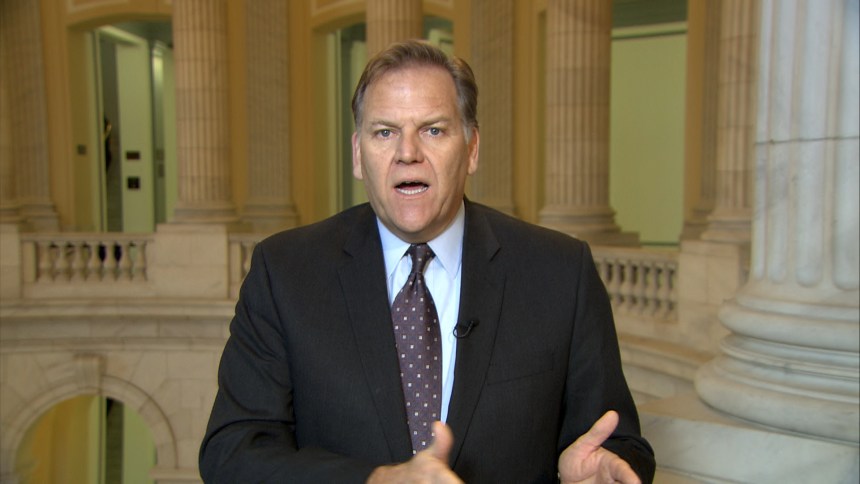
Rep. Peter King, the New York Republican, called the agreement “a victory for Iran and a defeat for the United States and our allies in the Middle East.”
The deal, which is set to last six months, stipulates that Iran halt the enrichment of uranium above 5% and neutralizes stockpile of 20% enriched uranium. It also gives the international community unprecedented access to the Islamic Republic’s nuclear sites, so that U.N. inspectors can verify Iran’s compliance with the deal. In return, the U.S. will ease crippling economic sanctions to the tune of $6 to 7 billion, including over $4 billion of the country’s oil revenue which has been tied up in foreign banks.
Sen. Saxby Chambliss, the Georgia Republican, expressed regrets about the easing what he said were stern and effective sanctions: “We’ve got all the leverage in the negotiations, and we’ve let them out of the trap,” he said during ABC’s This Week.
Chambliss said that he and his fellow senators were ready to move forward on even tougher sanctions, but recognized that any new measures would have to square with the administration’s deal. Democratic Sen. Chuck Schumer of New York said in a statement Sunday that further sanctions were “more likely” given the “disproportionality of this agreement.”
“I am disappointed by the terms of the agreement between Iran and the P5+1 nation because it does not seem proportional,” Schumer said. “Iran simply freezes its nuclear capabilities while we reduce the sanctions. It was strong sanctions, not the goodness of the hearts of the Iranian leaders, that brought Iran to the table, and any reduction relieves the psychological pressure of future sanctions and gives them hope that they will be able to gain nuclear weapon capability while further sanctions are reduced.”
Even the harshest domestic responses paled in comparison to those by Israeli leaders who see Iran as a major threat to the Jewish state.
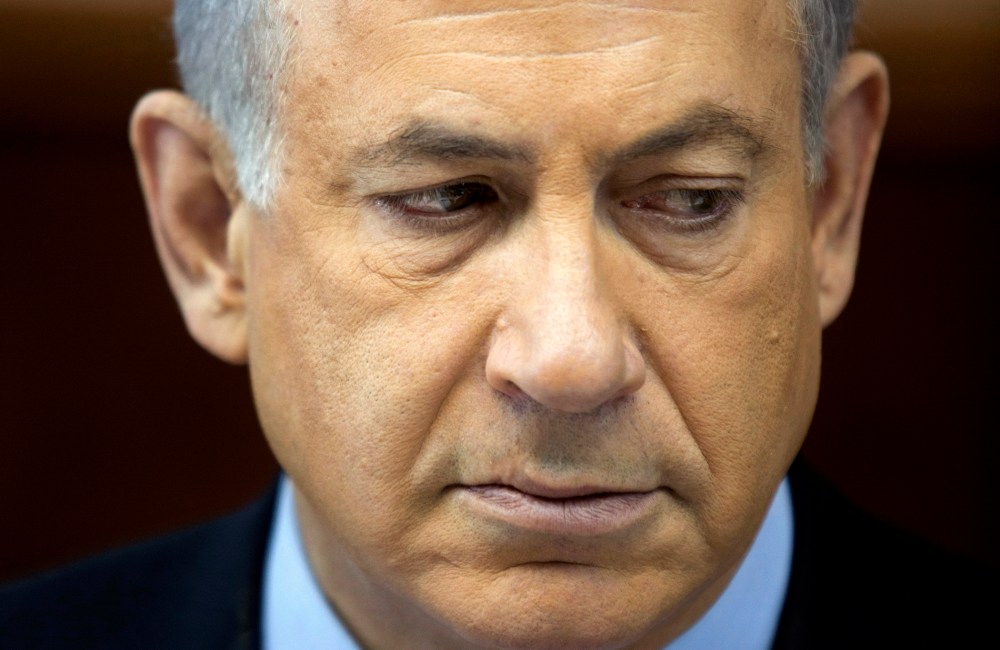
“What was concluded in Geneva last night is not a historic agreement,” Israeli Prime Minister Benjamin Netanyahu said Sunday, “it is a historic mistake…this agreement has made the world a much more dangerous place.”
Netanyahu made plain that Israel is not bound to the deal, and asserted the Jewish nation’s responsibility to defend itself “by itself” if need calls for it. President Obama called Netanyahu Sunday to reaffirm his commitment to a comprehensive solution, and to reiterate his promise of keeping Iran from obtaining a nuclear weapon. Obama told the Netanyahu that he wants to open consultations between Israel and the US immediately to craft a framework for a lasting agreement, which both countries can endorse. Against cool reaction and criticism, Secretary of State John Kerry appeared on a number of Sunday morning talk shows to defend the agreement. “This negotiation is not the art of fantasy, or the art of the ideal,” he said. It’s the art of the possible, which is verifiable and clear in its capacity to be able to make Israel and the region safer.” Kerry said he had no illusions about the stopgap measure, stressing that more had to be accomplished, but “you can’t always start where you want to wind up.” The Secretary of State sees the agreement as the beginning of a long relationship with Iranian leaders; specifically the country’s new, more moderate president Hassan Rouhani Dismantling centrifuges is “the next step,” Kerry said. For now, the international community has “a mechanism put in place whereby you know exactly what you’re getting and you know exactly what they’re doing.”
Evan Puschak Recommended