The Rachel Maddow Show WEEKNIGHTS 9PM ETMorning Joe WEEKDAYS 6AM ETDeadline: White House with Nicolle Wallace Weekdays 4PM ETThe Beat with Ari Melber Weeknights 6PM ETThe Weeknight Weeknights 7PM ETAll in with Chris Hayes TUESDAY-FRIDAY 8PM ETThe Briefing with Jen Psaki TUESDAYS – FRIDAYS 9PM ETThe Last Word with Lawrence O’Donnel Weeknights 10PM ETThe 11th Hour with Stephanie Ruhle Weeknights 11PM ET
On February 26, Albert Woodfox, one of the two remaining imprisoned members of the Angola 3 received some potentially good news. For the third time, his
On February 26, Albert Woodfox, one of the two remaining imprisoned members of the Angola 3 received some potentially good news. For the third time, his conviction for the 1972 murder of an officer at Louisiana State Penitentiary was overturned and a federal judge ordered Woodfox’s release after more than 40 years in solitary confinement.
Instead of letting the matter be settled in court, the Louisiana attorney general couldn’t help himself from responding. In doing so, he showed why this case is about more than the murder of one man. It’s about the inhumanity exhibited for more than 40 years.
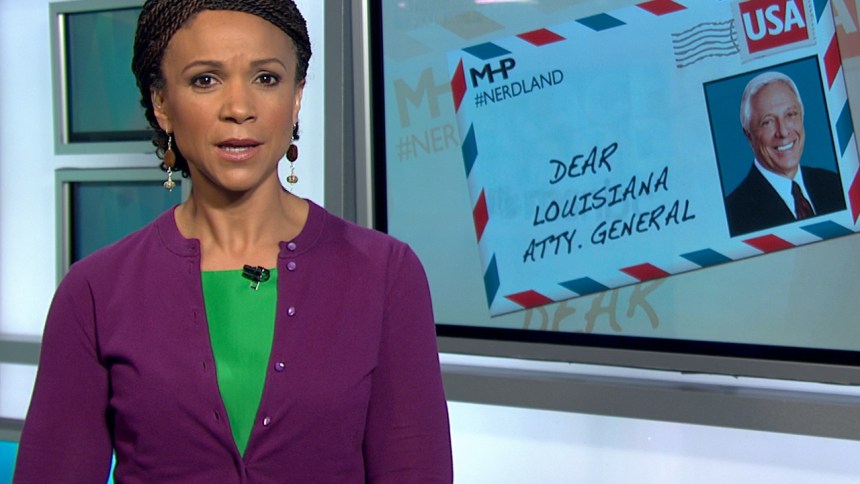
That is why this week’s letter is written to him.
Dear Louisiana Attorney General James “Buddy” Caldwell,
It’s me, Melissa.
Let’s be really clear–I am not here to try the case of Albert Woodfox.
The question of his innocence is for the courts to decide. After the ruling, Amnesty International started an online petition urging that the ruling stand so that Woodfox could be retried or released, noting that, “Albert Woodfox has spent nearly 41 years in solitary confinement in conditions that are cruel, inhuman and degrading.” And that “Woodfox and Wallace, two members of the “Angola 3,” were sentenced to life imprisonment, although no physical evidence linked them to the crime and serious legal flaws came to light.”
Yet your response to their online petitions shows your long held bias. You said, “Thank you for your interest in the ambush, savage attack and brutal murder of Officer Brent Miller at Louisiana State Penitentiary (LSP) on April 17, 1972.”
Attorney General Caldwell, no one disputes the brutality of Brent Miller’s murder. What’s in dispute is your impartiality and whether justice was served. Let’s not forget, the Angola 3, members of the Black Panther Party at the Louisiana State Penitentiary, were convicted of murder while trying to expose horrific conditions at the prison–a prison located on an 18,000-acre former slave plantation called Angola. Is it surprising to you that the U.S. District Court Judge overturned this conviction because the state failed to prove the grand jury foreperson was selected on a race-neutral basis?
You tout the so-called strong evidence against Albert Woodfox saying, “The evidence against him is overpowering. There are no flaws in our evidence and this case is very strong. We feel confident that we will again prevail at the Fifth Circuit Court of Appeals.”
Really? No flaws in your evidence? There have been charges of prosecutorial misconduct, bribing of a key eyewitness, and the loss of key evidence. Combined with the lack of jury diversity, that type of evidence isn’t solid at all.
And regarding these men being held in solitary confinement you said, “Contrary to popular lore, Woodfox and Wallace have never been held in solitary confinement while in the Louisiana penal system.” Interesting. And what do you make of holding 71- and 66-year old men who suffer from arthritis, kidney failure and claustrophobia in a six-by-nine foot cell for 23 hours a day? That sounds pretty solitary and pretty confined to me.
So while you may only see prisoners who have helped to define your career, maybe you should start seeing human beings who deserve a certain level of justice and respect.