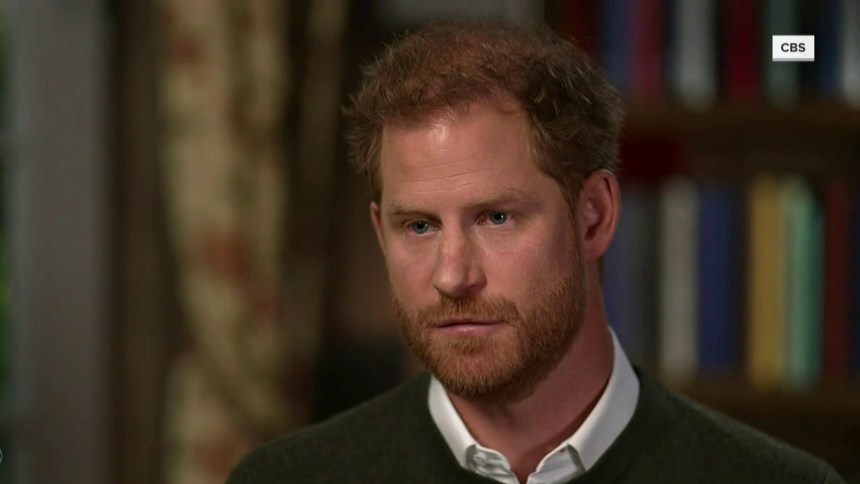
Even before Prince Harry officially published his much-awaited autobiography “Spare” on Tuesday, with just one excerpt he had already undermined the narrative he’s attempting to build for himself. Among the many details revealed last week when bookstores in Spain prematurely stocked their shelves, Harry wrote that he feels no shame for having killed 25 Afghans while on two tours in the country. His words suggest not the new kind of royal he wants to be seen as, but a classic royal idiot.
“While in the heat and fog of combat, I didn’t think of those 25 as people,” he writes. “You can’t kill people if you think of them as people.…They were chess pieces removed from the board, Bads taken away before they could kill Goods.”
His words suggest not the new kind of royal he wants to be seen as, but a classic royal idiot.
So horrifying is this sentiment that Taliban leader Anas Haqqani managed to sound humane in his Twitter response: “Mr. Harry! The ones you killed were not chess pieces, they were humans; they had families who were waiting for their return. … hopefully these atrocities will be remembered in the history of humanity.”
Harry’s rebranding — from his and his wife Meghan Markle’s multiple high-profile interviews to their Netflix docuseries to his book tour — has positioned him as a sensitive, woke, evolved young man, finally freed from the evils of the British Empire and its institutions. In part, he explains, this alleged transformation was catalyzed by his marriage to his biracial wife and finally separating himself from his family, many of whom he’s accused of being racist and outdated.

But the more Harry promotes his rebrand, the more his supposed transformation comes across as completely disingenuous. His approach to war could not be more racialized and, relatedly, imperial. Even at the time, he writes, “On some level, I recognized this learned detachment as problematic.” Rather than take responsibility for ignoring those doubts, he blames the military — which, if I’m not mistaken, he willingly joined. “I’d been trained to ‘other-ize’ them, trained well,” he claims, “I also saw it as an unavoidable part of soldiering.”
Nor is there any apparent self-awareness that he, just like so many of his antecedents, mirrored the bloody history of imperialism. The younger sons of royalty and aristocracy — the “spares” that the book’s title refers to — had limited options in life, thanks to primogeniture, a law dictating a family’s inheritance would all go to the firstborn son (sound familiar?) Many turned to military “adventures” to maintain a lifestyle close to which they were accustomed, or to appear useful or socially respectable. From India to Egypt, younger siblings joined bloody conquests to maintain their noble standing (and often pillaged along the way).
The more Harry promotes his rebrand, the more his supposed transformation comes across as completely disingenuous. The literal and symbolic violence of Harry’s participation in invading a country and killing its brown inhabitants — combined with his deflection of blame — reveal him to be little different from his predecessors. His woefully reductive phrasing — “Bads taken away before they could kill Goods” — also overlooks the fact that he may have been either complicit or directly involved in killing civilians. Nearly 400,000 civilians have been killed in the combined post-9/11 wars, according to Brown University’s Watson Institute for International and Public Affairs. The British military has taken responsibility for 300 civilian deaths, around a third of whom were children. (The Ministry of Defense compensated the families a grand total of 2,380 pounds, or $2,891, for each civilian they killed.) Those are just the deaths with the clearest evidence of British complicity. Then there’s the fact that many civilians have over the years been coerced or induced into joining the Taliban. Not to mention those who might have taken up arms because they objected to their country being invaded (yet again). But his book shows no evidence that the prince has grappled with, much less understood, these complexities. “As my tour neared its end … I had questions and qualms about the war, but none of these was moral,” he writes. “The only shots I thought twice about were the ones I hadn’t taken.” So, no, Harry, we cannot reduce Afghans to chess pieces. His approach to war exposes him for the house of mirrors he is. He’s allegedly woke, but feels no shame for participating in imperial violence, for being a white prince who kills brown people. He blames the media for destroying his life, but he and Meghan are building an empire which feeds off media attention. He admits mistakes but downplays or avoids his culpability (even blaming his brother William and sister-in-law Kate for encouraging him to wear a Nazi costume in 2005). The one potential saving grace I gave Harry and Meghan’s docuseries in my review was that it produced important conversations about breaking the cycle of intergenerational trauma. But the pettiness of “Spare” exposes him as a wounded, power-hungry individual who wants to air his grievances on his terms (knowing all too well the royal family can and will not retaliate) rather than someone who genuinely seeks to heal. And his immaturity, reductiveness and inability to accept accountability, in any meaningful way, for his wrongdoings, all work to undermine the evolved, enlightened, anti-racist he’s painting himself as.
Noor Noman is a writer focused on culture, race and LGBTQ issues.