








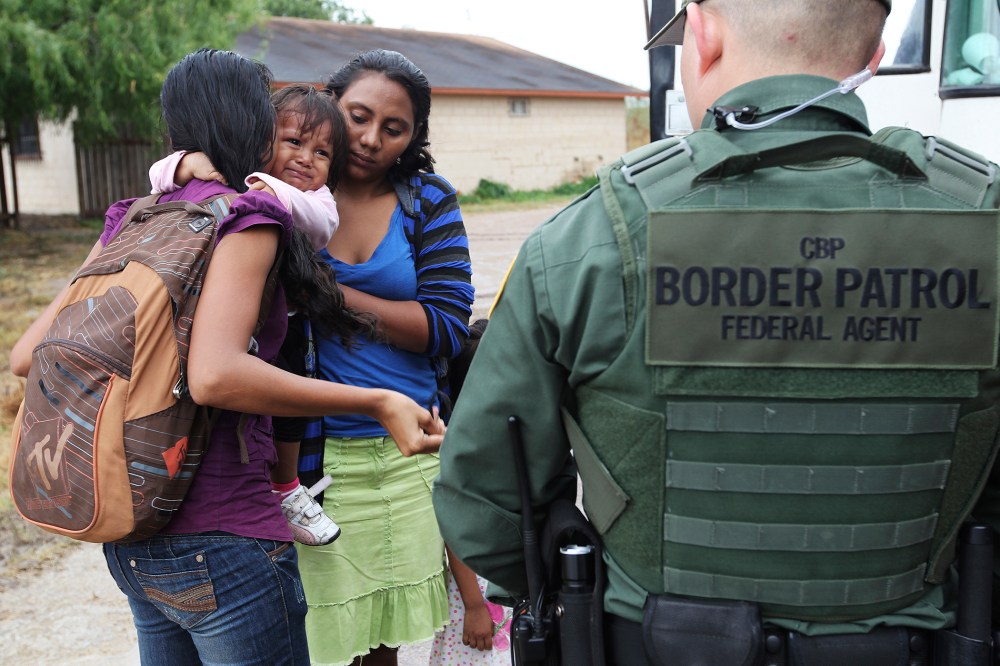
McALLEN, Texas — It’s a more than 2,300-mile journey from central El Salvador to southern Texas. First you must go by bus to Guatemala. Then into Mexico, by train, by car, even by foot. The journey, through some of the most dangerous regions run by the Mexican drug cartels, takes 13 days in all.
The women who make the trip don’t complain about the hardships. It’s their toddlers they worry about.
“We suffer from hunger, weariness, pain, sadness and knowing that your child is exposed to all of this is the most terrible part of the pain and the suffering,” said one young mother from El Salvador, as her 3-year-old son rolled around restlessly at the central bus station here. “You’re exposed to death and knowing that upon your arrival in the country with dreams, you can lose it in an instant because of deportation.”
There were eight people in her caravan from El Salvador, she said. Only two — both mothers with young children — eventually found their way to the U.S.
Both were arrested with their children while trying to cross into the Rio Grande Valley, one of the busiest illegal border crossing regions in the U.S. The journey from El Salvador to Texas was harrowing, they said. But so were the three days they spent in the Border Partrol’s custody.
“With your babies, it’s very sad. I didn’t sleep for two nights,” said Patricia Enamorado, one of the two mothers who made it to the U.S. Many of the children were wailing through the nights. But not her six-year-old daughter, Natalia. “My daughter never cries,” she said in English, puffing up with pride.
After spending three days detained by Border Patrol — unable to shower or get a good night’s sleep — both mothers were dropped off at the bus station for the next leg of their journey.
Spokespeople for Customs and Border Patrol were not immediately available for comment.
Unlike the thousands of unaccompanied minors who are being shipped around the U.S. to makeshift holding facilities while their cases are processed, the mothers who opted to brave the journey from Central America are making their way out of detention. Meanwhile, tensions are flaring as protesters in southern California forced U.S. Department of Homeland Security buses carrying migrants to turn away earlier this week.
The families must appear before an immigration court in cities all across the U.S., where they have family to take them in. Many don’t show up. For those who do, backlogs in immigration courts mean their cases can drag out for years. And even if these mothers are placed in deportation proceedings, they do not typically fit the profile of criminals who are the first priority for deportation. The mothers — and their children — are effectively here to stay for the time being.
The Obama administration has rushed to tamp down rumors that the massive surge of children crossing into the U.S. illegal qualify for the temporary legal status granted to children who were brought to the states before 2007, a group commonly known as DREAMers.
The U.S. is launching a public service announcement campaign on television and radio to run in El Salvador, Honduras, Guatemala, Mexico and even parts of the U.S., warning families to not send children on the dangerous journey north, and advising that the kids will not qualify for permits to grant them legal status.
“Families need to understand that the journey north has become much more treacherous and there are no ‘permisos’ for those crossing the border illegally,” said Customs and Border Protection Commissioner R. Gil Kerlikowske in a statement Wednesday.
More than 52,000 children have already made the journey into the U.S. alone since October. The majority of them are crossing at the Rio Grande Valley region, where the tip of southern Texas is the closest point of entry from Central America.
Catholic charities and human rights groups, well-practiced for years in providing aid to the immigrants crossing into the U.S., are cushioning the recent flow of mothers fleeing the dangerous conditions of crime and poverty in Central American countries.
%22We%20suffer%20from%20hunger%2C%20weariness%2C%20pain%2C%20sadness%20and%20knowing%20that%20your%20child%20is%20exposed%20to%20all%20of%20this%20is%20the%20most%20terrible%20part%20of%20the%20pain%20and%20the%20suffering.%22′ At the Sacred Heart Catholic Church in McAllen, hoards of volunteers are supplying food and clothes, clean showers and medical services, to mothers and children after they’ve been released from detention. The city helps shuttle the families back and forth from the bus station where immigration authorities release them after detention to the makeshift shelter set up outside the church. Volunteers erupt into a round of applause each time a mother and her child enter the shelter. Many are disheveled, looking exhausted. Their kids have dark, sunken eyes. Their first task is registration, and then a hot meal, often chicken soup and fruit. Candice Johnson, a volunteer at the Sacred Heart Church, has seen both sides of the story with the flood of immigrant kids coming to the U.S. Her husband is a border patrol agent, she said. He has watched as the immigrants are being thrown into an overloaded court system after they’re arrested instead of being turned away at the border. “You want to help, because you’re human, but on the other hand it’s frustrating,” Johnson said. “Nothing is happening to them. The sad thing is that they are not going to their court dates.” Johnson, along with her three kids, are Patricia and Natalia Enamorado’s sponsors for the day. They take the mother and child through the shelter, feed them, set them up with fresh showers and clothes, as well as an overnight bag for their upcoming bus trip. Johnson’s youngest daughter snuck in a small blanket and a teddy bear into the bag. “For the little girl,” she says with a grin. Despite the 90-degree weather, Natalia insists that she must wear her new silver-sequined Ugg boots found in the pile of clothes brought by community members. Natalia modeled her new shoes for all to see, hiding her broad smile behind her freshly washed hair. “Que bonita!” her mother cooed. “What a beautiful little girl.” The duo will be traveling by bus to New Jersey, where Natalia’s father lives. She has not seen in him more than two years. She will have to wait another few days, though. The trip from Texas to the northeast will take three days in all — from Houston to New Orleans, then Atlanta to Richmond until they finally reach New York on Saturday. Patricia is excited for her daughter to learn English in the U.S., but she is also anxious to return home to El Salvador once conditions there improve. She and her husband want to buy a house there, with a yard for Natalie to play. “I love my country,” she said. “I don’t want to live here all of my life.”
Amanda Sakuma Recommended


