








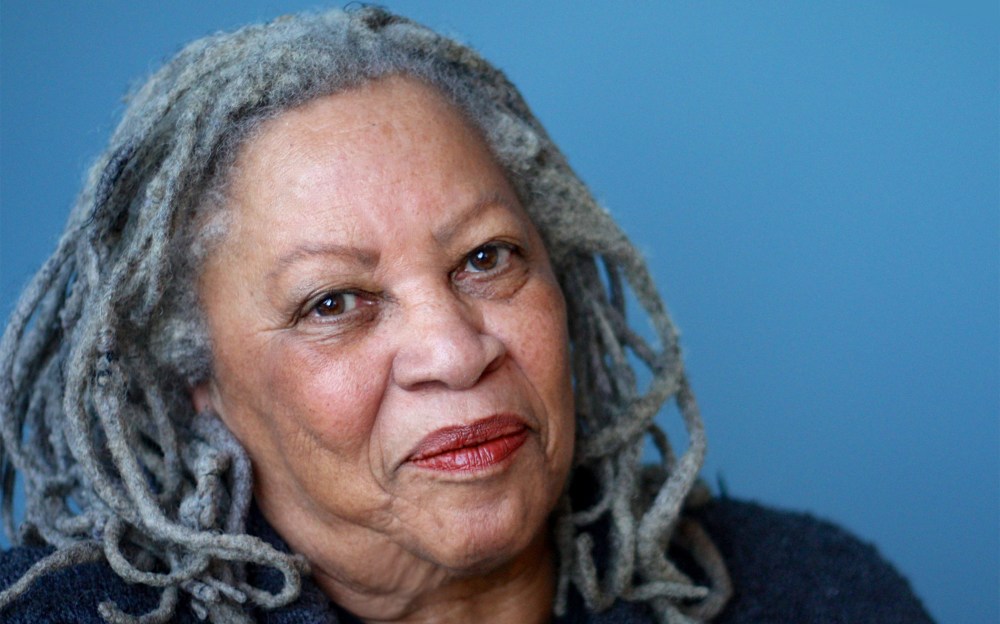
This week here in #nerdland, we were appalled to learn that Ohio schools leader Debe Terhar has called for banning Toni Morrison’s 1970 novel The Bluest Eye from the state’s Common Core-recommended reading list for 11th graders.
Terhar describes the book as “pornographic” and said, “I don’t want my grandchildren reading it, and I don’t want anyone else’s children reading it. It should not be used in any school for any Ohio K-12 child.”
Really? You don’t want your children to read Morrison? The last American to have received the Nobel Prize in Literature? Who is from your state, Ohio? And you’re on the Board of Education?
Beside the obvious anti-intellectualism inherent in banning books as a general practice, the attack on The Bluest Eye is especially egregious. Through the story of Pecola Breedlove, the text tackles difficult themes of incest, abuse, poverty, racism, and internalized shame. But the primary narrator of The Bluest Eye is a child, Claudia, who is Pecola’s classmate. Claudia is not sophisticated or experienced enough to understand the reasons for the awful events she witnesses, but Claudia has unfettered emotional insight into the darkness and brutality of racism and abuse.
Because so much of the story is in Claudia’s voice, Morrison brings young readers—not through a gauntlet of pornographic horror—but into a deep empathetic connection with trauma and suffering. This is precisely the kind of book teens ought to read, to develop both mind and heart. Great books, like The Bluest Eye, allow us to imagine, encounter and challenge difficulties in the relative safety of our classrooms so that we have the tools to confront our life struggles.
When she learned of the Ohio State Board of Education’s attempt to ban the novel, Toni Morrison responded, “I resent it.” #nerdland agrees.
So we are encouraging you to read a previously banned book this week. Tweet or Facebook us to tell us about your favorite banned books. We will add them to our list below, courtesy of the Banned Books Week site:
The Adventures of Huckleberry Finn, Mark Twain, 1884
The Autobiography of Malcolm X, Malcolm X and Alex Haley, 1965
Beloved, Toni Morrison, 1987
Bury My Heart at Wounded Knee, Dee Brown, 1970
The Call of the Wild, Jack London, 1903
Catch-22, Joseph Heller, 1961
The Catcher in the Rye, J.D. Salinger, 1951
Fahrenheit 451, Ray Bradbury, 1953
For Whom the Bell Tolls, Ernest Hemingway, 1940
Gone With the Wind, Margaret Mitchell, 1936
The Grapes of Wrath, John Steinbeck, 1939
The Great Gatsby, F. Scott Fitzgerald, 1925
Howl, Allen Ginsberg, 1956
In Cold Blood, Truman Capote, 1966
Invisible Man, Ralph Ellison, 1952
The Jungle, Upton Sinclair, 1906 Leaves of Grass, Walt Whitman, 1855 Moby-Dick; or The Whale, Herman Melville,1851 Native Son, Richard Wright, 1940 Our Bodies, Ourselves, Boston Women’s Health Book Collective, 1971 The Red Badge of Courage, Stephen Crane, 1895 The Scarlet Letter, Nathaniel Hawthorne, 1850 Sexual Behavior in the Human Male, Alfred C. Kinsey, 1948 Stranger in a Strange Land, Robert A. Heinlein, 1961 A Streetcar Named Desire, Tennessee Williams, 1947 Their Eyes Were Watching God, Zora Neale Hurston, 1937 To Kill a Mockingbird, Harper Lee, 1960 Uncle Tom’s Cabin, Harriet Beecher Stowe, 1852 Where the Wild Things Are, Maurice Sendak, 1963 The Words of Cesar Chavez, Cesar Chavez, 2002
Melissa Harris-Perry Recommended


