








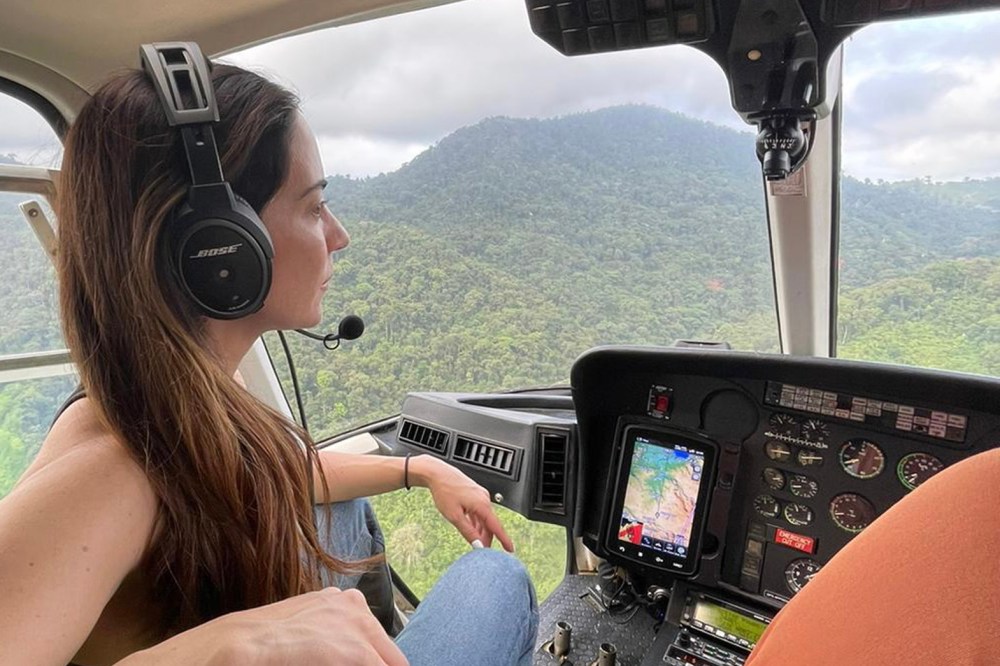
At the beginning of the year, I got a call about a story. It was about Kris Kremers, 21, and Lisanne Froon, 22, two Dutch women who went on a hike in Panama eight years ago and were never seen again. The Panamanian government had ruled their deaths an accident. The journalist on the other end of the line was Daily Beast reporter Jeremy Kryt, who had been following this case since the beginning. His question was matter-of-fact: Would I go to Panama with him to find out what really happened to the so-called “Lost Girls”?

The proposition reignited something in me that I hadn’t felt in a long time.
Two years after covering breaking news as a national correspondent for MSNBC, I decided to strike out as an entrepreneur during what turned out to be the Covid-19 downturn. I felt I was drifting. I grew my career as a social media influencer and it was feeding my income, but not my soul.
This story called me. There were elements about what supposedly happened to the women that didn’t add up. Kryt pointed to new evidence suggesting foul play: Kris and Lisanne may have been intercepted and assaulted on the hike.
When he told me this, my posture sank. The hairs on the back of my neck stood up. Every molecule of my body felt on high alert: I felt their trauma.
Kryt didn’t know, but I had experienced something similar. More than 13 years ago, when I was nearly the same age as the Dutch women and a college student, I was hiking by myself in the Ávila mountains above my hometown of Caracas, Venezuela, and I was attacked by a man on a trail.
Fortunately, in my case, I did manage to survive the attack physically unharmed. But I have never forgotten the pain and the overwhelming feeling of helplessness it caused me. We keep trauma hidden away – lest it becomes too much to bear – but suddenly a stranger on the other end of the phone can unknowingly bring it forth in an instant, like a ton of bricks hitting you over the head on some idle Tuesday.
I realized I was a lost girl too. Here was a great chance to find myself by getting back to the work I loved the most, seeking the truth and long-delayed justice for these women and their families.
Many people – including my agent – told me not to take the job, and understandably so. Did it sound reasonable to just fly down to Central America and traipse around the jungle in a place where people might be covering up the deaths of these poor women? Still, there were so many elements about this mystery I couldn’t resist.
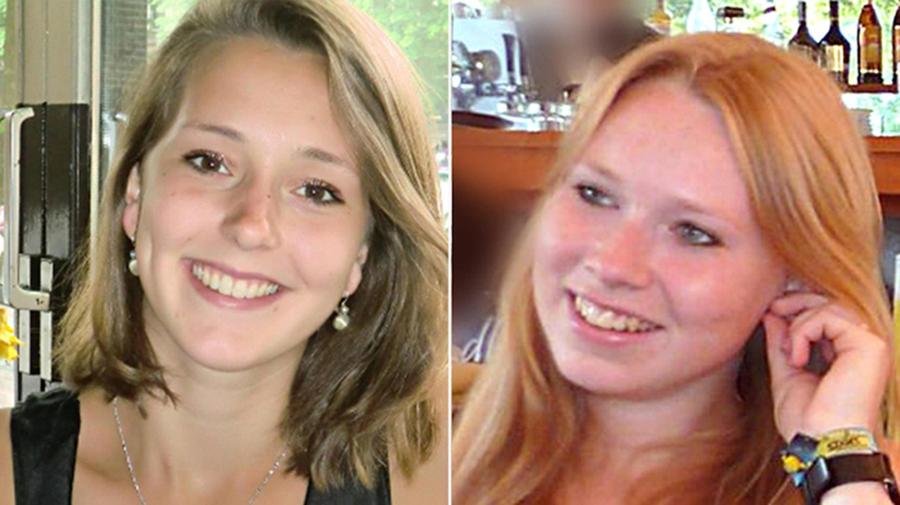
Kris and Lisanne had gone to the small town of Boquete, in the Talamanca Highlands of Panama, to learn Spanish and volunteer with young children. On April 1st, 2014, they went up a trail called “El Pianista” (The Pianist) and didn’t come back down. As the rainy season started, Dutch and Panamanian search teams combed the area to no avail. Both families pleaded for their whereabouts.
Two months later, a few scattered human remains turned up: Kris’s bifurcated pelvis, and Lisanne’s left foot – severed at the ankle – found inside a hiking boot. Then Lisanne’s backpack was turned in by locals. In it were the women’s cell phones, their bras, $87 in cash, and a Canon Powershot camera containing dozens of horrific photos taken at night and dated a week after their disappearance.
¿Qué pasó con ellas? I couldn’t turn away.
The closer I got to this story, the more I encountered signs connecting me to these women. For starters, the assignment fell on my birthday. Upon getting to our remote bungalow in the mountains, I found a notepad from my father’s Indiana high school behind a counter. My dad passed away a few years ago, we were extremely close. I fervently believe his energy is constantly around me. And when the women went missing, they had a dog with them. A dog named Blue. And the dog I adopted after my father passed away? Its name is Blue too.
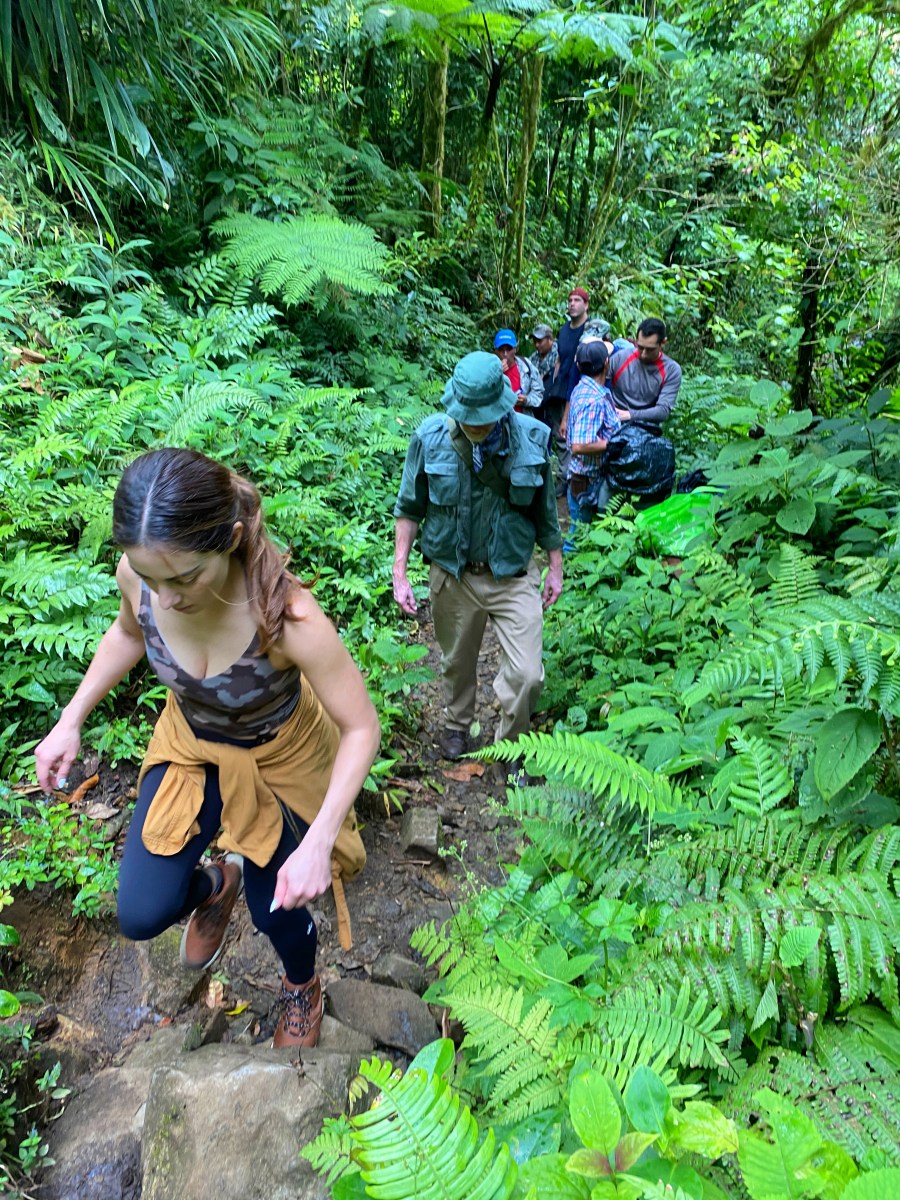
But to get to the heart of this story, I had to get to the heart of the jungle. After flying down to Panama City, then west to a city called David and driving to Boquete, we started retracing Kris and Lisanne’s two-hour hike into “El Pianista” on the anniversary of their disappearance.
All told, the reporting involved nearly a month in the field – riding horses and reaching key areas only by helicopter – and camping where the women likely went missing. During the jungle stints, I was the only woman among a crew of nine men.
Everyone on our crew – including our indigenous guides and local support – risked their lives to find out what happened to these young women. This story is that explosive in Boquete. A dirty little secret everyone theorizes about. They refer to it in hushed tones and many won’t dare grant you an interview about it in broad daylight.
During our investigation, we came across government corruption, possible drug trafficking, even mentions of organ and human trafficking. Without giving too much away, I will tell you that my life was directly threatened, which had never happened before, even while covering cartel-related violence in Mexico or crackdowns against protests in China or Cuba. As the team dug into what happened to Kris and Lisanne eight years ago, we found more than 50 cases of missing women and girls in that same 40-mile corridor of Panama. Femicide – extreme violence and murder of women based on their gender – is so rampant in Latin America it has been labeled a “shadow pandemic” by the United Nations. At least one third of women in Latin America and the Caribbean have experienced some form of violence from men, according to the most recent stats from the World Health Organization. In northern Panama where the women went missing the numbers are alarming, especially for an area that’s considered a mecca for expats and tourists. As a Latin-American woman, I had to find out what happened to Kris and Lisanne, but also shed more light on this epidemic of violence against women in our hemisphere and within our communities. To be sure, the case of two Dutch women deserves the media attention, what happened to them was unconscionable. But they were also beautiful, young and blonde: the ideal true crime victims. Other women, darker women, with Spanish or indigenous names who disappear usually don’t even get a tweet about their cases. While we were on the ground in Panama, another woman – Stephanie Rodriguez – went missing. Her body was later found in a dumpster. We made a point to interview her husband, Ilich Leon. He was so afraid to speak openly, we had to conduct the interview in the back seat of our car in a parking garage. A man with a strong physique, I still remember the tears of helplessness rolling down Leon’s cheeks as he held a framed photo of Stephanie in his hands. After that, my priorities shifted during this investigation. I reconnected to the struggles of everyday people and got back to boots on-the-ground reporting in places far from the headlines. Maybe I had stopped doing it because of the pandemic – there was certainly no possibility of doing this kind of story during quarantine – or maybe that was the lie I told myself while I was lost? This case helped me deal with past trauma and regain my purpose. I felt uniquely prepared for it, speaking my native Spanish on assignment, while translating to English for our audience. I channeled my empathy as a Latina and used my fearlessness and physicality to get answers. The investigation, which came out this week as the “Lost in Panama” true crime podcast series, is our team’s effort to uncover the truth. And my hope is that listeners also find a piece of themselves in the story of Kris Kremers and Lisanne Froon. “Lost in Panama,” the true crime investigative podcast series produced by Kast Media, debuted October 31st and can be found on Apple Podcasts, Spotify, Amazon Music or wherever you get your podcasts.
Mariana Atencio
Mariana Atencio is a Peabody Award-winning Venezuelan-American journalist, speaker and author. A former NBC News correspondent, she is also the co-founder of GoLike, a multimedia production company. Recommended


