








Updated, 9:15 p.m.
Four years ago, President Obama held a private meeting with the heads of major progressive human rights groups to assure them that on national security, he was committed to the rule of law. A day later, he gave a major national security address in which he pledged to close the prison at Guantanamo within a year and insisted that military commissions would be an effective way to prosecute alleged terrorists. While some prisoners would remain in custody indefinitely, without trial, he would use the courts to the best of his ability–a stark contrast from his predecessor.
Vince Warren, Executive Director of the Center for Constitutional Rights, attended that meeting the day before Obama’s 2009 speech at the National Archives. In the speech, the president “not only [embraced] the opposition, meaning George Bush’s policies, but then he comes out with things that even George Bush didn’t come out with, like preventive detention,” Warren recalled in an interview at the time.
Now, on the eve of another national security speech, Attorney General Eric Holder acknowledged that the U.S. government killed four American citizens in drone strikes. And at Guantanamo, 166 men still languish, more than 100 of them engaged in a months-long hunger strike in protest of their continued detention.
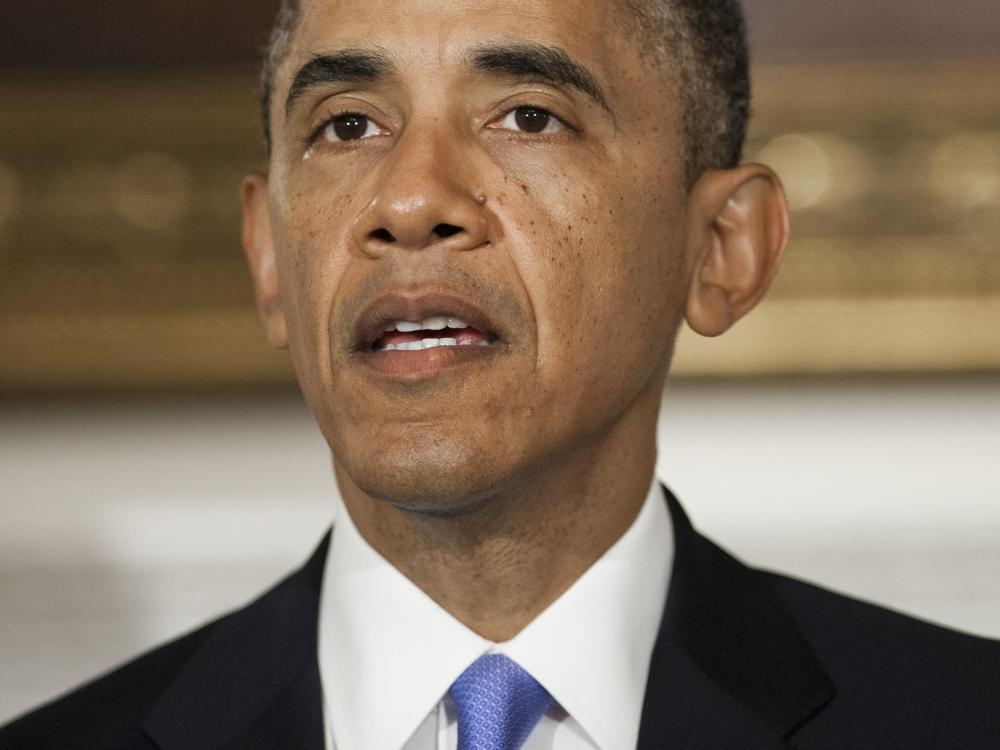
When Obama speaks Thursday at the National Defense University about counter-terrorism policies in his second term, he has the opportunity to recommit to the principles of transparency and human rights and to determine what his legacy on these issues will be. Human rights advocates and many of the president’s supporters are waiting to hear how he defines his policies and goals now.
Officials told the Wall Street Journal that Obama will announce he is restarting an effort to transfer some Guantanamo prisoners out of the facility, although he is not expected to share details in the speech. Obama will also lift his ban on sending detainees to Yemen, which would make it possible to return at least 56 men to their home country once Secretary of Defense Hagel has signed national security waivers for the detainees, the Journal reported. While there are a handful of other detainees who could be ready for transfer shortly, the Yemenis are likely to wait for months as the administration negotiates with the Yemeni government over how to monitor the former prisoners.
“I hope he’ll address Guantanamo,” Elisa Massimino, President of Human Rights First, told msnbc. If the president wants to prove he’s serious about making progress there, she said, “the executive branch has to stop laying blame at the feet of Congress” and take advantage of the powers it has to resume the transfer of prisoners out of Guantanamo. Obama could announce the appointment of a new special coordinator for closing the prison and transferring prisoners. In more than four years in office, the president has not had a Special Envoy tasked with closing Guantanamo. A state department official who worked on prisoner transfers was reassigned in January and has not been replaced.
Omar Farah at the Center for Constitutional Rights said he wanted to hear from the president that he was committed to an immediate resumption of transfers “starting with the 86 men already cleared by his administration for release.” Farah, a staff attorney with the center’s Guantanamo Global Justice Initiative told msnbc that “anything short of resuming transfers would be a great disappointment.”
“I hope he says he’s going to work with Congress to make sure he can close Guantanamo, lift the transfer restrictions, and use executive power to release those who have been cleared for release,” said Laura Murphy, Director of the American Civil Liberties Union’s Washington legislative office.
Obama is also expected to address his use of drones to kill individuals in countries from Pakistan to Yemen and the secrecy surrounding the administration’s legal authority to conduct the strikes. On Wednesday, The New York Times published a letter Holder sent to Congressional leaders acknowledging that four American citizens were killed in drone strikes. According to Holder, Anwar al-Awlaki, a radical Muslim cleric who planned a Christmas Day 2009 plane bombing, was targeted and killed in Yemen. Two others were also killed in Yemen, including al-Awlaki’s 16-year-old son who was born in Denver. A fourth American, Jude Kenan Mohammed, was killed in Pakistan by a drone. The letter constituted the first official public acknowledgement by the administration that U.S. citizens have been targeted and killed.
The Obama administration has dramatically expanded the targeted killing program but has not made public the legal framework that it uses to determine targets. “Signature drone strikes target swaths of people in certain communities is Pakistan,” said Murphy of the ACLU. Thousands of people have been killed by drones, many of them civilians in the wrong place at the wrong time. In terms of the number of bystanders killed, the strikes are “anything but targeted,” Murphy said. Because the legal justification for targeting has not been made public, human rights groups question whether courts could find it constitutional. International organizations have raised strong objections to the practice. Sharing the legal justification for the targeted killing program is necessary for more reasons than adhering to promises of transparency, says HRF’s Massimino. “Transparency is important, but it does not equal legality,” she said. “We need to know how this is lawful. Without understanding that, we are setting a broad and disturbing precedent that other countries might follow.” Late Wednesday, a White House official offered a preview of the president’s speech: “In a broad and comprehensive address, President Obama will lay out the framework for U.S. counter-terrorism strategy as we wind down the war in Afghanistan, and as he looks forward to the rest of his second term. The President will provide the American people with an update on how the threat of terrorism has changed substantially since 9/11, as Al Qaeda’s core in Afghanistan and Pakistan has been decimated, and new threats have emerged from al Qaeda affiliates, localized extremist groups, and homegrown terrorists. The President will discuss our comprehensive strategy to meet these threats, including waging the war against al Qaeda and our counter-terrorism efforts more broadly. Consistent with his commitment to being open and transparent with the American people, he will speak at length about the policy and legal rationale for how the United States takes direct action against al Qaeda and its associated forces, including with drone strikes. He will discuss why the use of drone strikes is necessary, legal, and just, while addressing the various issues raised by our use of targeted action. The speech coincides with the disclosure of the instances in which Americans have been killed in our counter-terrorism operations, and – more broadly – the signing of new Presidential Policy Guidance that lays out the standards under which we take lethal action. Beyond the use of force, the President will discuss our broader strategy, including diplomatic and assistance efforts around the world, and how we can better secure our diplomatic facilities while remaining engaged in dangerous regions. He will also discuss how to balance securing our country and protecting our civil liberties at home. Finally, the President will reiterate his strong commitment to closing the detention facility at Guantanamo as a part of our effort to align our counter-terrorism strategy with our values, and will announce a number of specific steps to advance that goal.”
Meredith Clark
Meredith Clark is a freelance writer and editor. She was previously a senior news producer for "Patriot Act with Hasan Minhaj," a reporter with MSNBC.com, the digital politics and culture editor at Glamour and a senior news and politics editor at Refinery29. She has written for Vulture, Rolling Stone, Self, Marie Claire, Cosmopolitan, The Daily Beast and Bustle. Recommended


