








A tragic shooting last week in Slaughter, Louisiana, left an 87-year-old woman dead. Her killer: an 8-year-old boy.
The young suspect will not face criminal charges for what police now believe was an intentional shooting of his elderly caregiver, committed just minutes after he played a violent video game. The incident reignited two already heated debates: one on the influence of violence in the media, and the other on the need for tighter gun control measures.
Although the 8-year-old initially told police he had accidentally shot 87-year-old Marie Smothers on Thursday while playing with the firearm, early results of the investigation led authorities to believe he “intentionally shot Mrs. Smothers in the back of the head as she sat in her living room watching television,” sheriff officials said in a statement.
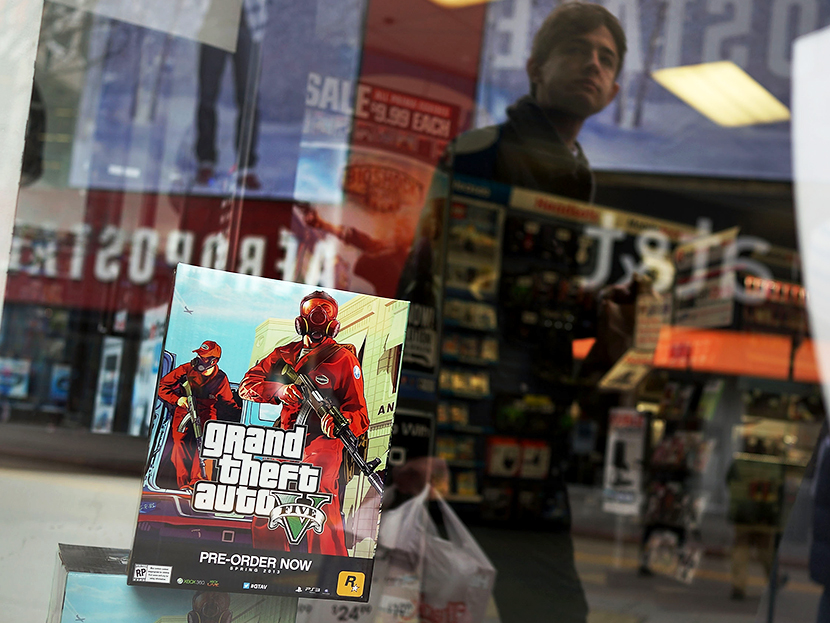
“Investigators have learned that the juvenile suspect was playing a video game, ‘Grand Theft Auto IV,’ a realistic game that has been associated with encouraging violence and awards points to players for killing people,” the statement said. The boy’s motive is still unknown, police said.
According to WAFB, a man who referred to himself as the boy’s father said the .38 caliber handgun belonged to Smothers, though it is still unclear how the child got hold of it. Louisiana law exempts children younger than 10 from criminal responsibility, so the boy won’t face any charges. The 8-year-old, whose name has not been disclosed due to his age, was released to his parents Thursday night.
Take-Two Interactive Software, Inc., the game maker responsible for the popular Grand Theft Auto franchise, swiftly rejected a link between its violent video game and Thursday’s shooting. Instead, the company pointed to the need for stricter gun laws.
“We are both shocked and saddened by this tragic event,” said Take-Two Interactive in a statement provided to MSNBC. “It further emphasizes the urgent need for America to address the availability of dangerous weapons to people who obviously shouldn’t have access to them. Ascribing a connection to entertainment–a theory that has been disproven repeatedly by multiple independent studies–both minimizes this moment and sidesteps the real issues at hand.”
Gun control advocates agreed, calling the incident clear indication that access to firearms is far too broad.
“I’m so tired of reading about ‘accidental’ shootings involving kids; those are negligent shootings,” said Shannon Watts, founder of Moms Demand Action for Gun Sense in America, to MSNBC. “The video game manufacturer did not make these parents buy a gun and leave it in the presence of a small child. That is [the parents’] fault and it is a crime.”
Mental health experts argue the issue is far more nuanced, and that the answer doesn’t necessarily lie in emphasizing gun control over reducing violence in the media, or vice versa. The full connection between virtual and real-life violence requires more research, they say, and reducing violence overall demands a broader approach.
“When something like this happens, you can’t ask, ‘Did A cause B?’” said forensic psychiatrist Dr. Praveen R. Kambam, co-founder of the consulting group Broadcast Thought, to MSNBC. Too many other factors like cognitive development, socioeconomic status, substance abuse, and gender are at play in shooting deaths, he said.
When talking about whether violence in the media causes gun deaths, Kambam said, “We’re asking the wrong question.” Rather than thinking of something like Grand Theft Auto as a root cause of violence, we should instead think of it as a “risk factor,” he said–in the same way that eating a fatty cheeseburger would be considered one risk factor for heart attack.
“There are a lot of risk factors for violence,” said Dr. Vasilis K. Pozios, another co-founder of Broadcast Thought, to MSNBC. “Owning a gun is a risk factor, substance abuse is a risk factor, alcohol is a risk factor–even just being male is considered a risk factor. Many researchers now think violent media is a risk factor. How big a factor, that’s up for debate.” The balance between targeting violence in the media and lax gun laws is nothing new. It came under sharp scrutiny following the Columbine and Virginia Tech massacres, and most recently in the aftermath of mass shootings in Colorado and Connecticut. Adam Lanza, the gunman responsible for killing 26 people last December at the Sandy Hook Elementary School, was believed to be a fanatical player of the warfare video game, “Call of Duty,” law enforcement officials said. James Holmes, the sole suspect in the Aurora shooting that left 12 dead, also frequently played violent video games like “Diablo III” and “World of Warcraft,” reported The New York Times. In his post-Newtown speech defending broad Second Amendment rights, National Rifle Association leader Wayne LaPierre cast a majority of the shooting’s blame on America’s mental health care system, and violent movies and video games–which he dubbed “the filthiest form of pornography.” But as Watts pointed out to MSNBC, the gun lobby is actually working with the video game industry to promote real-world weapons. According to a June report published by Moms Demand Action for Gun Sense in America and the Gun Truth Project, video games often feature actual weapons by make and model, and offer cross-promotional opportunities to players–including children–to buy them when the game is done. “‘Call of Duty’ features a Bushmaster semi-automatic rifle, exactly the weapon that was used by Adam Lanza, who was a fan of the game,” said Watts. “I don’t know if we’ve made that link yet, but what we do know is that the gun lobby is definitely marketing these video games to Americans.” Another issue at play is the rating system and age restrictions for entertainment, which vary across platforms, sometimes confusing parents, said Pozios. “Grand Theft Auto,” the game the 8-year-old Louisiana boy was playing, is rated “M” for mature, meaning it’s recommended for players more than twice his age. “What we should be doing is making sure children don’t consume media that isn’t meant for them,” said Pozios. But, he added, “young children having access to firearms is never a good idea.”
Emma Margolin
Emma Margolin is a reporter at MSNBC.com. Recommended


