








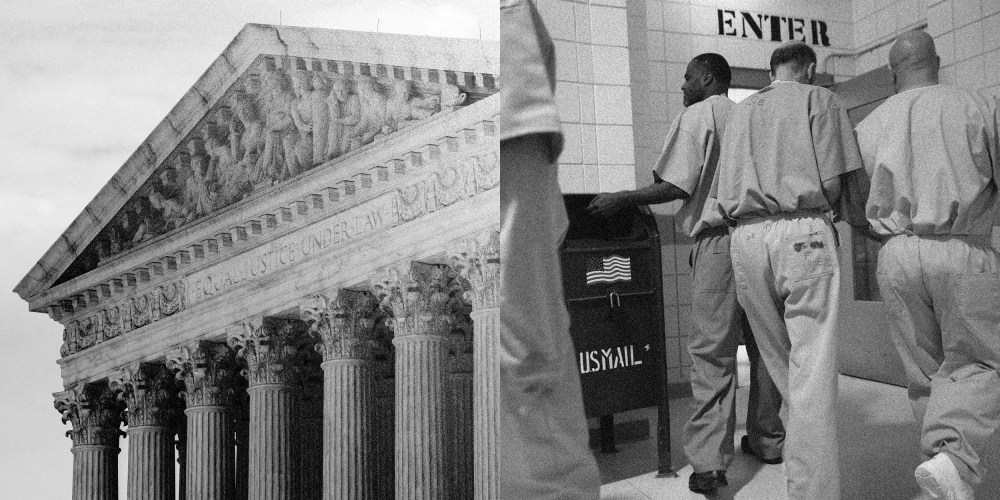
The conservative-tilted Supreme Court issued a ruling on Monday that will effectively place more hurdles in front of incarcerated people arguing for release because they received inadequate legal representation.
In Shinn v. Ramirez, the six conservatives on the court voted to bar federal courts from considering new evidence from defendants who alleged their lawyers failed them in state court.
It seems like the law is more about quick retribution than accuracy for Thomas.
The case centered around two men convicted in separate Arizona murder cases, David Ramirez and Barry Lee Jones. The men were charged at the state level, convicted and sentenced to death. They later appealed their cases in federal court, alleging they had been given insufficient legal counsel.
Ramirez argued his lawyer failed to present evidence of his low IQ, a history of abuse, sexual assault and neglect he suffered, and developmental issues that could have taken the death penalty off the table as a possibility. Jones has argued his initial attorney excluded potentially exculpatory evidence.
Both men filed habeas corpus petitions — essentially, requests for a federal court to reconsider the terms of their convictions — based on their beliefs that their lawyers did an insufficient job. In accordance with a 2012 ruling, the two men’s cases were being heard until David Shinn, the director of the Arizona Department of Corrections, sued, claiming an appeal on those grounds was unconstitutional.
And the right-wing justices on the court, seemingly ever eager to show their disdain for fair and equal justice under the law, all agreed. Writing for the majority, archconservative Justice Clarence Thomas said such appeals should stand because “serial relitigation of final convictions undermines the finality that ‘is essential to both the retributive and deterrent functions of criminal law.’”
In other words, he’s saying that if someone gets screwed over by a bad lawyer in a state case, federal courts can’t use that bad lawyering as evidence leading to their release. It seems like the law is more about quick retribution than accuracy for Thomas. The dangerous implications are obvious. This is going to lead to a lot of innocent people being forced to stay in jail, all because the right-wing justices on the Supreme Court think people’s pleas about unfair representation are insignificant once they’re convicted. As Justice Sonia Sotomayor stated in her dissenting opinion, this rationale is “perverse” and “illogical.” Writing for the minority, she bemoaned the court’s “single-minded focus on finality” before laying out the stakes for Ramirez and Jones — along with anyone who may find themselves in the law’s crosshairs with insufficient legal counsel. Related:
Ja’han Jones is an MS NOW opinion blogger. He previously wrote The ReidOut Blog. Recommended


