








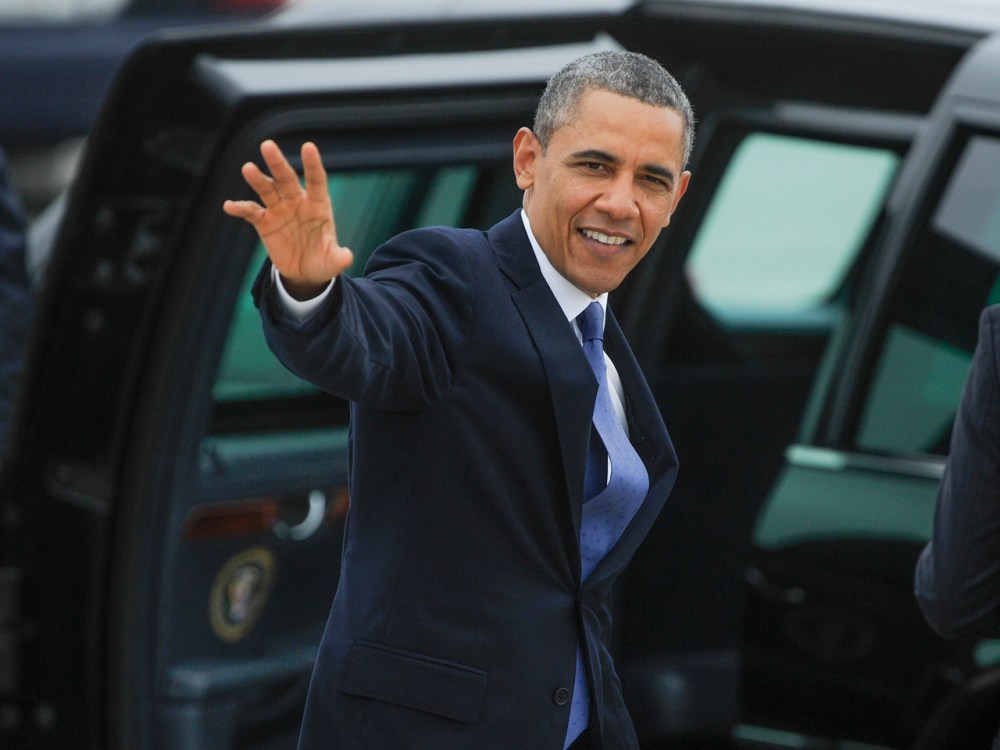
In the wake of last week’s parade of controversies, new polls show some divergent trends in Americans’ reactions to the Obama administration’s bad week.
A Washington Post-ABC News poll shows Obama’s approval rating holding steady at 51%, the same as it was a month ago. Gallup shows the same trend: in their poll Obama has remained at 49%. A CNN poll has even shown a 2-point uptick since April, from 51% to 53%.
This doesn’t mean Americans don’t care about the scandals–quite the opposite. The Washington Post poll finds that 56% believe the IRS deliberately harassed Tea Party-related groups in their crackdown on illegitimate 501(c)(4)s. On Benghazi, 55% believe the administration is trying to cover up some facts about last year’s embassy attack. And on the Department of Justice’s secret collection of Associated Press phone records, 69% are at least somewhat concerned that the government is improperly intruding on freedom of the press.
Why does Obama go untouched while Americans fault the government on these scandals? There are a number of theories, some of which are borne out in the data. Looking at partisan divides on the poll questions asked above, the expected splits are apparent. For example, 81% of Republicans feel the Obama administration is covering up something in the Benghazi attacks, while only 29% of Democrats agree. On the IRS scandal, two-thirds of Democrats say the administration was disclosing what it knew when it knew. Three-quarters of Republicans, on the other hand, think the administration was being less than honest about the scandal.
“The public’s reaction to the scandals is, in other words, being mediated by their reaction to Obama,” wrote Ezra Klein at the Wonkblog. “If they approve of Obama, they’re inclined to believe that neither he nor anyone in his circle ordered the IRS to attack Tea Party groups and that the administration did its best in the immediate aftermath of Benghazi. If they disapprove of Obama, they’re inclined to believe he or someone in his circle was controlling the IRS, and that the Benghazi talking points were part of a cover-up.”
Nate Silver over at the FiveThirtyEight blog suggested there’s a bit more to the numbers. Though Obama’s approval rating has held steady in a variety of polls, he wrote, “analyses may proceed from the wrong premise if they assume that the stories have had no impact.” Silver graphed a correlation between Obama’s approval rating and the overall approval rating of the economy, and argues that the president’s losses are possibly “offset by improved voter attitudes about the economy.” “Based on the historical relationship between Mr. Obama’a overall and economic approval ratings in the poll, you’d predict that his overall approval rating would be 53 or 54 percent given an economic approval rating of 48 percent,” Silver wrote, using the Washington Post poll as his basis. “Instead, it’s 51 percent.”
Evan Puschak Recommended


