








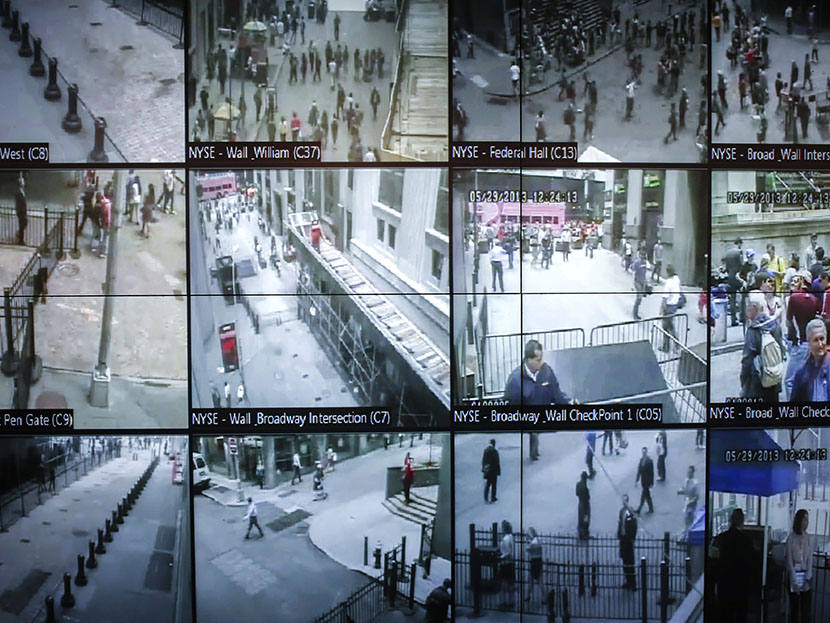
The GOP-controlled House came within 12 votes of barring bulk collection of Americans’ business records Wednesday, signalling a growing political backlash over the breadth of government surveillance powers adopted in the aftermath of the 9/11 attacks.
“We’re here to answer one question for the people we represent,” proclaimed Michigan Republican Rep. Justin Amash, co-sponsor of a proposal to restrict the government’s ability to acquire business records under the Patriot Act, from the House floor. “Do we oppose the suspicionless collection of every American’s phone records?” The proposal ultimately went down 205-217.
Civil liberties advocates are still delighted. “We’re very pleased with this vote,” says Michelle Richardson of the ACLU. “This is the biggest vote in opposition to the Patriot Act in the last 12 years.” A separate amendment simply restating existing surveillance law, under which Americans cannot technically be “targeted” but their information can be collected as part of surveillance on an assumed foreign target, passed easily.
As a heated debate over the proposal unfolded on the House floor, both opposition and support for the proposal to bar bulk collection of business records—phone records, credit card records, Internet records and the like—was bipartisan. The amendment was crafted by Democratic legislators John Conyers of Michigan and Jared Polis of Colorado with Republicans Justin Amash of Michigan, Thomas Massie of Kentucky, and Mick Mulvaney of South Carolina, with the intent to attach it to a must-pass defense spending bill. The proposal’s defenders say it wouldn’t stop the government from requesting business records—it would restrict records collection to acquiring information about someone who is subject to an investigation.
“This amendment will not stop the proper use of the Patriot Act and FISA authorities to conduct terrorism and intelligence investigations,” said Rep. Conyers. “All this amendment is intended to do is to curtail the ongoing dragnet collection and storage of the personal records of innocent Americans.”
Many members of Congress have been informed in classified briefings about how broadly national security agencies were interpreting the business records provision of the Patriot Act, known as Section 215. But that information was was not known to the public until a secret request to the foreign intelligence surveillance court for communications records was leaked to the Washington Post and The Guardian in June. That request, filed by the FBI on behalf of the NSA, sought to acquire the communications data for millions of Verizon customers. According to a recent NBC/WSJ poll, 55% of Americans are now worried that the US government will go too far in violating their privacy rights, a reversal of just after 9/11 when the same number worried the government wouldn’t go far enough in fighting terrorism.
The leadership of both parties opposed the Amash-Conyers amendment, and both Republican Speaker John Boehner of Ohio and Democratic Minority Leader Nancy Pelosi of California voted against it. The White House released a statement Tuesday night urging a vote against the proposal, saying it would “hastily dismantle one of our Intelligence Community’s counterterrorism tools,” and that it was “not the product of an informed, open, or deliberative process.”
An informed, open and deliberative process is exactly what erupted on the House floor prior to the recorded vote on the Amash-Conyers proposal—or at least the closest Congress gets to one—with the Obama administration finding itself with more than a few unlikely defenders.
“Have 12 years gone by, and our memories faded so badly we forgot what happened on September 11th?” asked House Intelligence Committee chairman Mike Rogers of Michigan, a sometimes harsh Republican critic of the Obama administration who said Amash-Conyers would leave the country vulnerable to terrorist attacks. “Passing this amendment takes us back to September 10th.” Republican Minnesota Rep. Michele Bachmann, who once said the ACLU was running the Obama administration, also spoke out against the Amash-Conyers proposal. “National security is a real and present danger and something we have to take quite seriously,” Bachmann said. But supporters of the effort to ban bulk collection of Americans’ data also had some unlikely voices on their side, including self-identified “author of the Patriot Act” Wisconsin Republican Rep. Jim Sensenbrenner, who said that the Obama administration’s interpretation of Patriot Act powers had gone too far. “The time has come to stop it, and the way we stop it is to approve this amendment,” Sensenbrenner said. Though the Amash-Conyers amendment failed, it was only in the initial salvo in a long-term effort to restrict government surveillance powers. Civil liberties advocates in Congress already have a list of potential reforms they intend to push through after the August recess. If anything, the closeness of the vote reaffirms their view that both public opinion and political momentum are on their side. “This is not going away,” Richardson says. “They will not be able to sweep this under the rug the way they have in the past.”
Adam Serwer Recommended


