








Republicans are making a big show out of rejecting Grover Norquist and his tax pledge. And yet, as the fiscal cliff looms, their offer to Democrats remains the same as Michael Corleone’s to Pat Geary: Nothing. And they’re using Norquist as a useful foil in the process.
In recent days, a bevvy of GOP lawmakers including John McCain, Lindsey Graham, Bob Corker, and Saxby Chambliss have taken to the airwaves to publicly renounce Norquist and the pledge they signed never to vote for a tax increase. That’s led to headlines implying a new-found Republican willingness to compromise—an impression that GOPers are doing everything they can to encourage.
“Elections do have consequences,” Rep. Jeb Hensarling of Texas, a member of the House GOP leadership, said Monday. “The bottom line is the president is getting his revenues. We can negotiate how much; we can minimize the damage to the economy.”
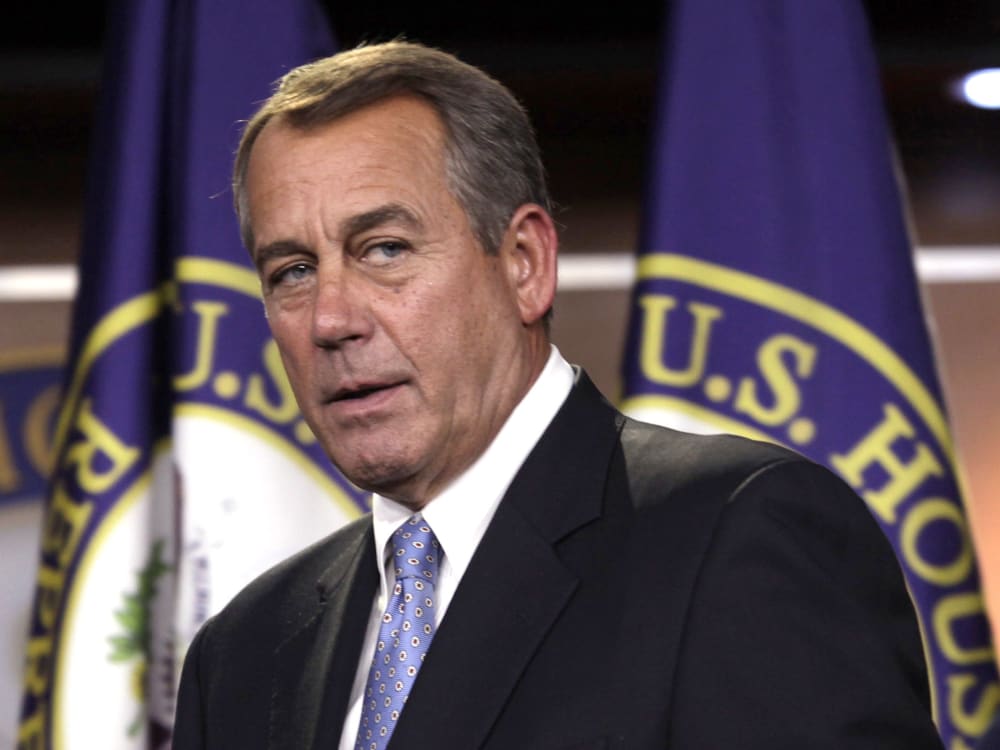
But Republicans’ actual position, as spelled out by Speaker John Boehner, is no compromise at all: The GOP will agree in theory to raise new revenue by closing unspecified loopholes and eliminating unspecified deductions in the tax code, but it won’t allow the top tax *rate* to go back to 39.5%, where it was in the 90s. Indeed, Boehner has even talked about using the savings won via the deductions and loopholes strategy to*lower* rates.
If that stance sounds familiar, it should: It’s what Mitt Romney campaigned on. Obama won after explicitly campaigning on a plan to raise tax rates on the richest. If Hensarling’s right that elections have consequences, having the loser’s plan adopted over the winner’s is an unusual consequence.
And that’s where Norquist comes in. As Steve Benen of The Maddow Blog writes: “[B]ecause Grover Norquist doesn’t like it, this is considered the reasonable GOP offer.”
Nor is the GOP approach any kind of reasonable concession in pure policy terms.
First, party leaders haven’t even said how much new revenue they’d agree to—though last year, the GOP presidential candidates famously said unanimously they’d reject a deal that was 10-1 spending cuts to tax increases. Compare that to the landmark budget deal of 1993, which was a 1-1 ratio.
“If it’s a token amount of revenue, it’s not much of a concession,” said Seth Hanlon, the director of fiscal reform at the Center for American Progress, a liberal Washington think tank.
And budget experts say it would be possible, but politically very difficult, to raise as much revenue as it needed solely by going after loopholes and deductions. “There’s a lot of talk about loopholes and deductions, but then you take a closer look at it and the major deductions exist for a reason, and are politically popular,” said Hanlon, citing the charitable deduction as an example. Or, as former White House economist Jared Bernstein put it in a column Tuesday on msnbc.com: “It’s one thing to say ‘close the loopholes…clean out the code!’ in the abstract; but the minute you start naming names, you find out that your loophole is my treasured job creation program.” Nor will the GOP say which loopholes and deductions they’d target, creating the concern that in the final reckoning, the process wouldn’t raise enough revenue to balance the budget or to avoid massive cuts to social programs. That’s why supporters of the administration’s position call the GOP’s approach “fill-in-the-blank” tax reform, Hanlon said.
Zachary Roth Recommended


