








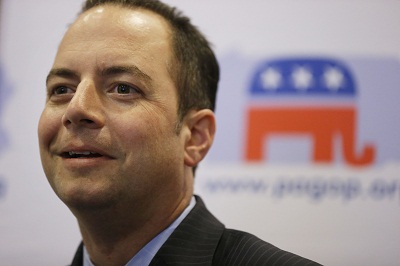
As the Republican National Committee does some soul-searching after their disappointing 2012 election season and hopes to learn from the mistakes of 2012, questions about the efficacy of the new “Growth and Opportunity Project” are being raised. With the RNC’s announcement on Monday, some are wondering how the GOP can respond to the nation’s shifting demographics and adopt winning political strategies.
RNC chairman Reince Priebus asked a group of five Republican leaders to examine the party’s messaging, fundraising methods, and what they could learn from the Democrats’ strategies. Identifying eight main goals, the committee will also look reach out to successful organizers and staffers at more junior levels and outside influential groups such as super-PACs and assess how the party should approach 2014’s midterm elections and the 2016 presidential primaries. In a statement, Preibus said:
“The Growth and Opportunity Project will recommend a plan to further ensure Republicans are victorious in 2013, 2014, 2016 and beyond. The work of the Growth and Opportunity Project will be critical as we move forward as a party and take our message to every American.”
The Republican Revolution the GOP was hoping for in 2012 has left the party without any distinct leaders, and with Obama’s win among minority groups—women, black, Hispanic and Asian voters—the party is looking to re-evaluate its outreach strategy to those voting blocks. That adds up to a quandary for a party looking ahead at gubernatorial races next year in Virginia and New Jersey, as well as 2014’s midterm elections.
Former George W. Bush White House press secretary Ari Fleischer and Sally Bradshaw, a Republican strategist and top adviser to Jeb Bush, are two of the five co-chairs. RNC member Henry Barbour, another Republican strategist and nephew of former Mississippi Gov. Haley Barbour, has also been named another committee co-chair. And RNC members Zori Fonalledas of Puerto Rico and Glenn McCall of South Carolina are the last two members of the team.
Henry Barbour told the Washington Post that the committee has “a broad perspective.” He continued, “Our effort is going to focus on the future of the Republican Party. How does it grow? How does it win elections?” He said that RNC staff will assist in the effort, but he stressed, “Our effort is to go out to listen to people. Who is giving us smart advice?” Buzzfeed‘s Andrew Kaczynski first pointed out that two members—Henry Barbour and Ari Fleischer—are “Poll Truthers” who accused pollsters of oversampling Democrats, skewing the polls, and that Mitt Romney would ultimately win the presidency. The Washington Post conservative columnist Jennifer Rubin wrote today, “You can almost hear the cries from the right-wing blogosphere objecting to any substantive policy changes on immigration or gay marriage and see the eye-rolling from grizzled veterans who think it is beneath the dignity of Republicans to ‘feel your pain.’… But if the party does nothing there is every reason to believe it will keep losing elections.” Even with the launch of the RNC’s fix-it committee, as Rubin labels them, there are questions about RNC expenditures going to companies run by RNC staffers, and questions about how the traditional, establishment panel may not invite grassroots opinions or rank-and-file voters to actually shake up the RNC. How the party will take the following steps to reach young, minority and women voters remains to be seen…at least until March 1st, 2013, the committee’s deadline for their final report to Priebus and the rest of the RNC.
Clare Kim Recommended


