








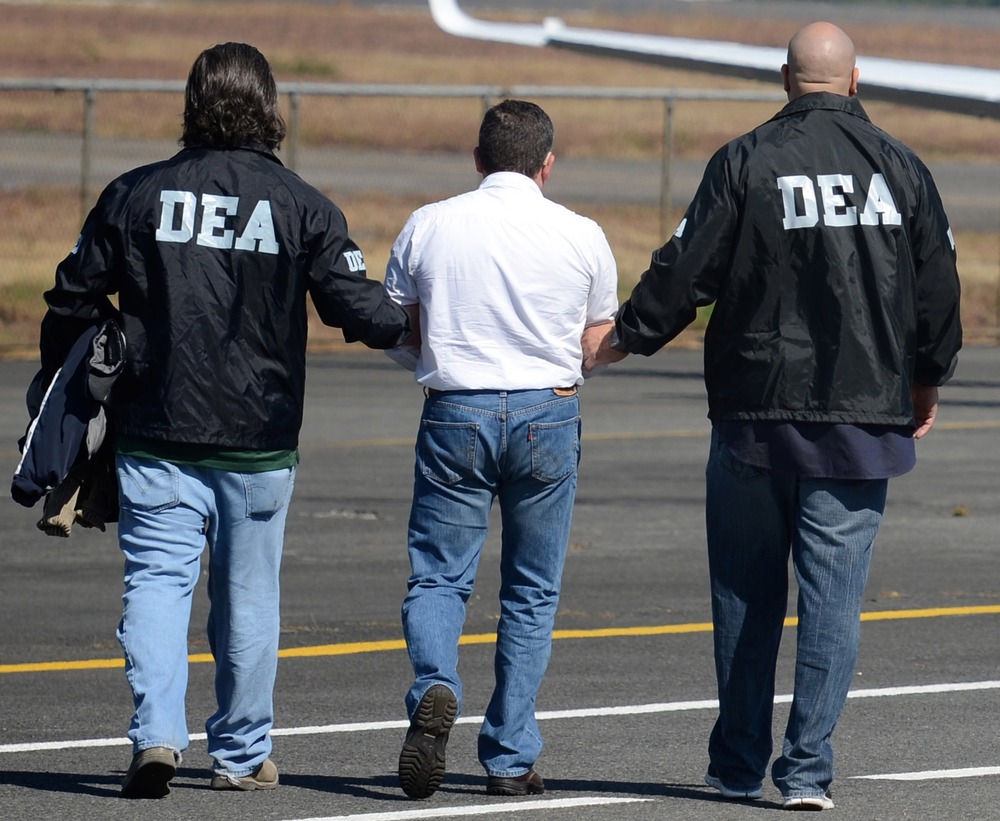
Mass shootings may be particularly horrific, but they don’t represent the most common form of gun violence in the United States. In mid-October, Harvard economist Jeffrey Miron told msnbc that the War on Drugs is a significant driver of violent crime in the United States.
“There’s plenty of violence that I think has nothing to do with prohibition … but there’s a substantial part of violence that’s due to prohibition,” he said at the time. “And the part that we can most easily address is due to prohibition.”
Overall, violent crime has decreased significantly over the past couple of decades, dropping by as much as 50% between 1991 and 2009. Part of that, said Miron, is because Washington’s Drug War fever has waned since the Reagan-Bush years. Drug-related carnage has now been exported to our southern neighbors: Since the escalation of Mexico’s U.S.-endorsed drug war in 2006, its murder rate has skyrocketed.
At least on this issue, U.S. policy is inching in the right direction: this year, Washington state and Colorado both legalized recreational cannabis use. However, many states—not to mention the federal government—still favor a policy regime which lets organized crime monopolize drug distribution, leads to the unjust imprisonment of countless non-violent offenders, keeps possible treatments out of the hands of cancer patients, and promotes escalating police violence in marginalized communities.
The Obama Justice Department may even continue to enforce federal anti-marijuana laws in states that have legalized the drug. And in recent years, the United States military has deployed troops in Honduras to fight the Drug War abroad. Limiting access to guns and improving mental health care access are both much-needed policy responses to shooting rampages. But we also need to take a long, hard look at the senseless violence which the government invites—and often even inflicts—through prolonged, pseudo-military wars with no limits and no clear objective.
Ned Resnikoff is an urban policy analyst, researcher, writer, and editor. His byline has appeared in a variety of publications, including the New York Times, San Francisco Chronicle, Dissent, and The Nation. He writes the newsletter Public Comment, which can be found at publiccomment.blog. Recommended


